



.jpg?w=800&auto=format%2Ccompress&fit=max&format=webp&dpr=1.0)
Trump’s SAVE America Act would require proof of citizenship to register for federal elections.
The bill would also require voters to show approved photo ID when casting ballots.
Supporters call it an election-security measure, while opponents warn it could create barriers for eligible voters.
The SAVE America Act backed by Donald Trump would require Americans to prove their US citizenship when registering to vote and show an approved photo ID when casting a ballot in federal elections. The legislation, backed by Trump and congressional Republicans, has become part of the president’s push for tighter election rules ahead of the November 2026 midterm elections.
The bill, formally called the Safeguard American Voter Eligibility Act, would establish federal requirements for citizenship verification, voter identification and voter-roll checks. Supporters say it would ensure that only eligible US citizens vote in federal elections. Opponents argue that the requirements could create additional hurdles for eligible voters who do not have the required documents.
What would the SAVE America Act change?
The SAVE America Act would require people registering to vote in federal elections to provide documentary proof of US citizenship. It would also require voters to present an approved physical photo ID when casting a ballot in person.

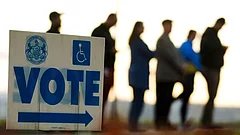


The two requirements are separate. Proof of citizenship would be required when a person registers to vote, while the photo-ID requirement would apply when the person votes.
The bill would also require states to take steps to identify and remove non-citizens from federal voter-registration rolls. It would allow states to use federal information, including data maintained by the Department of Homeland Security, when checking voter eligibility.
For people voting by mail, the legislation includes additional identification requirements. The bill sets out the documents that can be used to establish citizenship, while also providing an alternative process for people who do not have the standard documents. The legislation also contains enforcement provisions covering violations of the new requirements.
The current legislation follows an earlier version of the SAVE Act that was debated in Congress in 2025. According to the Associated Press, the newer measure goes beyond the earlier proposal by adding a federal photo-ID requirement for voters. The newer measure expands the focus from proof of citizenship during registration to identification requirements at the ballot box.
Why does Trump support it?
Trump has made election security and voting rules a major part of his political agenda. He has repeatedly argued that federal elections need stronger safeguards to prevent non-citizens from voting and has urged Congress to establish nationwide requirements.
Non-citizens are already prohibited from voting in federal elections. The dispute is therefore largely about how eligibility should be verified and what voters should have to provide to demonstrate that eligibility.
Trump has also argued that stricter identification rules would make elections more secure. The White House and Republican supporters of the legislation have framed the bill as a measure to protect the integrity of federal elections.
The Indian Express reported that Trump recently pointed to India while making his case for voter identification in the US. He cited India's use of voter identification during the 2024 Lok Sabha election as an example of a system in which voters are required to establish their identity. The two countries, however, have different electoral systems, with US elections largely administered by state and local authorities.
Trump's broader proposals on voting also include restrictions on mail-in ballots, although those proposals extend beyond the central citizenship and photo-ID provisions of the SAVE America Act.
Why is it controversial and where does it stand?
The main dispute is over whether the proposed requirements would strengthen election security or make voting more difficult for eligible citizens.
Republicans supporting the legislation argue that requiring proof of citizenship and photo identification is a straightforward safeguard. They say states should have stronger mechanisms for checking voter-registration lists and ensuring that people who are not eligible do not vote.
Democrats and voting-rights groups have argued that the requirements could disproportionately affect eligible voters who do not have passports, birth certificates or other accepted documents readily available. They also warn that errors in voter databases could result in eligible citizens being incorrectly flagged or removed from voter rolls.
The issue is particularly significant because US states currently have different rules governing voter identification. Some require voters to present photo ID, while others allow different forms of identification or have fewer requirements. The SAVE America Act would establish federal requirements for elections to federal office.
The House approved the bill in February, but the legislation has since been attached to the chamber’s version of the FY2027 National Defense Authorization Act. The Associated Press reported that House Republicans added the voting provisions to the defence bill as part of a broader effort to advance Trump’s election priorities. It faces a difficult path in the Senate because most legislation requires 60 votes to overcome a filibuster.
Republicans do not have the 60 votes generally needed to overcome a Senate filibuster, meaning they would need Democratic support to advance the measure unless the Senate rules are changed. Democrats have opposed the legislation, while Trump has continued to press Republican senators to advance it.
Reuters reported that Trump has urged Senate Republicans to act on the bill, while Senate Majority Leader John Thune has acknowledged the difficulty of securing enough votes to move it forward.
For now, the SAVE America Act has not become law. Its provisions are part of the House-passed FY2027 defence legislation, which has been sent to the Senate for consideration.
At its core, the SAVE America Act seeks to change two stages of the US voting process: it would make documentary proof of citizenship a requirement for registering to vote in federal elections and establish a federal photo-ID requirement for casting a ballot. The debate is over whether those measures are necessary safeguards or could make it harder for some eligible Americans to vote.















