



Iran says the Strait of Hormuz will remain closed unless the US meets its demands and changes its “behaviour”.
Trump claims the US has “total control” of Hormuz as commercial shipping remains severely disrupted.
Oman and Pakistan are pursuing diplomatic efforts to reopen the waterway and revive wider US-Iran talks.
Iran has rejected Donald Trump’s claim that the United States has “total control” over the Strait of Hormuz, insisting that the strategic waterway will remain closed until Washington changes its “behaviour” and accepts Tehran’s conditions. The declaration comes as attacks on commercial shipping continue in two of the region’s key maritime corridors, raising fresh questions about whether the US-Iran war is heading towards another escalation despite ongoing diplomatic efforts.
The dispute over Hormuz has become central to the search for a way out of the conflict. Iran is demanding the lifting of US sanctions, the release of frozen Iranian assets and compensation for attacks, while also calling for an end to the US naval blockade of its ports and a wider ceasefire covering Gaza and Lebanon. Washington, meanwhile, has continued to claim control of the waterway.
That leaves diplomacy facing a difficult problem: Iran wants guarantees over how Hormuz will operate before reopening it, while disagreements over who controls the passage remain unresolved. With shipping traffic at a fraction of its pre-war level and violence spreading towards the Bab al-Mandeb Strait, the outcome of the talks could determine whether the conflict moves towards de-escalation or a prolonged confrontation.


What is happening in the Strait of Hormuz?
Iran closed the Strait of Hormuz shortly after US-Israeli bombing of Iran began at the end of February. Since then, the waterway has become one of the main battlegrounds in the war and a major point of disagreement in diplomatic negotiations.
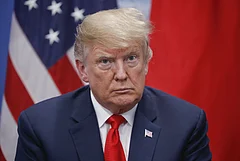
Trump has nevertheless claimed that Washington now controls the strait.
“I don't trust Iran. I'm the last person who trusts Iran. They've lied to me constantly. We have total control over the Strait of Hormuz right now. They don't have control. We have total control. We own it. And at some point, maybe they'll do something and then they get blown away. Right now, we're in a very good position...”
Iran has rejected that assertion. Mohsen Rezaie, the newly appointed head of Iran’s Supreme National Security Council, told China’s ambassador to Tehran, Cong Peiwu, that the strait would remain closed until the US changed its behaviour and accepted Iran’s conditions.
Those conditions include the lifting of sanctions, the release of frozen Iranian assets and compensation for attacks. Rezaei has also called for an end to the US naval blockade on Iranian ports and a region-wide ceasefire, including in Gaza and Lebanon.
The stakes extend well beyond the military confrontation. During peacetime, roughly one-fifth of global oil and natural gas shipments pass through Hormuz. Disruption to the route has already pushed energy prices higher and severely reduced commercial shipping.
The United Kingdom Maritime Trade Operations has reported that shipping remains at reduced levels, with attacks and harassment continuing as Iran and the US maintain blockades in and around the waterway. Al Jazeera has also reported that commercial shipping remains severely disrupted.
Kpler data cited by Reuters showed that only eight vessels transited Hormuz on Tuesday, below the 10-day average of about 12 and the lowest daily figure since August 5. Before the war, around 130 ships crossed the strait each day.
Why is Bab al-Mandeb also becoming a concern?
The conflict’s maritime fallout has now extended to another strategic passage: the Bab al-Mandeb Strait, at the entrance to the Red Sea between Yemen and the western coast of Saudi Arabia.
On Tuesday, the US military said a Navy MH-60 helicopter fired two Hellfire missiles at the Panama-flagged M/V Vela Nova in the Gulf of Oman. According to US Central Command, the vessel was headed towards an Iranian port and had allegedly attempted to violate the US blockade of Iranian ports after ignoring warnings. The missiles struck the ship’s engine room and disabled its steering gear. No casualties among the crew were reported.
Hours later, six people were reportedly killed in a Houthi attack on the Egyptian-owned Tihamah in the Bab al-Mandeb Strait. Four crew members and two Yemeni rescuers who had responded to the attack were killed, while 10 others were injured.
The Houthis have not directly claimed responsibility for the attack. Houthi-affiliated media later reported that the ship was carrying Saudi military equipment.
The deaths are being described as the first fatalities from Houthi attacks on shipping since the US-Israel war on Iran began. Saudi Arabia has also announced a new maritime alliance aimed at securing the waterway.
Bab al-Mandeb is important to global energy trade in its own right. About 11 per cent of global oil and 8 per cent of global liquefied natural gas trade passes through the strait.
Disruption at both chokepoints has therefore added to the pressure on regional shipping and global energy markets.
According to Al Jazeera, the attacks indicate that the conflict is continuing to affect major maritime routes even as regional countries try to keep diplomatic channels open.
What is happening in the Oman and Pakistan talks?
There are still diplomatic efforts under way, but the central disagreement over Hormuz has proved difficult to resolve.
Iranian Foreign Minister Abbas Araghchi said last week that negotiations with Oman over the future management of the strait, including new shipping lanes, had made progress and entered their “final stages”.
Iran says it is not negotiating directly with the US over the management of Hormuz. Instead, it is discussing the issue with Oman, whose territorial waters also extend into the strait. Tehran has proposed sharing management of the waterway with Muscat.
On Tuesday, Qatar’s foreign ministry spokesperson Majed al-Ansari said he had received positive messages from both Tehran and Muscat about reopening Hormuz.
But the earlier attempt at a broader arrangement failed.
An interim Memorandum of Understanding brokered by Pakistan and Qatar in June included an understanding that Iran would keep Hormuz open for at least 60 days. Its wording was not clear enough to settle the question of who would control the waterway, and disagreements over that issue eventually contributed to the agreement falling apart. Iran subsequently fired on several ships using a route through the strait that it had not approved.
Pakistan is now trying to revive the wider diplomatic process. Interior Minister Mohsin Naqvi travelled to Tehran on Tuesday to meet Iranian officials and encourage Tehran to resume negotiations with Washington under the June framework, which is due to expire next week.
The visit was Naqvi’s sixth trip to Iran as part of efforts to end the war.
Can diplomacy still prevent another escalation?
The latest attacks show that the military confrontation has not disappeared, but neither have diplomatic efforts.
Trump has in recent days demanded compensation from Iran for deaths and injuries linked to conflicts and attacks over several decades. Iran, meanwhile, has expanded its conditions for reopening Hormuz and warned that it will not do so unless Washington changes course.
There are also concerns about the ability of the US to sustain the military campaign. US media reports have suggested that Washington could be running short of some weapons, particularly air-defence interceptors used in Patriot and Terminal High Altitude Area Defense systems. Trump and other US officials have denied that the US is facing such shortages.
Iran has also signalled that it could widen the geographical scope of the conflict. An Islamic Revolutionary Guard Corps adviser said Tehran was developing the capability to conduct operations on “enemy soil”, saying this would be used when ordered and considered necessary. Until now, Iran has largely targeted US military assets and energy infrastructure in neighbouring Gulf states and Jordan.
The competing signals make the diplomatic outlook difficult to read. The US and Iran are continuing to communicate through regional intermediaries, while military activity and public rhetoric are becoming more confrontational.
For analyst Negar Mortazavi, the central question is whether those statements are simply negotiating positions or genuine red lines. Speaking to Al Jazeera, Mortazavi said that if both sides are prepared to compromise, there remains a route towards ending the conflict and reopening Hormuz. If they are not, the strait could remain restricted and the confrontation could become a prolonged conflict.
For now, Hormuz remains the key test. Progress in the Oman talks could help reopen the waterway and create space for wider US-Iran negotiations. But unless Tehran and Washington can resolve their differences over the strait’s management and Iran’s wider conditions, restrictions on shipping and the broader confrontation could continue even while diplomatic channels remain open.















