



China said the India border situation is generally stable, while also saying it does not see Arunachal Pradesh as part of India.
The statement follows a second round of Corps Commander-level talks on 24 November aimed at engagement protocols and reducing friction on the LAC in Arunachal before winter.
Beijing has used the same phrase after earlier clashes and tensions, and India says peace on the border is fundamental to the wider relationship.
Two words do a great deal of work in Beijing's vocabulary: "generally stable". On Thursday, China said the situation along its border with India is generally stable, while its defence ministry also reminded everyone that it does not see Arunachal Pradesh as part of India. The reassurance and the reservation came in the same breath, which is how most statements about this frontier are made.
What Beijing Said, And What The Talks Did
The remarks follow another round of talks on November 24, meant to cool tensions along the Line of Actual Control in Arunachal Pradesh. It was the second round of Corps Commander-level talks, with the Indian side led by Lieutenant General Girish Kalia, who heads the Army's III Corps at Dimapur. The aim was to set clear engagement protocols between the two militaries, reduce friction between patrols, and make sure local confrontations do not grow into wider tensions.
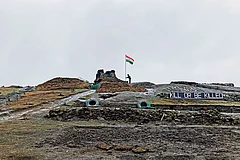
The talks came before the onset of the harsh Himalayan winter, and both sides continue to hold substantial troop deployments in the eastern sector. It is unclear whether any new protocols will take effect before winter.



A Phrase With A Long Memory
The words are a Beijing habit. In December 2022, China's foreign ministry described the border as "generally stable" days after troops clashed at Tawang in Arunachal Pradesh, injuring men on both sides. In 2023, the then defence minister said conditions were "stable overall", in sharp contrast to New Delhi's more pessimistic view.
The most recent use before this one came in August. ThePrint had reported that Indian and Chinese patrols came face to face in late July near Taksing, in Arunachal's Upper Subansiri district. An Indian defence spokesperson called the reports "unsubstantiated and uncorroborated". India's Ministry of External Affairs said it considers border matters "most serious" and that the state of the border will reflect on the wider relationship. Beijing's reply, from foreign ministry spokesperson Guo Jiakun, was that the situation was generally stable, and that he declined to comment on reports of stepped-up military activity.
So the phrase works as a ritual. It is said whether or not a clash has taken place, and it is always followed by a reference to talks. In August, Guo cited the 36th meeting of the border consultation mechanism, where both sides agreed to keep communication open through diplomatic and military channels.

What "Stable" Leaves Out
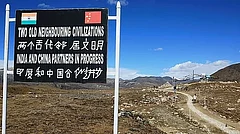
The problem is the map. Beijing claims the whole of Arunachal Pradesh, which it calls Zangnan or "South Tibet", while India treats the McMahon Line as its border. The two sides' claims of where the LAC lies differ in several places, which lets patrols on each side enter areas the other claims. India's foreign ministry has said the LAC periodically becomes disturbed when Chinese forces diverge from established patrolling patterns, and that unilateral attempts to alter the status quo are unacceptable. In August, China also rejected India's announcement of "standard" names for 27 places in Arunachal, saying Zangnan is Chinese territory.
A scholar quoted by Al Jazeera put the larger picture plainly: India-China relations are best described as "managed competition rather than genuine normalisation".
In the vocabulary of this border, "stable" describes the state of the conversation more than the state of the ground. The talks continue, the winter is coming, and both armies are still there.








