






Heavy rain sent a surge of water and debris through Bright Angel Creek, killing two people and prompting nearly 80 rescues.
The Dragon Bravo wildfire burn scar and drought left the steep landscape more vulnerable to rapid runoff.
El Niño and warming temperatures may have helped intensify the rainfall behind the flash flood.
Two people died and nearly 80 others were rescued after intense rainfall triggered a flash flood in Arizona’s Grand Canyon over the weekend, with drought, wildfire damage and conditions linked to a warming climate adding to the risks posed by the storm.
The flooding struck the Bright Angel Creek area of the national park on Saturday, sending water and debris through trails and infrastructure. One person remained unaccounted for after the incident.
Flash floods are a known risk in the Grand Canyon, particularly during the monsoon season between June and September. Heavy thunderstorms can send large amounts of water through the canyon’s steep and narrow terrain within a short period, even when weather conditions appear calm earlier in the day.
According to The Guardian, the latest flooding occurred in an area still affected by the Dragon Bravo wildfire, which burned nearly 150,000 acres (60,700 hectares) in 2025 and destroyed the historic Grand Canyon Lodge.
How The Wildfire And Drought Increased The Risk
The Dragon Bravo fire may have altered the landscape in ways that made intense rainfall more hazardous. After severe fires, vegetation that would normally slow and absorb rainfall can be lost, leaving slopes more exposed to rapid runoff.


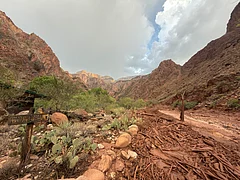
It remains unclear how directly the wildfire contributed to Saturday’s flooding. However, federal assessments of the area had already identified an increased risk of debris flows around Bright Angel Creek.
A Department of Interior team tasked with assessing post-fire threats to “life, property, and critical natural and cultural resources” estimated that runoff risks upstream of Phantom Creek were between two and eight times higher.
The team also warned about the dangers facing people using trails in the affected area, stating: “Hikers on the trails within or downslope from the burned area will experience frequent stabilization issues, especially hazardous rockfall for at least the first year.”
The Guardian reported that park officials had been concerned earlier in the summer that intense storms could create dangerous conditions around areas affected by the fire.
Hikers who were later evacuated by helicopter told the Arizona Republic that the creek turned black as large amounts of runoff entered the water. Bridges and other infrastructure were also overwhelmed by the rushing water.
The region is also dealing with severe drought. The Grand Canyon area and the wider Colorado River basin have experienced prolonged dry conditions, leaving parts of the landscape hard and sparsely vegetated.
When intense rainfall arrives suddenly over steep terrain, water can run off rapidly instead of being absorbed gradually. The canyon’s topography can further concentrate that flow, allowing water to move quickly through its narrow channels.
Did El Niño Make The Storm Stronger?
Another factor is El Niño, a natural climate pattern that has sharply increased sea surface temperatures in the Pacific Ocean and can affect weather systems around the world. In the south-western US, increased atmospheric moisture associated with the phenomenon can contribute to heavier rainfall.
Park Williams, a hydroclimatologist at the University of California, Los Angeles, told the Associated Press that in the south-west, the additional water vapour brought by El Niño can be released as rainfall.
The Guardian reported that scientists are also examining the event in the wider context of a warming climate, which is expected to increase the intensity of some extreme weather events.
Daniel Swain, a climate scientist at the California Institute for Water Resources, said the connection between human-caused climate change and the heavy Arizona rainfall was moderately strong.
Swain and his colleagues recently published research in the journal Weather and Climate Extremes showing that short-duration, intense summer rainfall events in the western US have become about 10% stronger since 2000.
Scientists describe situations in which several environmental pressures combine to increase the impact of an extreme event as “compound extremes”. A heavy storm falling on terrain affected by drought and wildfire can produce different consequences from the same amount of rainfall falling on healthier, more vegetated ground.
The Guardian reported that researchers expect overlapping climate risks to become increasingly important as global temperatures rise, potentially placing greater pressure on communities and emergency services dealing with extreme weather.















