China’s new exit-entry regulation gives authorities wider scope to assess travellers through the lens of national security, identity and information
For Tibetans abroad, foreign passports may not eliminate scrutiny linked to their political activities, overseas associations or family ties in Tibet
The broader concern is whether securitised border controls could encourage self-censorship and make family visits contingent on political expression
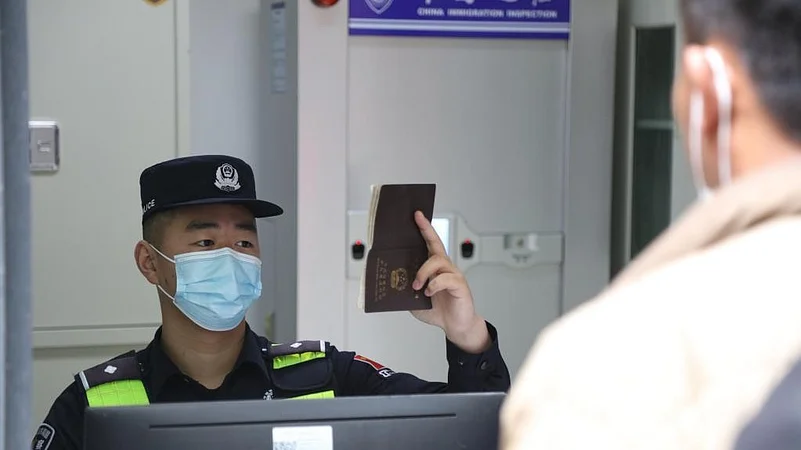
On July 31, Chinese Premier Li Qiang promulgated the State Council’s new Regulation on Exit and Entry Administration, which will take effect on September 15, 2026. Beijing presents the regulation as an administrative measure intended to standardise exit and entry procedures, protect the lawful rights of travellers, and safeguard China’s sovereignty, security and development interests. However, its significance extends beyond procedural reform. The regulation places national security more firmly at the centre of decisions about who may leave or enter China and what information authorities can require when assessing a traveller’s identity, purpose and circumstances.
What makes the regulation significant is the way it brings together security-risk prevention, information verification and restrictions on mobility. Its provisions give immigration and other authorities greater scope to question visitors, verify their identity and stated purpose, and require relevant documents, electronic data and other information.
This creates a significant rule-of-law concern. The greater the role of national security in decisions affecting mobility, the greater the possibility that individuals may face restrictions without being given a clear explanation of the grounds for those decisions. The result is a system in which the boundaries between immigration administration and national-security enforcement become increasingly difficult to distinguish.



The regulation therefore reflects a broader shift in how China governs international movement. Travel is no longer treated simply as a matter of passports, visas and border procedures. It is increasingly connected to questions of identity, information, overseas conduct and national security. The issue is not simply whether the regulation introduces any single new restriction, but whether it strengthens an existing system in which a person’s ability to cross China’s borders can be assessed through a much wider security and political lens.

Implications for Tibetans
Tibetans have long faced significant restrictions on international travel, passport access, communications and contact with people outside China. UN human-rights mechanisms and international human-rights organisations have documented restrictions affecting Tibetans seeking passports and travelling abroad, as well as cases involving questioning, searches, detention and punishment connected to religious activities and communications with people outside China.
The concern lies instead in how its broader security provisions may interact with existing practices in Tibet, where political expression, religious activity, overseas contacts and perceived foreign influence are already subject to close scrutiny.
This is particularly significant for Tibetans who have left Tibet, acquired foreign citizenship, and later wish to return to visit parents, relatives or friends. A foreign passport establishes a different legal nationality, but it does not necessarily erase an individual’s history in the eyes of Chinese authorities. Previous participation in demonstrations, work with Tibetan organisations, political advocacy, activities in India or public criticism of Chinese policies may remain relevant to how a traveller is assessed.
Migmar, a Tibetan who resides in Canada, describes this uncertainty: “With the introduction of the new Exit and Entry regulation, many of my friends are now thinking twice about returning to Tibet because of their previous involvement in the Free Tibet movement and their activities in India. We know that having a foreign passport does not necessarily mean that our past is forgotten. For Tibetans, our identity, our families in Tibet, and our political activities can all become connected in the eyes of the Chinese authorities. That makes the possibility of returning home much more uncertain.”
The concern extends beyond what happens at the border. The possibility of facing consequences upon returning to China can influence how Tibetans behave while living abroad.
“Sometimes this fear creates a kind of self-censorship,” Migmar says. “I want to come out onto the streets, join demonstrations, and speak openly against Chinese policies. I want to stand up for the cause I believe in. But then I think about what could happen if I ever want to return to Tibet and see my family. That thought holds me back. It is painful to feel that exercising your right to speak and protest could eventually mean losing the possibility of seeing your own parents or relatives. There are many Tibetans who continue to restrict their own speech and activities because of these concerns. This is one of the ways transnational repression can affect people, even when they are living outside China.”
This illustrates one of the most consequential effects of securitised border governance: its reach does not stop at the border. If Tibetans abroad believe that political expression, participation in demonstrations or association with Tibetan organisations could jeopardise their ability to return home, the result can be self-censorship without any formal prohibition being imposed. The prospect of seeing one’s parents or relatives can become an unintended but powerful constraint on political expression.
For Tibetans, this creates a particularly difficult choice. They may enjoy formal rights to political expression in the countries where they live, while remaining conscious that exercising those rights could affect their ability to visit family members in Tibet. In this sense, the consequences of China’s border policies can extend into democratic societies, influencing behaviour well beyond Chinese territory.
Foreign Passports Do Not Necessarily End the Risk
The issue is also relevant to Tibetans living in Canada, the United States, Australia and European countries, including those who may benefit from visa-free or simplified entry arrangements. Visa-free access allows ordinary passport holders to enter China for up to 30 days for tourism, business, family visits, exchanges or transit, but it does not necessarily shield Tibetan travellers from scrutiny once they enter the country.
Some Tibetans have reported prolonged questioning, detention, verbal harassment and discriminatory treatment at Chinese airports or during their stay, particularly when authorities are aware of their previous political activities, participation in demonstrations or connections with the Tibetan exile community.
One Tibetan traveller from Australia, who requested anonymity because of concerns about possible repercussions, described being surprised that Chinese authorities appeared to possess detailed information about his previous activities. Despite holding a valid Australian passport and the necessary travel documents, he was subjected to extensive questioning concerning his background, contacts and past activities.
His experience points to an important distinction between formal entry rights and practical freedom of movement. Possessing a foreign passport may establish a person’s legal status as a foreign national, but it does not necessarily remove the political significance that Chinese authorities may attach to their Tibetan identity, family background, previous activities or overseas associations.
For many Tibetans, this uncertainty begins before they even travel. The possibility that previous political engagement, public statements, participation in protests or connections with Tibetan organisations may remain known to Chinese authorities can itself discourage travel. Visa-free access, therefore, should not automatically be equated with unrestricted mobility. A person may have the formal ability to enter China while remaining uncertain about how they will be treated after arrival.

From Border Control to Transnational Repression
The broader policy issue is the interaction between border control and transnational repression. Exit restrictions, entry decisions, questioning, information gathering, surveillance and monitoring of overseas communities do not need to be contained within a single legal instrument to produce a cumulative effect. When these mechanisms operate alongside restrictions on political and religious expression inside Tibet, they can create a wider system in which physical mobility and political behaviour become closely connected.
This is particularly significant because many Tibetans abroad maintain strong family relationships inside Tibet. For those who left Tibet decades ago, returning to see an elderly parent or attending a family funeral may represent a deeply personal and long-awaited connection. If the perceived risk of returning is shaped by political activity undertaken abroad, family reunion becomes entangled with political considerations.
That raises a fundamental question about the meaning of integration in China’s ethnic governance framework. The Chinese state promotes greater integration among ethnic groups within China while simultaneously maintaining extensive controls over contacts between Tibetan communities and people outside the country. Integration should not require the weakening of legitimate family, cultural, religious and social relationships across borders. Nor should maintaining those relationships require individuals to limit their lawful political expression.
The new regulation does not explicitly prohibit Tibetans from returning to Tibet, nor does it establish that political activity abroad automatically constitutes grounds for refusing entry or restricting movement. Its significance is more structural. It strengthens a regulatory framework in which travel, identity, information, overseas conduct and national-security interests can intersect.
For Tibetans, the consequence is a form of uncertainty that extends beyond immigration administration. A person may hold a foreign passport, live in a democratic country and have every formal document required for travel, yet still question whether returning home could expose them or their family to scrutiny.
The policy debate should therefore distinguish between legitimate border security and the use of security mechanisms in ways that create political pressure. States have a legitimate responsibility to prevent trafficking, combat transnational crime and protect travellers. But security powers should not become so broad or opaque that individuals begin regulating their own speech and political participation because they fear losing access to their families.
The ability to visit one’s parents should not depend on whether a person has attended a demonstration, worked with a Tibetan organisation, spoken publicly about Tibet or participated in political advocacy.
The central question raised by China’s new exit and entry framework is therefore not simply whether Tibetans can obtain passports or cross an international border. It is whether they can maintain ordinary family relationships without having to choose between political expression abroad and the possibility of returning home.
A government has a legitimate right to protect its borders. But when border security becomes sufficiently broad that people begin asking whether speaking freely today could prevent them from seeing their parents tomorrow, its consequences have moved well beyond immigration administration.