India did not join eight other members of the Shanghai Cooperation Organisation (SCO) in reaffirming support for China’s Belt and Road Initiative (BRI) at the grouping’s summit in Bishkek, preserving its longstanding position against endorsing the Chinese connectivity framework.
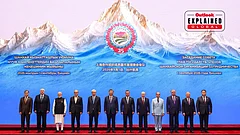
The Bishkek Declaration, adopted at the 26th SCO Summit on Tuesday, recorded support for the BRI from Belarus, Iran, Kazakhstan, Kyrgyzstan, Pakistan, Russia, Tajikistan and Uzbekistan. India was not included among the countries supporting the initiative. The SCO said the summit adopted 28 outcome documents covering security, economic, cultural and organisational cooperation.
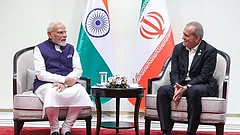
The omission came as Prime Minister Narendra Modi stressed that regional connectivity should respect the sovereignty and territorial integrity of countries involved. In his address, Modi said India supports connectivity that links markets and facilitates trade, but argued that such projects must follow these principles.

India’s Position
India’s position on the BRI has remained consistent since the initiative was launched. In a 2019 response to Parliament, the Ministry of External Affairs said the government's opposition was linked particularly to the inclusion of the China-Pakistan Economic Corridor (CPEC) as a flagship BRI project.
The MEA said CPEC passes through parts of Jammu and Kashmir under Pakistan’s illegal occupation and therefore raises questions of India’s sovereignty and territorial integrity. It also said connectivity initiatives should be based on universally recognised international norms.
New Delhi has consequently drawn a distinction between supporting regional connectivity and endorsing the BRI itself. The MEA has previously said India supports greater physical connectivity and has pursued projects with other countries, while maintaining that connectivity projects must respect sovereignty and territorial integrity.


A Repeated Pattern
India’s position at Bishkek follows an established pattern in SCO documents.
The organisation’s earlier declarations have similarly recorded BRI support from several member states without India joining the endorsement. The 2024 Astana Declaration, for instance, listed Belarus, Iran, Kazakhstan, Kyrgyzstan, Pakistan, Russia, Tajikistan and Uzbekistan as reaffirming support for the BRI. India was not included in that formulation.
This has allowed the SCO to retain a common position among most of its members while leaving room for India’s separate position on the initiative.
The distinction is particularly important because connectivity remains one of the three areas India has highlighted in its engagement with the SCO, alongside security and opportunity. Modi said at Bishkek that the organisation should turn its shared geography into shared opportunities and work towards practical outcomes in these areas.

China’s Push
The BRI nevertheless remains central to China’s economic agenda within the SCO. President Xi Jinping told the summit that China views the SCO as a priority area for promoting high-quality Belt and Road cooperation.
Xi proposed deeper cooperation in trade, investment, connectivity, energy, resources, digital economy and green industries, alongside new China-SCO initiatives.
The contrast at Bishkek therefore reflects a broader difference within the SCO. China and several other members continue to promote the BRI as a vehicle for regional economic and infrastructure cooperation, while India supports connectivity in principle but does not endorse the BRI framework.
For New Delhi, the issue remains tied to sovereignty. Its decision not to join the BRI endorsement at Bishkek does not amount to a rejection of SCO connectivity initiatives, but continues its refusal to endorse a framework that includes CPEC as one of its flagship projects.