The 2023 Women’s Reservation Act provides for 33% reservation in the Lok Sabha and state Assemblies, but its implementation is linked to a future Census and delimitation exercise.
A separate delimitation-linked constitutional amendment failed in the Lok Sabha in April 2026, after receiving 298 votes against the 352 required.
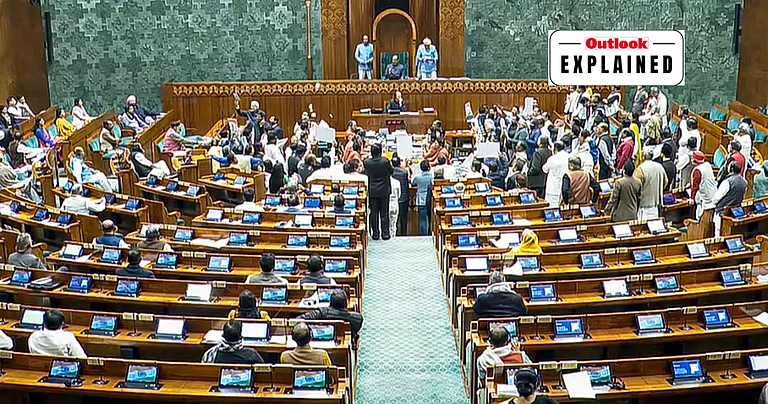
With Parliament set to reconvene from November 30, the government is seeking support beyond the NDA while Opposition parties question the proposed delimitation framework and the timing of the special sitting.
Women’s Reservation Bill Explained: Why The 33% Quota Is Still Stuck, And What Happens Next
India’s 33% women’s reservation law was passed in 2023, but its implementation remains tied to Census figures and delimitation as the government prepares to revive the constitutional changes that failed in Parliament in April.

Summary
The promise of reserving one-third of seats in Parliament and state Assemblies for women has survived a historic legislative victory, a constitutional setback and months of political wrangling. Now, with Parliament set to reconvene from November 30, the Narendra Modi government is preparing for another attempt to move the process forward.
But the question is no longer simply whether women should have greater representation in legislatures. It is how the reservation will be implemented, what role delimitation will play, and whether the government can secure the numbers needed to pass the proposed constitutional changes.
What Does The Women’s Reservation Law Actually Provide?
The Constitution (106th Amendment) Act, 2023, popularly known as the Nari Shakti Vandan Adhiniyam, provides for reserving approximately one-third of seats for women in the Lok Sabha, state Legislative Assemblies and the Delhi Assembly. The quota also includes women from Scheduled Castes and Scheduled Tribes within the seats already reserved for these communities. It was passed by Parliament in September 2023, marking a significant legislative step towards addressing the under-representation of women in elected bodies.
However, passage of the law did not mean that one-third of parliamentary and Assembly seats would immediately be reserved for women. Article 334A, inserted through the amendment, links its implementation to a delimitation exercise conducted after the publication of figures from the first Census undertaken after the law came into force.
In other words, the constitutional provision exists, but its implementation is conditional on two processes: the publication of the relevant Census figures and a subsequent delimitation exercise.
Delimitation is the process of redrawing constituency boundaries and determining how many seats each area or state will have in elected legislatures. It is intended to account for changes in population and ensure that constituencies have broadly comparable representation.
But in a country as large and diverse as India, the exercise carries political consequences: a redistribution of seats could alter the relative strength of states in the Lok Sabha. This is particularly sensitive for southern states, which have raised concerns that states with stronger population growth could gain a greater share of parliamentary representation at their expense.
Advertisement
The government’s proposed constitutional changes seek to address the delay by linking the quota's rollout to a fresh delimitation framework and an expansion of the Lok Sabha. The proposal under discussion would raise the House’s maximum strength from 543 to 850, while the government is understood to be considering a formula that increases seats by 50% across states. Another option being discussed is retaining the existing proportion of representation based on the 1971 Census. No final decision on the formula has been announced.
Why Did The Government’s Earlier Attempt Fail?
The government’s attempt to push through the delimitation-linked constitutional changes suffered a setback on April 17, 2026, when the Constitution (131st Amendment) Bill failed to secure the required majority in the Lok Sabha. Of the 528 members who voted, 298 supported the legislation and 230 opposed it.
Advertisement
The government needed 352 votes to meet the two-thirds requirement among those voting, leaving it 54 votes short. The related Delimitation Bill, 2026, and the Union Territories Laws (Amendment) Bill, 2026, were subsequently held back.
The defeat was not a vote against the 2023 women’s reservation law itself. The legislation that failed was a separate constitutional amendment linked to delimitation and the proposed expansion of the Lok Sabha. The distinction matters: political parties may support the principle of reserving seats for women while disagreeing over the mechanism, timing and consequences of the proposed changes.
Opposition parties have questioned the government's approach to delimitation, arguing that women's empowerment should not be used to push through a wider restructuring of parliamentary representation.
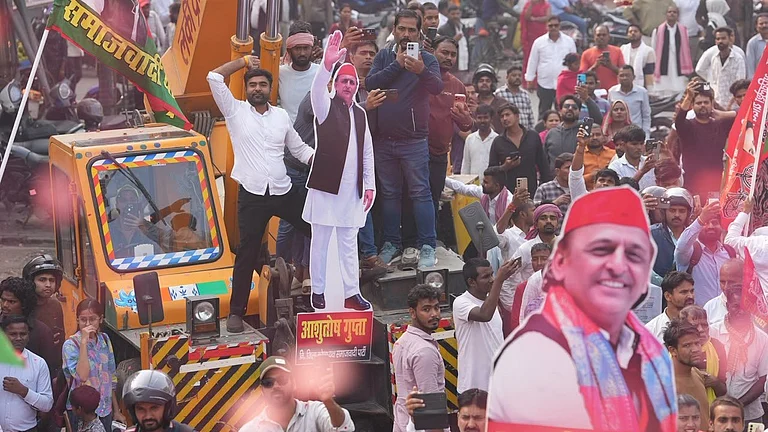
Prime Minister Narendra Modi has, meanwhile, blamed the Opposition for the April defeat. In a signed article published on Constitution Day, he described the failure of the legislation as a matter of shame and accused the Congress of obstructing women's political empowerment. He said no force could prevent the government from ensuring justice for women. The Congress and other Opposition parties have rejected the government's framing, questioning both the timing of the special sitting and the legislative strategy surrounding delimitation.
Advertisement
Can The NDA Get The Numbers This Time?
The government’s immediate challenge is arithmetic. A Constitution amendment under Article 368 requires a majority of the total membership of each House and the support of at least two-thirds of members present and voting. The NDA's strength in the Lok Sabha is estimated at around 298 MPs. That leaves the government dependent on support from outside its alliance, or on a reduction in the number of Opposition MPs participating in the vote.
The government is exploring support beyond its existing allies. The potential tally could rise if regional parties, including the DMK, the Nationalist Congress Party (Sharadchandra Pawar) and the YSR Congress Party, back the proposal.
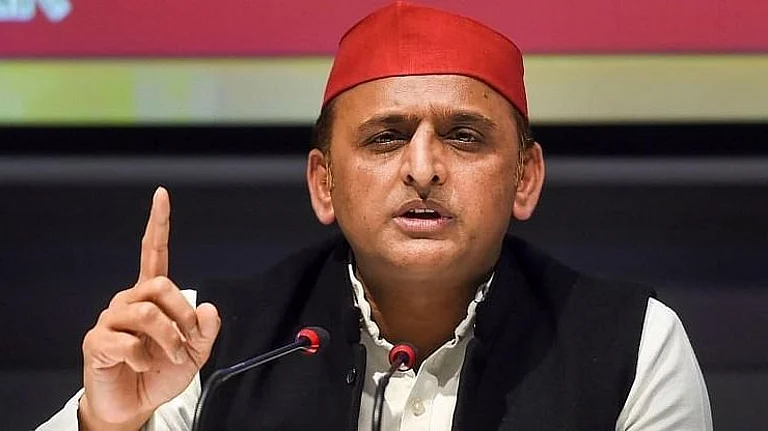
NCP (SP) leader Supriya Sule has indicated that her party could consider supporting the legislation if it provides for a uniform 50% increase in Lok Sabha seats for every state. The support of such parties, however, is conditional and cannot be treated as secured votes.
Advertisement
Another possible route is to secure the abstention or absence of Opposition MPs, which would reduce the number of members present and voting and, consequently, the two-thirds threshold. The government could seek to persuade Opposition MPs to stay away or walk out rather than vote against the Bill. But this is not a guaranteed route: the constitutional requirement of a majority of the total membership of the House also applies, and the precise numbers will depend on attendance and voting when the legislation is taken up.
The political contest is now set to move back to Parliament. The Lok Sabha is scheduled to reconvene on November 30, followed by the Rajya Sabha on December 2, with the sittings expected to conclude by December 3, subject to the business before the Houses. The government has described the proposed sitting as one to transact essential government business; the exact legislative agenda remains to be formally established. Opposition parties have questioned the short-notice sitting and the decision to reconvene Parliament rather than hold a regular Winter Session.
For women waiting to see the constitutional promise translate into seats in legislatures, the next test is not merely another parliamentary vote. It is whether the government and Opposition can agree on a framework that expands representation without deepening disputes over the balance of power between states. The 2023 law put the principle into the Constitution. The political struggle now is over the route to making it a reality.
Published At: