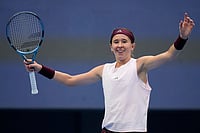
Sahibzada Farhan scored 89 off 53 balls in his first match as Pakistan captain
Pakistan overhauled Sri Lanka’s 182 in the first T20I in Rawalpindi
Maaz Sadaqat struck a quick half-century and added 92 with Farhan
Sahibzada Farhan celebrated his first match as Pakistan captain with a 53-ball 89 as his side overhauled Sri Lanka’s 182 in the first T20I in Rawalpindi. Sri Lanka won the toss and chose to bat, but Pakistan’s chase quickly took control of the game and turned the target into a modest one.
Pakistan raced to 70 in the powerplay and barely let up after that. Fakhar Zaman’s brisk cameo set the tone before Farhan and Maaz Sadaqat took charge. Sadaqat needed only 28 balls to reach his half-century and added 92 with Farhan, a stand that broke Sri Lanka’s resistance and drove Pakistan to a comfortable win.
Pakistan had already laid the platform with the ball. Their attack kept dragging Sri Lanka back despite conceding 29 extras, and Mohammad Imran’s debut spell of 2-21 stood out. Lahiru Udara’s 91 off 55 kept Sri Lanka in the contest for much of the innings, but he received too little support from the other end.
Powerplay Contrast
The game turned early.
Sri Lanka’s powerplay never caught fire. Kamil Mishara took nine deliveries to get off the mark and by the end of the fourth over Sri Lanka were going at a run-a-ball and had already lost two wickets. Their innings never fully recovered from that slow start.


Pakistan made the difference plain in the chase. They matched Sri Lanka’s score from four overs in just 2.2 overs, then surged further by the end of the sixth over as Farhan and Fakhar attacked from the start.
Sri Lanka struggled for timing through those first six overs. There were several plays and misses and too many low-percentage shots. They managed a small recovery in the final two overs of the powerplay, but the delay cost them and left runs unused on a surface that rewarded clean batting.
Imran's Bright Debut
Imran impressed at once.
Mohammad Imran made his T20I debut for Pakistan in Rawalpindi and, having also made his Test debut in that same game, he ended up as a footnote there before finding his feet in T20I cricket today. Razaullah had arrived with more attention after his stunning Test debut, which had already pushed him into Pakistan’s white-ball plans, but Imran produced the sharper impact in this format.
He opened the bowling with Naseem Shah and proved the more effective of the two in the powerplay. Imran gave away just one run in his first over and conceded 19 across his three overs in that phase, using sideways movement that more than made up for a lack of pace.
Farhan trusted him again when Sri Lanka tried to build through the middle overs. The captain brought him back at the halfway stage of the innings and Imran struck with his first ball on return. He gave away only two runs in that over, checked Sri Lanka’s progress again and completed a strong debut spell.
Lahiru Udara celebrates his fifty, Pakistan vs Sri Lanka, 1st T20I, Rawalpindi, October 9, 2026
Udara's Lone Resistance
Udara fought alone. Sri Lanka will want to move quickly on from this game, but to wipe it completely from the record would be a disservice to their opener.
Confronted with a decent bowling attack on an off-day for his fellow batters, Udara almost batted through the Sri Lankan innings, playing just about every role a batter can in a T20 innings.
Lahiru Udara made 91 off 55 and almost carried Sri Lanka through the full innings. He moved through different roles as the innings demanded, beginning as the aggressor, then holding the innings together, then accelerating again when wickets and pressure built around him.
The support was thin. Kamindu Mendis and Dasun Shanaka gave him only brief help, and Sri Lanka looked a batter short as the innings moved towards the finish. That left Udara with the task of keeping the scoring rate up while also stopping a collapse.
Once he holed out in the penultimate over, the end came quickly. Sri Lanka lost three wickets in five balls and the innings faded away. On a pitch where weak batting was always likely to be exposed, Udara’s lone hand was not enough.