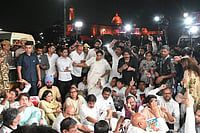
CJP leaders Abhijeet Dipke, Ashutosh Ranka and Saurav Das have questioned Delhi Police’s refusal to allow their October 10 protest.
The party is seeking Chief Election Commissioner Gyanesh Kumar’s resignation.
CJP leaders have invoked Article 19 and defended their right to peaceful assembly.
Cockroach Janta Party (CJP) leaders Abhijeet Dipke, Ashutosh Ranka and Saurav Das have questioned Delhi Police’s decision to deny permission for their October 10 protest at Jantar Mantar, asking why demonstrations were allowed in Mumbai and Bengaluru but restricted in the national capital.
Speaking at the India Today Conclave Mumbai 2026 on Friday, Dipke questioned whether protesters were being subjected to different rules in Delhi.
“If we can protest in Mumbai, if we can protest in Bangalore, then why can’t we do it in Delhi? Is Delhi running under some other constitution?” he asked.
The CJP has called for a protest demanding the resignation of Chief Election Commissioner Gyanesh Kumar over alleged irregularities in the Special Intensive Revision (SIR) of electoral rolls. Delhi Police denied permission, citing procedural requirements, previous law-and-order concerns and potential disruptions to traffic and public safety.

‘Close The Country, Close The Election’
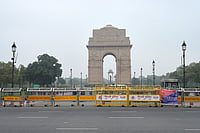
Dipke invoked Article 19 of the Constitution, which guarantees freedoms including the right to assemble peacefully, and questioned restrictions on access to Jantar Mantar, a designated protest site.


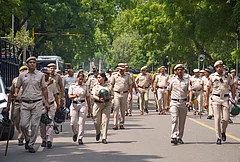

He criticised the closure of Metro stations, train cancellations and other security measures ahead of the demonstration.
“Close the country. Close the election. Close the country,” he said, taking aim at the scale of the restrictions.
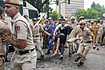
Dipke also questioned the deployment of security personnel from Jammu and Kashmir and areas affected by Left-wing extremism, arguing that such measures were disproportionate to a protest demanding the resignation of an election official.
“He is a bureaucrat. He is not a minister. He is not the Prime Minister. He is not the President,” Dipke said, referring to Kumar.
Ranka said the dispute over access to Jantar Mantar had overshadowed the issues the organisers wanted to raise against the Election Commission.
“Today the situation in this country has become such that we have to protest to protest at a designated protest site,” he said.
Ranka argued that citizens should be able to express disagreement with the government through peaceful and democratic means. He alleged that the Election Commission was working in the interests of the BJP and claimed that the party’s defence of Kumar, along with the detention of protesters in BJP-ruled states, reinforced the organisers’ suspicions. These were allegations made by Ranka, not independently established findings.
The proposed demonstration follows an earlier CJP protest at Jantar Mantar in July against the NEET-UG paper leak, which escalated into clashes and police action.
At a sperate event held in Mumbai, Dipke took another jibe at the government saying that during the emergency "at least trains were running on time”.

CJP Informed Police, Did Not Seek Permission
Das said he had approached Delhi Police to inform the authorities about the planned demonstration rather than apply for permission.
“I want to clarify that I did not go to ask for permission. I went to give information,” he said.
According to Das, he submitted a letter on October 7 asserting the organisers’ constitutional right to protest. He said police acknowledged receipt of the letter with a stamp but did not tell him whether the gathering would be permitted.
Das also alleged that no senior police officer met him, unlike during preparations for the July demonstration, when he said he had held several rounds of discussions with senior officers.
He claimed the organisers had offered to cooperate with the police and described the lack of communication as an attempt to discourage young people from joining the protest.
Questioning the requirement of seeking the state’s permission to demonstrate against it, Das invoked Mahatma Gandhi’s Dandi March, asking whether Gandhi would have sought permission from the British authorities before beginning the march.
Delhi Police, meanwhile, has defended its decision by citing the 10-day advance-notice requirement for programmes at Jantar Mantar, alleged violations during earlier demonstrations and the need to protect public safety, traffic movement and the rights of local residents.
The CJP has maintained that the protest would go ahead despite the denial of permission, setting up a confrontation over the planned demonstration and the limits of public assembly in the Capital.