



The Supreme Court said it had not approved any modification to Form 6 and sought records to establish who authorised the disputed changes.
The Election Commission maintains that Form 6 itself was not modified and that the additional declaration was a separate SIR requirement; it removed the declaration from the online form in states where SIR had concluded.
The controversy centres on whether the additional requirements could be introduced without amending the Registration of Electors Rules and whether the EC followed its collective decision-making process.
The Supreme Court on Monday said it had not approved any modification to Form 6, the statutory application used to register as a new voter, raising questions over who authorised additional requirements linked to the Election Commission’s Special Intensive Revision (SIR) exercise.
“Any modified Form 6 has not been approved by us. Let’s be clear. When the record is produced, we would like to see who has modified,” Chief Justice of India Surya Kant said while hearing petitions challenging decisions allegedly taken by Chief Election Commissioner Gyanesh Kumar without the concurrence of Election Commissioners Sukhbir Singh Sandhu and Vivek Joshi.
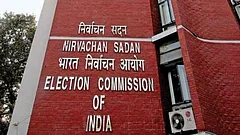
The court issued notice on one of the pleas and tagged it with another petition challenging the functioning of the Election Commission. It has not yet ruled that the alleged changes to Form 6 were unlawful. The immediate issue is whether the changes were authorised and whether the Election Commission followed the statutory procedure for taking such decisions.
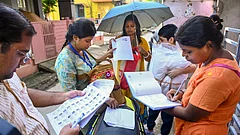


What Is Form 6?
Form 6 is the prescribed application through which an eligible Indian citizen seeks inclusion in the electoral roll as a new voter. It is available to citizens who have attained, or will attain, 18 years of age on one of the four qualifying dates — January 1, April 1, July 1 or October 1 — provided they are ordinarily resident in the constituency and are not otherwise disqualified.
The form seeks details such as the applicant’s name, date of birth, address and other information required for voter enrolment. It is prescribed under the Registration of Electors Rules, 1960.
Applicants can submit Form 6 online or use the statutory offline form.
What Was Added During SIR?
The controversy concerns an additional declaration that appeared alongside the online version of Form 6 on the ECINET portal during the SIR exercise.
The declaration required new applicants to provide details linking themselves, their parents or grandparents to electoral rolls prepared during an earlier intensive revision. Depending on the response, applicants could be asked for information such as a parent’s EPIC number, constituency and state.
The additional declaration was not part of the statutory offline Form 6.
The Election Commission has maintained that Form 6 itself was not amended and that the declaration was an additional document connected specifically to the SIR exercise.
Why Is The Change Controversial?
The dispute is not only over what information applicants were asked to provide but also over who had the authority to introduce the additional requirements.
The issue came into focus after an Indian Express report said Election Commissioners Sukhbir Singh Sandhu and Vivek Joshi had objected to the changes. According to the report, Joshi recorded that the statutory form could not be altered without amending the Registration of Electors Rules, 1960, and Sandhu concurred.
The petition filed by advocate Shailendra Mani Tripathi similarly alleges that requirements relating to an applicant’s ancestry and links to a previous SIR were introduced through the Election Commission’s software without the statutory amendment required under the electoral rules.
The petitioners have argued that the issue is part of a larger concern over whether the Election Commission, as a multi-member body, took decisions collectively.
What Did The Supreme Court Say?
During Monday’s hearing, the bench comprising CJI Surya Kant and Justices Joymalya Bagchi and V Mohana questioned the basis for the alleged modification.
The CJI said the Supreme Court had not approved any modified Form 6 and indicated that the court would examine the records to determine who made the changes.
The bench also stressed that the Election Commission’s decisions have to be taken unanimously or, where there is disagreement, by majority. Justice Bagchi indicated that if the records show that a decision was not taken through the required process, the court could declare it ultra vires.
However, the court has not concluded that the CEC acted unilaterally or that the Form 6 changes were illegal. It has sought responses and records before determining whether the statutory procedure was followed.
What Did The EC Say About The Supreme Court’s Approval?
The controversy intensified after an Election Commission press release on September 26 said that the declaration attached to Form 6 for the SIR had been upheld by the Supreme Court.
The statement referred to the Supreme Court’s May 2026 judgment on the Bihar SIR. The Court had unanimously upheld the Bihar SIR exercise on May 27, holding that adopting a procedure different from routine electoral-roll revisions did not by itself make the exercise unconstitutional.
The Supreme Court’s Monday observation, however, made clear that it had not approved any modification to Form 6. The court is now seeking records to establish what exactly was changed and by whom.
The Election Commission has maintained that the Form 6 declaration was an additional SIR requirement rather than a modification of the statutory form.
What Happened To The Additional Declaration?
The Election Commission subsequently withdrew the additional SIR-related declaration from the online voter enrolment process in states where the SIR had been completed.
The declaration remains available on ECINET in states and Union Territories where the SIR is still underway. In states where the exercise has concluded, applicants are required to fill only the statutory Form 6 prescribed under the Registration of Electors Rules, 1960.
The EC said the additional declaration was meant for the SIR and that, outside the SIR period, the forms prescribed under the 1960 Rules would be used.
What Does Section 18 Say?
The petitioners have also invoked Section 18 of the Chief Election Commissioner and Other Election Commissioners Act, 2023.
The provision says the Commission’s business should, as far as possible, be conducted unanimously. Where members differ, the majority view prevails.
The petitions argue that this means powers vested in the Election Commission cannot be exercised individually by the CEC where the law requires the Commission to act collectively.
The Supreme Court is now examining whether that procedure was followed in relation to Form 6 and other SIR-related decisions.
What Happens Next?
The Supreme Court has sought responses and records from the concerned authorities. It will then examine whether the alleged Form 6 changes were authorised and whether the Election Commission followed the statutory framework governing its decision-making.
For now, the court has not declared the Form 6 changes illegal. Its immediate intervention is narrower: it has clarified that the Supreme Court did not approve a modified Form 6 and wants to establish who made the disputed changes and under what authority.















