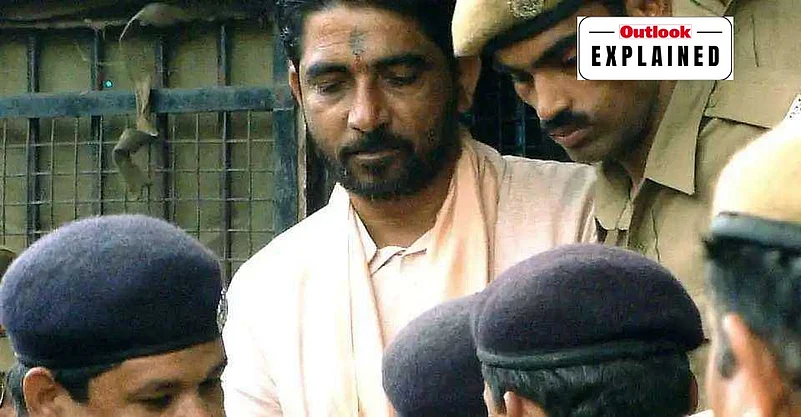
Dara Singh was convicted of burning Australian missionary Graham Staines and his sons, Philip and Timothy, alive in Odisha’s Keonjhar in 1999.
The Sentence Review Board rejected his premature release plea for the sixth time, citing fresh reports and concerns over possible communal disturbances.
The Supreme Court had directed Odisha to decide on the plea after repeated delays and will hear the matter again on September 17.
The Odisha government has rejected the premature release plea of Dara Singh, who is serving a life sentence for the 1999 murder of Australian missionary Graham Staines and his two minor sons. The decision came after the Supreme Court directed the state to decide on Singh’s plea, which has been pending for several years.
The 67-year-old had sought release after completing more than 25 years in prison, citing his eligibility under Odisha’s premature-release guidelines and his conduct during incarceration. The matter is now scheduled to come up before the Supreme Court on September 17.
What Happened To Graham Staines And His Sons?
Graham Staines, an Australian missionary who had spent nearly three decades working with leprosy patients in Odisha, was killed along with his sons, Philip, 10, and Timothy, 6, on January 22, 1999.
Staines and his sons had attended a Christian gathering in Manoharpur village in Keonjhar district. They were sleeping in their station wagon when a mob surrounded the vehicle, set it on fire and prevented them from escaping.
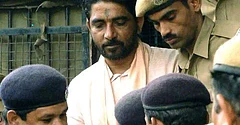

Singh, whose real name is Ravindra Pal, was accused of leading the attack. He and his associates from Hindu hardline groups had accused Staines of forcibly converting poor Hindus, particularly people from disadvantaged castes and tribal communities, to Christianity.
The killings caused widespread outrage in India and abroad and sent shockwaves through the Christian community.
As Singh went into hiding after the killings, police announced a reward for information leading to his arrest. He was eventually arrested in 2000 during a raid on a jungle hideout.
What Was Dara Singh Convicted Of?
A Bhubaneswar district and sessions court initially sentenced Singh to death. His capital punishment was later commuted to life imprisonment.
The Supreme Court upheld his life sentence in January 2011, rejecting the prosecution’s plea to restore the death penalty.
In all, 51 people were arrested in connection with the case between 1999 and 2000. Of the 14 people who eventually faced trial, 12 were acquitted, while Singh and Mahendra Hembram were convicted and sentenced to life imprisonment.
Hembram, an aide of Singh, was released from Keonjhar jail in April 2026 after completing 25 years, with his good conduct during incarceration cited as the basis for his release.
Why Did Singh Seek Premature Release?
Singh moved the Supreme Court in July 2024 seeking consideration of his remission plea. He argued that he had completed more than 25 years in prison and was therefore eligible for consideration under Odisha’s 2022 premature-release guidelines.
His petition also cited his conduct in prison and expressed remorse for the killings. Singh described his actions as the result of the “fervour of youth” and said he deeply regretted his conduct.
His case, however, had already been considered and rejected several times by the State Sentence Review Board — in November 2016, June 2019, December 2020, January 2022 and February 2023.
Why Did Odisha Reject The Plea Again?
The State Sentence Review Board considered Singh’s case at a special meeting on August 31. It ultimately decided not to recommend his premature release “at this stage”.
The Board considered fresh reports from the Kendujhar district authorities, including one submitted on August 28. A key concern was the possibility of communal tension surrounding Singh’s release.
District authorities had earlier given a conditional recommendation in March 2025, saying Singh could potentially be released subject to conditions aimed at maintaining social harmony. But the latest reports did not support his release.
According to the Board’s proceedings, around 200-250 people associated with Dara Sena gathered outside the Kendujhar district jail on August 15 in connection with Singh’s proposed release. The authorities reported that provocative slogans were raised during the gathering.
The Board said these circumstances, along with the sensitivity surrounding the case, meant it was not inclined to recommend Singh’s release.
What About His Conduct In Prison?
The Board also considered Singh’s prison record. Official records indicated that his general conduct and behaviour during incarceration had been good. He had not been released on parole or furlough during his imprisonment.
However, his two applications for parole were rejected — one by the Orissa High Court in 2003 and another by the Keonjhar district magistrate in 2012. Prison records also show that Singh went on hunger strike in 2006 and 2008.
His case had also been repeatedly deferred while authorities sought additional reports. In 2025, the Board considered his convictions in three separate murder cases and sought further information, including an opinion from Auraiya, his native district. Auraiya authorities later supported his premature release in February 2026.
Why Did The Supreme Court Intervene?
The Supreme Court’s intervention came after repeated delays in deciding Singh’s plea.
At a hearing on August 19, the two-judge bench of Justices Manoj Misra and Vijay Bishnoi directed the Sentence Review Board to decide the matter by September 2. The court expressed displeasure over the repeated adjournments and made clear that the state had to take a decision rather than keep the plea pending indefinitely.
The Board has now rejected the request. The Supreme Court is scheduled to consider the matter again on September 17, when the state’s decision and the reasons behind it are expected to be examined.