A Delhi court denied anticipatory bail to PG operator Shubham Tyagi.
Seven people died in the September 6 Satya Niketan building collapse.
Police arrested co-operator Sudhanshu and labour contractor Sanoj in the case.
A Delhi court on Thursday rejected the anticipatory bail application of Shubham Tyagi, one of the operators of the Satya Niketan paying guest accommodation where seven people died after the building collapsed on September 6.
Additional Sessions Judge Saurabh Pratap Singh Laler of the Patiala House Court denied Tyagi pre-arrest protection as police continued searching for him.
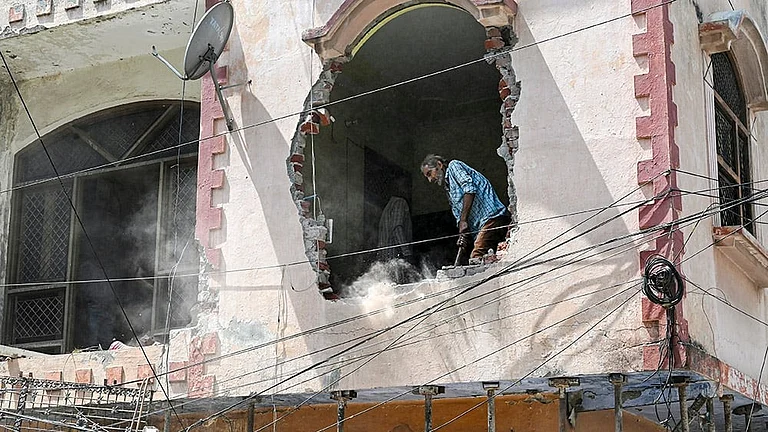
The multi-storey building, which functioned as a private boys’ hostel near Delhi University’s South Campus, collapsed while work was allegedly underway in its basement. Five students and two labourers were killed.
One Operator Arrested, Another On The Run
Police arrested Sudhanshu, the other operator of the PG facility, on Wednesday morning. Investigators said the two business partners had taken the property on lease in August 2025 and were jointly operating the accommodation.
Tyagi remained on the run following the rejection of his anticipatory bail plea.
Police had earlier arrested labour contractor Sanoj, who allegedly supervised the “repair” work in the basement. Investigators are examining whether the work affected the building’s structural stability and contributed to the collapse.
The tragedy has brought renewed scrutiny to construction practices, structural safety and the regulation of private student accommodation in the national capital.


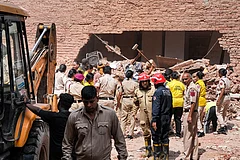
According to PTI, the Satya Niketan incident was Delhi’s fifth reported building collapse this year. Three fatal incidents have together claimed 16 lives: six people died in Saket in May, three in Rohini in July and seven in Satya Niketan in September.
Officials cited unauthorised or unregulated construction, additional floors, ageing structures and the absence of regular structural assessments among the recurring safety concerns. Repair work undertaken without adequate precautions and monsoon-related damage to foundations, walls and basements have also emerged as possible risk factors.

Delhi Plans Disaster-Response Force
Following the Satya Niketan collapse, the Delhi government decided to establish its own State Disaster Response Force (SDRF) to improve rescue and relief operations during emergencies.
Officials discussed the proposal during a high-level meeting with the National Disaster Response Force. The government plans to form an SDRF battalion of approximately 1,100 personnel trained in disaster management, emergency response and rescue operations, India Today reported.
The proposed force would allow Delhi to deploy trained teams immediately instead of depending entirely on personnel from external agencies during a crisis.
Under the plan, Delhi Fire Service personnel and Civil Defence volunteers will also receive specialised disaster-response training. The government aims to improve coordination among local agencies and create a wider pool of trained responders.
The proposed SDRF will respond to building collapses, floods, earthquakes and other major emergencies across Delhi.
Its personnel will receive specialised training to reach disaster sites quickly, begin rescue operations and coordinate relief work at the local level. The force is also expected to work alongside the NDRF and other emergency services when an incident requires a larger response.