Bittu Tabahi manually cleared waste from Madhya Pradesh’s polluted Ajnar River.
His effort spotlighted municipal duties for waste, sewage and waterbody maintenance.
Government programmes fund restoration, but execution depends on states and civic bodies.
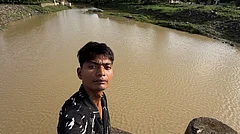
For months, Surendra Singh Choudhary, better known online as Bittu Tabahi, entered Madhya Pradesh’s polluted Ajnar River and manually removed plastic, bottles, weeds, algae and other accumulated waste.
The BSc student from Biaora in Rajgarh district began the drive on January 26, spending his own money to clean the river. His videos eventually attracted national attention and a response from Boyan Slat, founder of the Netherlands-based The Ocean Cleanup: “Come work for us.”
The online recognition turned Bittu’s work into a story of individual initiative. It also drew attention to how India assigns responsibility for cleaning urban rivers, drains and waterbodies—and why visible pollution can persist despite municipal rules, regulatory bodies and government programmes.
What Bittu’s Cleanup Revealed
Bittu initially worked with friends, but continued largely on his own as others withdrew. He said the Biaora civic body offered assistance after noticing his work.
“I started alone; they [the municipality] saw what I was doing and then offered their support,” he told ANI.
The municipality deployed earth-moving equipment to remove waste and polythene. Rupesh Kumar Netam, a sub-engineer with the civic body, identified sewage as a continuing source of pollution.


“The main issue is that five large drains discharge into the Biaora River; to stop this wastewater, we have prepared a proposal to construct an STP [sewage treatment plant] costing approximately ₹14.77 crore,” Netam told ANI.
His statement highlights the difference between removing floating garbage and restoring a polluted river. A cleanup can clear visible waste from the surface and banks, but it cannot stop pollution if drains continue carrying untreated wastewater into the river.

Who Is Responsible For Cleaning Urban Waterbodies?
Urban water and sanitation are primarily responsibilities of state governments and urban local bodies. Municipal authorities handle services such as solid-waste collection, sanitation, drainage and sewage management, while state departments may oversee water resources, sewerage projects and river restoration.
Under the Solid Waste Management Rules, 2026, which came into force on April 1, local bodies must arrange the collection, segregation, transportation and processing of municipal waste. They must also prepare action plans, create waste-management infrastructure, frame local bye-laws and file regulatory returns.
The Plastic Waste Management Rules separately require local authorities to establish systems for collecting, storing, transporting, processing and disposing of plastic waste, either directly or through authorised agencies.
Pollution-control boards have a different role. The Central Pollution Control Board sets standards and coordinates national monitoring, while state boards—including the Madhya Pradesh Pollution Control Board—monitor polluting activities, regulate industrial discharges and enforce compliance with the Water Act.
State pollution-control boards can issue directions against industries or authorities violating environmental requirements, including orders regulating or closing an operation. Local bodies, however, remain responsible for providing routine municipal services and preventing waste from reaching drains and waterbodies.

What Government Programmes Provide
Several Union government programmes provide financial and technical support, but implementation largely rests with states and civic bodies.
The National River Conservation Plan supports pollution-abatement projects for rivers other than the Ganga. According to the Ministry of Jal Shakti, these projects can include intercepting and diverting sewage, laying sewer networks, constructing treatment plants, improving ghats and running public-awareness campaigns.
AMRUT 2.0 covers urban local bodies nationwide and includes waterbody rejuvenation, water supply and sewage or septage management. Its operational framework allows cities to propose projects based on their requirements, while the Centre provides financial and technical support.
Swachh Bharat Mission-Urban 2.0 focuses on municipal waste and “garbage-free” cities. Its Garbage Free Cities Framework expects civic bodies to ensure that waterbodies contain no visible solid waste, install methods to trap floating rubbish, prevent dumping near the water’s edge and screen drains before they discharge into other water channels.

Why Pollution Returns After Cleanups
Removing accumulated rubbish does not address the systems that carry fresh waste into a river. Sustained improvement requires door-to-door collection, segregation, drain screens, anti-dumping enforcement, sewer connections, treatment capacity and regular maintenance.
Projects can also move slowly because they require surveys, detailed project reports, funding approvals, land, procurement and arrangements for operating treatment facilities after construction. Responsibilities may be divided among municipalities, development authorities, water-resource departments and pollution-control boards.
A Comptroller and Auditor General performance audit of Madhya Pradesh’s Kshipra River documented similar institutional weaknesses. It found that some urban local bodies disposed of solid waste along riverbanks, sewage networks did not cover entire urban areas and treatment facilities had not always been planned for future demand.
The Kshipra findings do not establish the administrative history of the Ajnar River. They do, however, document how gaps in sewage infrastructure, waste management and coordination can undermine river-restoration efforts within the same state.
In Biaora, Bittu has said that people continued throwing rubbish into the river after parts of it were cleaned.
“I don’t know why people throw garbage in the river. I don’t know why they do that. You can’t stop them,” he told The Times of India.
Preventing such dumping requires both public compliance and municipal enforcement. Citizen participation can support monitoring and behaviour change, but statutory duties do not shift to volunteers when they join a cleanup.
What Health Risks Do Volunteers Face?
Bittu’s work also illustrates the danger of manually entering polluted water without professional equipment.
“I wanted to make a machine to clean the river, but I didn’t have the money. I am a student. So I thought, I will clean as much as I can with my own hands. I got infections. The skin on my hands and feet started coming off,” he told The Indian Express.
A joint WHO, World Bank, ILO and WaterAid report states that contact with wastewater and human waste can expose workers to biological, chemical and physical hazards, increasing the risk of illness, injury and death.
Contaminated water can cause skin and wound infections, gastrointestinal illness and diseases such as leptospirosis. Broken glass, metal, discarded needles and other sharp objects create additional injury risks. Prolonged immersion can soften damaged skin, making it easier for pathogens to enter through cuts or abrasions.
Professional operations therefore require risk assessment, protective gloves and boots, appropriate clothing, mechanical equipment, hygiene facilities and medical support. River depth, currents, snakes and submerged objects can add further hazards.
Community Action Or An Accountability Test?
Bittu’s work has encouraged attention to local cleanliness and prompted municipal support. It has also made visible a river-management system involving civic waste collection, sewage infrastructure, pollution monitoring and enforcement.
Citizen cleanups can remove rubbish, generate awareness and encourage participation. They cannot replace sewage-treatment plants, municipal collection systems or regulatory action against polluters.
In Ajnar’s case, the proposed ₹14.77-crore treatment plant and the reported discharge from five drains indicate that lasting improvement will depend on infrastructure and continued municipal action—not only the removal of waste already present in the river.