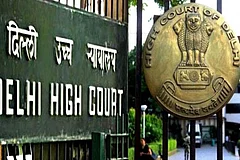
The Delhi High Court has issues notice to the Centre, Delhi government and Delhi University on a public interest litigation seeking hostel facilities across university colleges, days after seven people died in the collapse of a paying guest accommodation in Satya Niketan.
National Students’ Union of India (NSUI) president Vinod Jakhar filed the petition through advocate Vimal Tyagi, arguing that Delhi University’s limited residential infrastructure forces thousands of students to depend on privately operated PGs, hostels and rented properties.
The court will hear the case again on September 25 alongside another PIL seeking an independent investigation into the Satya Niketan collapse and a regulatory framework for PG and hostel facilities across Delhi.
Collapse Highlights Risks Faced By Students
The five-storey building collapse in Satya Niketan has renewed scrutiny of privately managed student housing in the Capital. The locality, situated near several South Campus colleges, accommodates a large student population living in PG facilities and rented rooms.
In his petition, Jakhar, as cited by Indian Express, said the tragedy “serves as a grave warning regarding the risks faced by thousands of students who are dependent upon privately operated accommodation in different parts of Delhi because their respective colleges do not have adequate hostel facilities”.
The plea raises concerns over whether Delhi University’s residential facilities have expanded in proportion to its student population. According to figures cited in the petition, the university had 750 students when it was established in 1922. It now has approximately 1,32,435 students enrolled in regular courses.



“More than 104 years have elapsed since the establishment of the University, yet adequate institutional shelter has not been created commensurate with its present student population and geographical expansion,” the PIL stated.
The petition also referred to Delhi University’s official description of itself as a “unitary, teaching and residential University”.

Plea Seeks Hostels Across DU Colleges
Jakhar has asked the court to direct Delhi University and its affiliated colleges to assess students’ accommodation needs and draw up a university-wide policy for expanding hostel capacity.
The petitioner proposed that “where sufficient land is available within a college campus, hostel facilities may be constructed or expanded”.
For colleges that lack adequate space, the plea suggested building common hostels at accessible locations. It said that where individual institutions “face genuine land constraints, the authorities may develop common/cluster hostels at suitable locations catering to students of neighbouring University colleges”.
The PIL also sought a “comprehensive assessment of the residential requirements of students across all colleges, departments and institutions of the University of Delhi”. Based on that exercise, the university should undertake the “construction or expansion of college hostels… in a phased manner”, it added.
The plea argues that expanding university-managed housing could reduce students’ exposure to unsafe or inadequately regulated private accommodation. It would also address affordability concerns for students arriving in Delhi from other states, particularly those from economically weaker backgrounds.

Delhi Government Action After Collap
Following the Satya Niketan collapse, the Delhi government proposed a draft Bill to regulate privately operated PG facilities and similar establishments. The proposed framework seeks stronger oversight of buildings used as student accommodation.
However, the government has not announced whether it is considering measures to expand residential facilities within college campuses.
Lieutenant Governor Taranjit Singh Sandhu, Chief Minister Rekha Gupta and senior government officials also reviewed building safety, student housing and PG regulations at a meeting on Monday.