



The Rajasthan government issued a circular banning unauthorised entry, photography, videography, and live streaming in state-run schools without the principal's prior written permission.
The restrictions coincide with the launch of the 'School Thik Karo' campaign by the Cockroach Janta Party to audit educational amenities across major urban centres.
CJP representative Ashutosh Ranka planned inspections in cities including Jaipur, Kota, Jodhpur, and Ajmer to highlight allegedly dilapidated school infrastructures.
The Rajasthan government issued a circular on Sunday restricting unauthorised entry, photography and live streaming in state-run schools, as well as the collection of personal information of students or teachers.
The administrative order coincides with the launch of the 'School Thik Karo' campaign by the Cockroach Janta Party (CJP).
CJP representative Ashutosh Ranka announced the campaign to audit school amenities and the quality of education being provided across major urban centres, citing administrative inaction over necessary repairs for allegedly dilapidated schools. Ranka plans to inspect educational facilities in Jaipur, Kota, Jodhpur, Ajmer, Udaipur, Bharatpur, Dholpur, Barmer and Hanumangarh.
Strict New School Guidelines
The state government mandate outlines stringent access protocols. No outsider, except authorised government officials, will be allowed entry without prior permission from the principal. Visitors must register their entry upon arrival.
Once inside, visitors must remain accompanied by the principal, a teacher or an authorised school official when visiting classrooms, laboratories, libraries, hostels, playgrounds, toilets or any area where students are active.
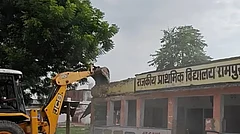


The circular bans photography, videography, interviews, audio recording and live streaming of students, teachers or school activities without the principal's prior written permission, allowing them only for lawful purposes. It prohibits collecting, publishing or disseminating photographs, videos or personal information of students in ways that violate their privacy, dignity or safety.
Principals can refuse entry to any visitor whose presence is likely to affect security, privacy, discipline or the academic environment. All supervisory officers must ensure strict compliance.
If violators refuse to leave or disrupt operations, school heads must report them to the local police and the District Education Officer. Principals can initiate legal action under the Bharatiya Nyaya Sanhita (BNS) 2023, the Protection of Children from Sexual Offences (POCSO) Act 2012, the Juvenile Justice (JJ) Act 2015 and the Information Technology (IT) Act 2000.
Justification and Political Backlash
The Secondary Education department cited the principle of 'in loco parentis', meaning 'in place of parents', to justify the safety measures. The department stated that the rules safeguard the children's Right to Privacy and comply with school safety guidelines of the National Commission for Protection of Child Rights (NCPCR).
The opposition criticised the directive, with Rajasthan Congress chief Govind Singh Dostara targeting the state administration.
Dostara said, "Instead of improving the condition of government schools, the BJP government has found a way to cover up its failure and hide the poor condition of the education system."|
CJP Launches Nationwide Campaign
CJP founder Abhijeet Dipke on Monday expanded the school reform initiative, announcing a nationwide campaign starting August 15 to improve government schools in rural areas, calling on parents, citizens and village heads to monitor basic facilities. The programme features a 'Sarpanch Challenge' and citizen-led social audits, beginning in his village in Hingoli, Maharashtra, by approaching the local sarpanch.
In a video message, Dipke said, "The coming 15th August is our 80th Independence Day. But, if anything has been neglected or ignored the most in the last 80 years, it is the government schools in our villages."
Questioning the condition of rural schools, Dipke added, "We have made a new Parliament, a new PM house. Why have we not been able to build new schools in our villages? Do we not consider the children of farmers and labourers the future of our country?"















