



N Chandrasekaran rose from a government school in Tamil Nadu and a 1987 TCS internship to become Tata Sons chairman in 2017.
His tenure was marked by Tata's return to aviation, major investments in semiconductors and EVs, and a push to integrate the sprawling group.
His August 2026 resignation comes amid months of reported friction between Tata Sons and Tata Trusts, with Chandrasekaran expected to complete his term until February 2027.
Natarajan Chandrasekaran has spent almost four decades inside the Tata universe, rising from a computer-science intern at Tata Consultancy Services in 1987 to the chairman of the entire, 30-company Tata Group. On August 12, 2026, that long climb appeared to reach its end point. Chandrasekaran tendered his resignation as Tata Sons chairman but will stay on to complete his current term, which runs until February 2027.
The move comes just days before Tata Sons' August 18 annual general meeting, where shareholders were due to vote on his reappointment as a director, a vote that had become a flashpoint in an increasingly public rift between Tata Sons and Tata Trusts, the charitable arm that owns roughly 66 per cent of the holding company. To understand why Chandrasekaran's exit matters, it helps to trace the arc of the career that got him there.

From a government school in Tamil Nadu to TCS
Chandrasekaran was born on June 2, 1963, in Mohanur, a small town in Tamil Nadu's Namakkal district, into a farming family. His early schooling was in a Tamil-medium government school in Mohanur, a detail frequently cited as central to his rags-to-boardroom story. Family expectation initially pointed him toward taking over the farm, and he briefly returned home to do so after his undergraduate years.
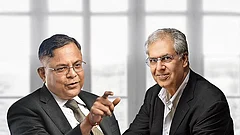
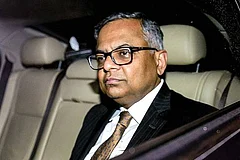

He went on to earn a bachelor's degree in applied sciences from the Coimbatore Institute of Technology, followed by a master's in computer applications from the Regional Engineering College in Tiruchirappalli — now the National Institute of Technology, Trichy — completing the degree in 1986.
It was a campus internship in his final semester that led him to TCS, then a fast-growing but still modest IT firm with about 500 employees. Two months into that internship, TCS offered him a full-time job as an engineer, and he joined formally in 1987.
How Chandrasekaran rose through the Tata Group
Chandrasekaran's rise through the Tata system was steady rather than sudden. He spent his entire corporate career at a single company — TCS — working through technical and leadership roles over two decades before being named chief operating officer in 2007. Two years later, he was elevated to chief executive and managing director.
His move into the wider Tata Group came nearly a decade after that. He joined the board of Tata Sons, the group's holding company, in October 2016, and was named its executive chairman in January 2017, taking charge on February 21 that year. The appointment made him the first Tata Sons chairman with no blood or marital tie to the Tata family, and the first non-Parsi to hold the post, a symbolic break from a leadership tradition that had held for generations.
The TCS years that made his career
It was at TCS that Chandrasekaran built the reputation that eventually took him to the top of Tata. He became CEO and managing director on October 6, 2009, at 45, making him one of the youngest chief executives among major Indian IT firms at the time, per Bloomberg's reporting on his appointment. Over the next eight years, TCS grew into India's most valuable company by market capitalisation and one of the world's largest IT services firms, with digital, cloud and consulting work driving a growing share of revenue.
Colleagues and analysts have pointed to his emphasis on scale, discipline and long-term client relationships as defining traits of that period — traits he would later carry into his approach at Tata Sons. He stepped down as TCS CEO in 2017 to take the group chairmanship, later returning to the company only as its non-executive chairman.

How he became Tata Sons chairman
Chandrasekaran's appointment followed one of the most turbulent chapters in Tata's modern history. In October 2016, Tata Sons abruptly removed its then chairman, Cyrus Mistry, in a boardroom coup that spilled into a bitter, very public legal and reputational battle. Ratan Tata stepped in as interim chairman while the group searched for a permanent successor, a search that wiped billions of dollars off the market value of Tata's listed companies amid the uncertainty.
On January 12, 2017, Tata Sons' board named Chandrasekaran, then still TCS's chief, as the new executive chairman, and he formally took over five weeks later. He was reappointed for a second five-year term in February 2022, a term that was scheduled to run until February 2027.
His biggest decisions at Tata
As chairman, Chandrasekaran pursued what the group has called a "One Tata" strategy, built around simplification, scale and synergy across its sprawling portfolio of companies. The most visible move of his tenure was the Tata Group's buyback of Air India in January 2022 — India's first major privatisation in nearly two decades, and a symbolic homecoming for an airline the Tatas had originally founded in 1932 before it was nationalised.
He also steered the group into capital-intensive new businesses: semiconductor manufacturing and assembly through Tata Electronics, electric-vehicle battery gigafactories in Gujarat and the UK, and consumer internet and digital platforms under Tata Digital. Under his 2026 New Year letter to the group, he framed TCS's shift toward becoming an AI-led services company and an "AI-first" approach across new factories as the next phase of that strategy.
That period also brought setbacks — a fatal Air India crash that drew intense regulatory scrutiny, pricing pressure at TCS, and a cyberattack on Jaguar Land Rover in late 2025 that disrupted production and dented Britain's economic output, as media outlets have reported.
What his exit means
The resignation reported on August 12, 2026, caps months of tension between Tata Sons and Tata Trusts. In February 2026, the Tata Sons board deferred a decision on reappointing Chandrasekaran as chairman after Tata Trusts chairman Noel Tata objected, according to Reuters. The dispute has since widened to cover board representation, overall group strategy, and how to handle the planned exit of minority shareholder Shapoorji Pallonji Group, a disagreement that earlier led to the ouster of a Tata Sons director. A separate, long-running debate over whether Tata Sons should eventually list on public markets, driven partly by the Reserve Bank of India's framework for large non-banking financial companies, has added to the friction, Storyboard18 reported.
According to Reuters, Chandrasekaran had discussed the possibility of stepping down with close associates rather than let his continuation be decided at what could have been a contentious August 18 shareholder meeting.
As of this report, Tata Group and Tata Sons had not officially confirmed the resignation, and no successor had been named. What is confirmed, is that Chandrasekaran will complete his current term through February 2027 even as he steps back from the chairmanship, leaving the question of who leads Tata next as the group's most closely watched succession story since Mistry's ouster a decade ago.















