



Manmohan Singh rose from academia and economic policymaking to become India’s Prime Minister for two consecutive terms.
As Finance Minister in 1991, Singh introduced sweeping reforms amid India’s severe economic and balance of payments crisis.
His governments introduced MGNREGA, RTI and RTE, while pursuing initiatives including the Indo-US Civil Nuclear Agreement.
Former Prime Minister Manmohan Singh is being remembered by political leaders on his birth anniversary on September 26, with tributes highlighting his contribution to India’s economy and social justice.
Prime Minister Narendra Modi paid tribute to Singh, saying he had spent many years in public life and served the nation with dedication. Congress leader Rahul Gandhi also remembered the former prime minister, highlighting his contributions to the economy and social justice and his role in shaping the country.
Singh was born on September 26, 1932, in a village in the Punjab province of undivided India. An economist and academician who entered public life through economic policymaking, he went on to become India’s 14th Prime Minister and served two consecutive terms.
Here is a look at some of the major reforms and initiatives associated with his tenure, from the 1991 economic reforms to the RTI Act and the Indo-US nuclear deal.
The 1991 Economic Reforms
Singh’s tenure as Finance Minister from 1991 to 1996 remains closely associated with the economic reforms introduced when India was facing a severe crisis.


Foreign exchange reserves had fallen to levels that could barely cover a few weeks of essential imports such as oil and fertilisers. Inflation was rising, the fiscal deficit was widening and India faced a balance of payments crisis. The collapse of the Soviet Union, a key trading partner, added to the difficulties.
Singh introduced reforms centred on liberalisation, privatisation and globalisation. In July 1991, the Reserve Bank of India pledged 46.91 tonnes of gold with the Bank of England and the Bank of Japan to raise $400 million.
The rupee was then devalued to make Indian exports more competitive. Import tariffs were reduced and restrictions on foreign trade were dismantled.
On July 24, 1991, Singh presented a new industrial policy that ended the Licence Raj. It deregulated nearly 80% of the industrial sector and reduced the number of industries reserved exclusively for the public sector from 17 to eight.
The banking and financial sectors were also reformed. Following the Narasimham Committee’s recommendations, the statutory liquidity ratio was reduced from 38.5% to 25% and the cash reserve ratio from 25% to 10% over a few years. Bank branch licensing was eased and interest rates were deregulated.

MGNREGA
The Mahatma Gandhi National Rural Employment Guarantee Act of 2005 sought to enhance livelihood security in rural areas by providing at least 100 days of guaranteed wage employment every financial year to households whose adult members volunteered for unskilled manual work.
The programme addressed poverty, underemployment and rural distress and became one of the major programmes of Singh’s government.
Right To Information Act
The RTI Bill was introduced in Parliament in December 2004. The Lok Sabha passed it on May 11, 2005, followed by the Rajya Sabha the next day. The Act came into implementation on October 12, 2005.
It empowered citizens with access to government information.
The legislation followed the Freedom of Information Act passed under Atal Bihari Vajpayee’s government in 2002, which was not implemented as rules were not framed.
During the debate on the RTI legislation, Singh said its passage would mark a new era in governance and bring the common man’s concerns to the heart of government processes.
Indo-US Civil Nuclear Agreement
The Indo-US Civil Nuclear Agreement was signed in 2008 and sought to end India’s nuclear isolation following its 1998 nuclear tests.
The government argued that the agreement would help meet India’s growing energy needs and sustain economic growth. It provided for a waiver allowing India to begin civilian nuclear trade with the US and other countries.
The agreement faced strong opposition. Critics alleged that it could compromise India’s sovereignty and independence in foreign policy. The Left Front withdrew support from the governing alliance in protest. Singh, however, managed to save both his government and the agreement.
From Punjab To Cambridge
Long before entering politics, Singh’s career was shaped by economics and academia.
He completed his Matriculation examinations from Punjab University in 1948 and went on to study Economics at the University of Cambridge, where he earned a First Class Honours degree in 1957. He completed a D.Phil in Economics from Nuffield College, Oxford, in 1962.
His 1964 book, India’s Export Trends and Prospects for Self-Sustained Growth, was an early critique of India’s inward-oriented trade policy.
Singh taught at Panjab University and the Delhi School of Economics. He also served briefly at the UNCTAD Secretariat and was Secretary General of the South Commission in Geneva from 1987 to 1990.
His government career began in 1971 as Economic Adviser in the Commerce Ministry. A year later, he became Chief Economic Adviser in the Ministry of Finance.
He later served as Finance Secretary, Deputy Chairman of the Planning Commission, Governor of the Reserve Bank of India, Advisor to the Prime Minister and Chairman of the University Grants Commission.

Economist To Prime Minister
Singh entered the Rajya Sabha in 1991 and served as Leader of the Opposition from 1998 to 2004. He was sworn in as Prime Minister on May 22, 2004, and took oath for a second term on May 22, 2009.
In 2014, towards the end of his second term, Singh reflected on the criticism surrounding his government. “I honestly believe that history will be kinder to me than the contemporary media, or for that matter, the opposition parties in Parliament,” he had said.
The remark offered a glimpse into how Singh viewed his record after years in public life, particularly at a time when his government faced sustained political criticism.
Singh received several honours, including the Padma Vibhushan in 1987, the Jawaharlal Nehru Birth Centenary Award of the Indian Science Congress in 1995, the Asia Money Award for Finance Minister of the Year in 1993 and 1994, and the Euro Money Award for Finance Minister of the Year in 1993.
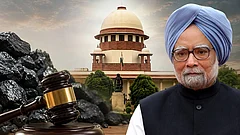
In July, Congress Parliamentary Party chairperson Sonia Gandhi, writing in The Indian Express, said, “History will indeed remember Dr Manmohan Singh kindly.” Referring to the Supreme Court’s July 29 judgment in the coal-block allocation case, she said Singh’s record of “probity and integrity” had been vindicated.
Singh died on December 26, 2024. He is survived by his wife, Gursharan Kaur, and their three daughters.















