The 26/11 Mumbai terror attacks killed 166 people and injured 238 others.
Police officers, NSG commandos and railway personnel confronted the attackers and helped save lives.
Hotel employees and civilians risked their lives to protect guests, commuters and hostages during the attacks.
Eighteen years after 10 Lashkar-e-Taiba terrorists attacked Mumbai, killing 166 people and injuring 238 others, the response to the November 26, 2008 attacks remains marked by the actions of those who confronted the gunmen, evacuated hotels and helped people escape. Among them were police officers, NSG commandos, railway employees, hotel staff and civilians who put others' safety before their own.
While several received gallantry awards, many others who helped save lives are less widely remembered. Here are some of the people whose actions shaped the response to the attacks.
Hemant Karkare, Ashok Kamte and Vijay Salaskar
Maharashtra ATS chief Hemant Karkare, Additional Commissioner of Police Ashok Kamte and Crime Branch Inspector Vijay Salaskar were killed in a terrorist ambush near Cama Hospital. All three had pursued the attackers after receiving information about the assault. The Government of India's gallantry citations record that all three continued fighting despite being critically injured. All three were posthumously awarded the Ashoka Chakra.
Tukaram Omble
Assistant Sub-Inspector Tukaram Omble helped capture Ajmal Kasab, the only attacker caught alive. When Kasab and fellow terrorist Abu Ismail were intercepted at a police barricade, Omble rushed towards their vehicle and grabbed Kasab's rifle. The government citation records that he "pounced on one of the terrorists in order to snatch his AK 47 rifle". He sustained fatal injuries during the struggle and was posthumously awarded the Ashoka Chakra.


Major Sandeep Unnikrishnan
Major Sandeep Unnikrishnan of the NSG's 51 Special Action Group led the operation to rescue hostages at the Taj Mahal Palace Hotel. The government's Ashoka Chakra citation states that he rescued 14 hostages and returned to rescue an injured commando under hostile fire. He was shot during the operation and died fighting the terrorists.
Havildar Gajender Singh
Havildar Gajender Singh led his squad during the NSG operation at Nariman House. Despite being injured by a grenade thrown by the terrorists, he continued advancing and firing at them until he succumbed to his injuries. He was posthumously awarded the Ashoka Chakra.
Sadanand Date
Then Additional Commissioner of Police Sadanand Date confronted the terrorists at Cama Hospital. Despite being injured by grenade splinters, he continued firing at them for around 40 minutes before being taken to hospital. His actions are documented in the Supreme Court judgment in the Ajmal Kasab case and the Maharashtra Government's High Level Enquiry Committee report.
Karambir Singh Kang
Karambir Singh Kang, the Taj's general manager, returned to the hotel after the attacks began and helped coordinate the response and evacuation efforts. His wife and two sons were trapped inside the hotel and killed. In an interview with NDTV, Kang said, "I don't think I will ever heal but this is my family and being here does help."

Mallika Jagad and Thomas Varghese
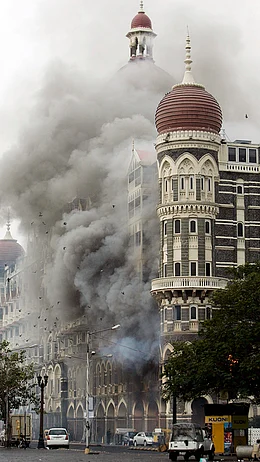
Mallika Jagad, a banquet manager at the Taj, helped protect around 60 guests during the attack, according to Deccan Herald. She and her colleagues locked the banquet doors, switched off the lights and instructed guests to remain silent. The group eventually escaped through a window with the help of firefighters.
At the hotel's Japanese restaurant Wasabi, senior waiter Thomas Varghese instructed guests to take cover and helped evacuate them. He was the last to leave the restaurant but was shot by the terrorists before reaching safety.
Sandra Samuel and Kazi Zakir Hussain
At Nariman House, nanny Sandra Samuel and Kazi Zakir Hussain helped rescue two-year-old Moshe Holtzberg after his parents, Rabbi Gavriel and Rivka Holtzberg, were killed. The Supreme Court judgment records that the two heard Moshe crying, found him on the second floor and Samuel carried him out. The court described their actions as "exemplary courage, humanity and loyalty to their employers".
Vishnu Zende, Bablu Kumar Deepak and Jillu Yadav
Railway announcers Vishnu Zende and Bablu Kumar Deepak used the public-address system at Chhatrapati Shivaji Maharaj Terminus (CSMT) to warn commuters and direct them towards safer exits. The Supreme Court judgment records that Zende's announcements saved countless people from death or injury. Deepak later recalled warning passengers and alerting Zende and the railway control room. Railway Protection Force constable Jillu Yadav also opened fire at the attackers.
Shashank Shinde, Ambadas Pawar, Mukesh Jadhav and Murlidhar Chaudhari
Police Inspector Shashank Shinde, constable Ambadas Pawar and Home Guard Mukesh Bhikaji Jadhav were among the personnel killed at CSMT. The Maharashtra Government's High Level Enquiry Committee report also records the death of Railway Protection Force jawan Murlidhar Laxman Chaudhari during the initial firing at the station. Pawar was off duty but joined the resistance after seeing Shinde and constable Pandharkar confronting the terrorists. Shinde and Pawar were killed while retaliating, while Pandharkar was grievously injured. The resistance by Shinde, Pawar and Pandharkar forced the attackers to flee Platform 7.
Max, Tiger, Sultan, Caesar and Prince
Mumbai Police's Bomb Detection and Disposal Squad deployed sniffer dogs to search for explosives during and after the attacks. Max, Tiger, Sultan and Caesar were among the dogs involved in the operation. Another police sniffer dog, Prince, was credited by The Indian Express with detecting four live bombs and 17 hand grenades. His handlers also recalled that he detected a live bomb in a parcel room at Chhatrapati Shivaji Terminus three days after the attacks.
The response to 26/11 involved many others whose names and contributions are not always recorded. Their actions, alongside those of the people remembered here, remain part of the account of how Mumbai confronted the attacks.