A US strike targeted a tower 135 metres from the wedding site.
Experts say the wedding home was likely hit directly by a US munition.
Four died and 68 were injured as Washington investigates the strike.
Four people were killed and at least 68 injured when an explosion struck a wedding gathering in southern Iran, with weapons experts saying the damage suggests that a US munition directly hit the building rather than ricocheting from another target.
The strike on a home in the small town of Kuhestak on September 1 has renewed scrutiny of civilian casualties in the US war with Iran. Images and videos verified by Reuters and reviewed by four military weapons experts showed damage consistent with a direct impact on the roof. Three of the experts said the weapon was likely American.
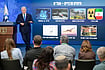
The US government has not confirmed responsibility for the casualties and is investigating what happened. US Vice President JD Vance said on Thursday that Washington was examining the incident, while the US military said it was aware of reports and was looking into them.
“We’re investigating it because obviously we care. We want to know,” Vance said during a White House press briefing.
What the weapons evidence shows
Reuters shared photographs and video from the scene with four military weapons experts, who assessed that the damage was consistent with a munition hitting the building directly rather than causing secondary damage after striking another target.


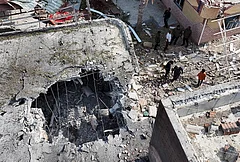
Trevor Ball, a former US Army explosive ordnance disposal technician and weapons technical analyst at Armament Research Services, said the damage suggested a munition had detonated on or immediately above the roof.
“The damage seen appears to be from a munition which detonated on contact with the roof, or just above the roof,” he said, adding it was apparently a direct hit.
“The visible blast damage could not result from fragments from the nearby strike on the communications tower striking the area.”
Ball said the weapon was likely a US munition.
Gareth Collett, a retired British Army brigadier who specialised in counterterrorist bomb disposal and holds a doctorate in explosives engineering, reached a similar conclusion.
“The weight of evidence leans towards a U.S. 500 lb air-dropped munition as opposed to an Iranian air defence missile,” he said.
Collett said the weapon may have missed its intended objective.
“Given the number of bombs that have been dropped, this does occur from time to time even with the most sophisticated guidance systems,” he said.
Sebastian Schutte, a research professor at the Peace Research Institute Oslo, also reviewed the visual material. He agreed that the hole in the roof was not consistent with a munition ricocheting off the nearby telecommunications tower.
The experts also considered whether an Iranian air defence missile could have caused the destruction. Schutte said the angle of impact was inconsistent with an air defence missile, while Collett said there was no evidence of the fragmentation normally associated with an air defence warhead.
Various weapons fragments were shown on Iranian media. Ball identified “some of these remnants” as belonging to a Joint Standoff Weapon, or JSOW, a type of glide bomb commonly used by the US military. Reuters could not verify that those fragments came from the attack on the house in Kuhestak.
US strikes and the nearby tower
The US Central Command had announced that American forces carried out multiple strikes across southern Iran on September 1, targeting Islamic Revolutionary Guard Corps air defence sites, radar systems and communications facilities.
The strikes came in retaliation for earlier Iranian attacks on US military assets around the Gulf.
Two US officials, speaking on condition of anonymity, said the US military had carried out strikes in the Kuhestak area and had specifically targeted a telecommunications tower.
According to satellite imagery, the tower is about 135 metres from the site where the wedding celebration was taking place. Iranian media reported that the tower was hit at approximately 9:30 pm local time.
One of the US officials said the government was examining several possible explanations for the casualties, including whether they were caused by a US strike, a ricochet from an Iranian air defence missile or an errant interceptor.
Iran’s delegation to the United Nations did not immediately respond to a request for comment.
Iranian state media, citing telecommunications authorities in Hormozgan, said the tower was a civilian structure providing mobile, telephone and internet services to people in the surrounding Sirik County.
During the six-month war in Iran, the US military has repeatedly struck Iranian radar and communications facilities near the strategic Strait of Hormuz. Washington has said such operations are aimed at preventing Iran from threatening commercial ships and oil tankers travelling through the waterway.
Iran has shown that it can throttle energy shipments through the strait, pushing up global energy costs and creating a political challenge for the Trump administration ahead of the US midterm Congressional elections.
Wedding gathering becomes a casualty scene
Dozens of residents had gathered at a home in Kuhestak for a wedding ceremony on the night of the attack, eyewitnesses told Reuters.
At approximately 9:30 pm local time, social media posts began circulating about an attack on the local wedding. A munition likely struck the building’s roof during the wedding, according to images and video verified by Reuters and examined by the weapons experts.
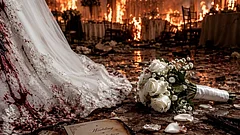
Photographs from the aftermath showed bloody shoes scattered among the rubble, while wedding decorations common in the region were left strewn across the site.
One eyewitness sent Reuters a voice note moments after the explosion.
“Kuhestak is destroyed. Four, five, ten houses were destroyed. Many people are under the rubble. God help us.”
Another resident described the scale of the casualties in a voice message sent shortly after the wedding was hit.
“At the wedding, there were a lot of people. Many [injured] people have been taken away, many more [injured people] are being taken right now,” the resident said.
Reuters spoke to local residents through intermediaries and on condition of anonymity. Human rights groups in contact with residents said local authorities had pressured eyewitnesses not to discuss the attack with foreign media.
The Balochestan Human Rights Documentation Network and Haalvsh, which monitor and document human rights abuses, reported that four people were killed and at least 68 injured.
Three of those killed were wedding guests: Kolsoom Mollahi Najhandania, 43; Zarkhatoon Taheri, 50; and four-year-old Amir Mohammad Karimi. The fourth victim, 16-year-old Mohammad Mallahi, was killed while riding his motorcycle near the communications tower.
The names of the victims were also confirmed by Iranian media.
Civilian toll echoes earlier school strike
The Kuhestak attack comes more than six months after a missile destroyed a primary school in Minab on February 28, hours after the start of the US and Israeli attacks on Iran that launched the current conflict.
Iranian officials said more than 175 children and teachers were killed in that strike.
The Pentagon has not publicly released the findings of its investigation into the Minab incident, which was the US military’s biggest civilian casualty incident in decades. Reuters reported on March 5 that an initial internal US military investigation indicated US forces were likely responsible for the strike on the opening day of the war.
The circumstances surrounding the Kuhestak attack remain under investigation, as US officials examine whether American forces were responsible for the casualties.
On Thursday, residents of Kuhestak held a funeral for those killed in the attack. Mourners filled the procession as a casket was carried and posters were held above the crowd while a funeral prayer played.
Women wearing black full-body cloaks and bright red traditional facemasks distinctive to Iran’s southern coastal region threw flowers on the small casket of four-year-old Amir Mohammad Karimi as it passed.
“The situation in Sirik is sad and mournful, and people are still in shock,” one eyewitness said.