



Turkish minister Hakan Fidan alleges Israel is arming a Druze faction in southern Syria
Ankara fears Israeli intervention could undermine Syria's new government's efforts to rebuild its military
Gadi Eisenkot's bid to replace Netanyahu raises questions about the future of Israel's Syria policy
Southern Syria is becoming a testing ground for two competing visions of the region's post-Assad order. Turkiye wants to help Damascus rebuild a unified state and military. Israel, which has expanded its military presence beyond the former separation zone, wants to prevent hostile forces and military infrastructure from taking root near its border. As both countries extend their security interests into Syria, the risk of a direct confrontation is looming.
It was against this backdrop that Turkish Foreign Minister Hakan Fidan issued a warning on November 21. He alleged that Israel was arming a Druze faction in southern Syria and could use the resulting confrontation with Syrian government forces as a pretext for a military operation. Ankara has alerted regional partners, officials in Washington and European governments.
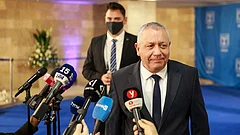
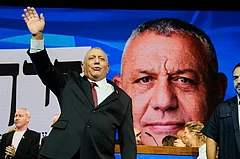
The warning also arrives at a politically significant moment in Israel. Benjamin Netanyahu faces a challenge from former IDF chief Gadi Eisenkot, who has criticised the government's conduct of the wars and its lack of strategic direction. Could a new government change Israel's approach towards Syria, or would its security calculations remain largely intact?


Why Is Turkiye Concerned About An Israeli Operation?
In his interview with Turkish broadcaster TGRT Haber, Fidan alleged that Israel was supplying weapons and ammunition by helicopter to one of three major Druze groupings in southern Syria. He claimed the deliveries were intended to provoke the Syrian Army and potentially create conditions for Israeli intervention.
Fidan's warning indicates Ankara's growing concern over Israel's relationship with armed groups outside Damascus's control.
On November 17, Fidan and Turkish Defence Minister Yaşar Güler met their Syrian counterparts in Ankara to discuss defence and security cooperation. Turkiye is seeking closer institutional ties with the new Syrian government, backing the rebuilding of its armed forces and the principle of a unified Syrian state. Israeli military action against Syrian facilities or support for rival armed factions could undermine that effort.
There is also a recent precedent. In August, Israel struck the Abu al-Duhur airbase, alleging that Turkiye was preparing to deploy troops there. Ankara denied plans for a military deployment, while Syrian Foreign Minister Asaad al-Shaibani said Turkish officers had visited for training and the exchange of expertise. The episode exposed how quickly Turkish-Syrian defence cooperation can become a source of friction with Israel.
For Ankara, the dispute is about influence over Syria's future security architecture. For Israel, a Turkish military presence could alter the balance along its northern frontier.

How Does The Druze Question Complicate The Dispute?
Israel has repeatedly justified its military interventions in Syria by citing the protection of the Druze community. During the sectarian clashes in Suwayda in July 2025, Netanyahu said Israeli strikes against Syrian government targets were intended to protect Druze civilians. The Israeli military has also argued that its presence beyond the border is necessary to prevent hostile forces from establishing positions near Israeli communities.
The Druze, however, are not a politically unified community. Their leaders and armed groups in Syria differ over relations with Damascus, autonomy and the role of Israel. The dispute over their future has consequently become part of the wider struggle over who controls southern Syria.
The 1974 Israel-Syria Disengagement Agreement provides an important legal backdrop. A June 2026 UN Security Council resolution called on both countries to respect the agreement and stressed that there should be no military activity in the area of separation. A subsequent UN report documented Israeli military presence and activities in the separation zone and beyond.
Israel's security concerns and Turkiye's objections are therefore playing out against an increasingly contested border arrangement. Fidan's warning raises the possibility that the Druze question could become another flashpoint between the two regional powers.
Could Eisenkot Offer A Different Israel?
The political challenge to Netanyahu adds another variable. In the October 27 election, Eisenkot's Yashar party won 21 seats, while Likud secured 27. The Joint List and Ra'am together won 19 seats, making Arab-led parties important to the coalition negotiations. No bloc secured the 61 seats needed for a majority.
President Isaac Herzog subsequently gave Eisenkot the mandate to form a government after factions representing 67 lawmakers recommended him, compared with 46 for Netanyahu. The support gives Eisenkot an opening, but does not guarantee a functioning coalition.
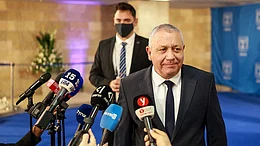
Eisenkot has built his challenge around Netanyahu's handling of the wars, the absence of a political strategy and the influence of far-right ministers. His criticism of settler violence has also drawn a clear contrast with the current government. On Sunday, he condemned attacks by Jewish settlers on Palestinian villages in the occupied West Bank as “Jewish terrorism”, blaming ministers Itamar Ben-Gvir and Bezalel Smotrich for allowing extremist violence to escalate.
His personal history gives his criticism of the wars an added dimension. Eisenkot served 41 years in the Israeli military and became IDF chief of staff in 2015. His son Gal was killed in Gaza in December 2023, during an operation connected to the recovery of hostages' bodies. Two of his nephews also died in the war.
Yet Eisenkot's record does not suggest a straightforward anti-war platform. He has called for a stronger Israeli military and a new national security doctrine. He opposes Palestinian statehood, wants Hamas disarmed before an Israeli withdrawal from Gaza and supports Israeli settlements in the occupied West Bank, albeit with restrictions.
His criticism is directed principally at how Netanyahu has conducted the wars and the absence of a defined political endgame. That distinction matters when assessing what an Eisenkot government might mean for Syria.
Would A Change Of Government Alter Israel's Syria Policy?
An Eisenkot-led government could change the political management of Israel's regional policy, particularly if it reduces the influence of far-right parties. It might impose greater oversight on military operations, take a different approach to settler violence and place more emphasis on diplomatic coordination.
But there is little indication that Eisenkot would abandon Israel's demand for a secure and militarily controlled frontier with Syria. His emphasis on strengthening the IDF and making Israel a regional power suggests that military pressure would remain an instrument of policy. A different government could change the justification, timing and conduct of operations without necessarily changing their underlying objectives.
For Turkiye, the larger concern is whether Israel will accept the restoration of a Syrian state capable of exercising authority over its territory, including through defence cooperation with Ankara.
Fidan's warning, however, exposes the competing ambitions shaping post-Assad Syria. Even if Netanyahu leaves office, the contest over southern Syria and the question of how much military influence Turkiye can build there, is unlikely to disappear.








