At the security level, political front and the state of its economy, there are multiple challenges which Pakistan is finding difficult to handle.
And when things go beyond its control, it has a tendency to deflect the domestic situation by fomenting a crisis with its neighbours.
As a precautionary measure, India must track the movement of suspected Pakistani state-sponsored terrorist groups.
Pakistan continues to face challenges on multiple fronts. It may take some comfort in the fact that it is receiving global attention for its mediating role in the West Asia crisis, but a closer examination reveals a disconcerting picture.
At the security level, political front and the state of its economy, there are multiple challenges which Pakistan is finding difficult to handle. And when things go beyond its control, it has a tendency to deflect the domestic situation by fomenting a crisis with its neighbours. This has happened quite a few times in the past.

Tension Between Pakistan And Afghanistan
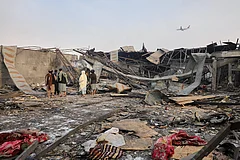
To begin with, the terrorist attack on the police headquarters in Kohat led to the killing of several people and injuries. This incident has led to another episode of tension between Pakistan and Afghanistan. Pakistan blames the Kohat attack on terrorist groups who are receiving sanctuary in Afghanistan. The attack prompted airstrikes by the Pakistani Air Force on Afghan positions.
In the past few months, the bilateral relations between Afghanistan and Pakistan have tanked to such low levels that Turkish and Qatari security officials attempted to broker peace between the two, as per media reports.



The Mecca Pact presents its own set of challenges to Pakistan. For instance, the war between Saudi Arabia and Yemen’s Houthi rebels could engulf into a long-drawn conflict, requiring commitment of significant conventional military resources and efforts. Given its own precarious internal security situation, Pakistan will find itself hard-pressed in fulfilling its role under the Mecca Pact. Even if it manages to cobble up a military contingent to support Saudi Arabia in its war against Houthi rebels, it will have a difficult time stabilising its western front with Afghanistan, which faces regular terrorist attacks and cross-border firing.
On the political front too, things do not look promising. The tussle between the Pakistan Tehreek-e-Insaf supporters and the government is expected to intensify further. In addition to not releasing the former Prime Minister Imran Khan from jail on medical grounds last month, the Pakistani government has tightened the screws around the Khan family by arresting his sisters. This is being done despite mounting pressure from within and outside the country.

A Catch-22 Situation
It is a Catch-22 situation for both the ruling political class and Army Chief Asim Munir. The negative fallout of Khan’s deteriorating health presents a danger which they are not in a position to deal with. On the other hand, they cannot afford to let him go, as it will trigger the prospect of Khan garnering political sympathy.
Not doing anything too does not help the Pakistani leadership. If a long march to Islamabad goes beyond control on September 27, as is being threatened by the opposition political groups, it will unpack a major political crisis for the government in Pakistan. This is further complicated by a fledgling economic situation, spurred by energy price hikes due to the conflict in West Asia.
So, what would a typical politician in Pakistan do in such circumstances? The answer is simple: collaborate with its army to cook up an external crisis. For instance, Zulfiqar Ali Bhutto, at different points in Pakistan’s history, willingly collaborated with the army leadership to play the national security card to consolidate his political position. Such scheming becomes easier for Pakistan when they start believing that they have the backing of the US with other geopolitical conditions favouring them. As of now, Pakistan is undoubtedly in the good books of the US, due to its mediating role in the US-Iran crisis. The Iranians too seem to be relying on Pakistan to keep channels of communication open with the US. It would not be entirely wrong to assume, but Pakistan is also aware that the bilateral relations between India and the US is not in the best state of affairs.
Raising anti-India rhetoric to deflect the mounting political crisis is an age-old ploy by both the military and the political leadership of Pakistan. There are other developments too which make one think this way. From that perspective, one cannot help but think if the secret military exercises with Türkiye are meant to prepare Pakistan’s military for another round of short-term conflict with its neighbours? Or is this a routine continuation of the military relationship with Türkiye to strengthen Pakistan’s depleted military capabilities after the setback it received during Operation Sindoor?
What should India do at this juncture? To begin with, it needs to pay attention as to how the situation inside Pakistan pans out—economically, politically and security wise. As a precautionary measure, India must track the movement of suspected Pakistani state-sponsored terrorist groups. At the national level, it is pertinent for India to strengthen its defence preparedness to address any security contingencies that may arise in the next few weeks.

Pakistan’s leadership may think that raking up a crisis with its neighbours at this juncture could help them deflect a domestic political crisis. However, if India reacts the way it did during Operation Sindoor, it will further aggravate Pakistan’s internal political crisis. The same goes for Pakistan’s military. Another round of military defeat meted by India will severely dent Munir’s own stature within military circles.
(The author is an Assistant Professor at the Subhas Chandra Bose Chair of International Relations, Chanakya University, Bengaluru. He specialises on national security issues, defence & aerospace manufacturing and global geopolitics)
(Views expressed are personal)