



Iran proposes a seven-day plan to reopen the Strait of Hormuz and restart nuclear talks with the US.
Tehran wants Washington to return to the June MoU and meet conditions linked to the Hormuz reopening.
Pezeshkian says Iran is willing to dilute enriched uranium and accept international verification.
Tehran wants Washington to return to the June MoU, while Iranian President Masoud Pezeshkian says Iran is willing to dilute enriched uranium and accept international verification
Iran has proposed a seven-day plan to the United States under which Tehran would reopen the Strait of Hormuz and resume negotiations over its nuclear programme if Washington meets certain conditions, Foreign Minister Abbas Araghchi said in New York, as Tehran called for Washington to honour commitments under the June memorandum of understanding (MoU) and signalled a preference for a deal before the US midterm elections.
Speaking to reporters on the sidelines of the United Nations General Assembly, Araghchi said Iran had conveyed the proposal to Washington through intermediaries. Under the plan, he said, the Strait would reopen at the end of the seventh day if the conditions were met, after which nuclear negotiations would restart.
“We have introduced a plan to the United States through the intermediators that if certain conditions are met, the Strait of Hormuz would be open on the end of the seventh day and talks would restart,” Araghchi was quoted as saying by The New York Times.
Araghchi said it would be preferable for a deal to be reached before the US midterm elections. The comments came after Reuters reported on September 22 that a senior Iranian official had said Tehran could reopen the Strait within seven days if Washington eased military pressure and lifted its blockade on Iranian ports. Reuters also reported that Iran had sent a proposal to the US through mediators on September 16 and that its delegation at the UN had authority to pursue diplomacy.


What Iran wants from the US
The full conditions attached to Araghchi’s seven-day proposal have not been publicly disclosed. Earlier Iranian statements have linked progress on Hormuz to an end to the US naval blockade, the release of frozen Iranian funds and the implementation of commitments made under the June MoU.
Al Jazeera reported on September 20 that Iran’s conditions for re-engaging in talks included lifting the US naval blockade, releasing frozen Iranian funds, ending US attacks and interference, and addressing wider sanctions-related issues. The report also said the June MoU had included provisions for Iran to reopen Hormuz for shipping, alongside commitments concerning sanctions, frozen funds and its nuclear programme.
The seven-day proposal is related to the June agreement but is not the same document. Araghchi has described the new plan as similar to the earlier framework, while Tehran has continued to call on Washington to honour the commitments made under the MoU.
Reuters reported that Iranian officials saw the UN General Assembly as an opportunity for Washington to return to diplomacy, but wanted the US to demonstrate its intentions through concrete actions.
Pezeshkian offers nuclear concessions
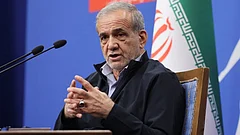
The diplomatic proposal came as President Pezeshkian told Fox News that Iran does not seek nuclear weapons and is willing to accept international verification of its nuclear programme.
Asked whether Tehran wanted a nuclear bomb, Pezeshkian replied: “Not at all. Not at all.”
He referred to a religious prohibition against nuclear weapons previously articulated by Iran’s leadership.
Pezeshkian also said Iran was prepared to dilute its enriched uranium and submit to international verification.
“We said we’re willing to dilute them. It’s not a big deal. We are willing to submit ourselves to verification,” he said.
The president did not specify what enrichment level Iran would accept or what the scope of future inspections would be.
Tehran has consistently rejected accusations that its nuclear programme is intended to produce weapons, while the United States has said Iran must not obtain a nuclear weapon.
Iran blames Washington for breakdown
Pezeshkian said the June agreement remained a basis on which Tehran was prepared to negotiate.
“We did reach an agreement with your president, that agreement was signed, and based on that, we are willing and still wish to move forward,” he told Fox News.
He accused Washington of abandoning diplomacy and said US military action had derailed negotiations. He described Iran’s military response as self-defence.
Pezeshkian also accused the United States of killing Iran’s supreme leader, scientists, military commanders and government figures. Those were his allegations and were not independently established in the interview.
Araghchi also accused the US of military aggression during a meeting with German Foreign Minister Johann Wadephul in New York. He said Tehran had communicated its conditions for resuming diplomacy to Washington and argued that regional security required an end to what Iran described as US intervention and aggression.
He also criticised European governments, including Germany, for what he said was their failure to address alleged US violations of international law while holding Tehran responsible for insecurity around the Strait.
Tehran wants MoU revived before midterms
Araghchi said an agreement before the US midterm elections in November would be preferable. Pezeshkian, however, said Iran’s negotiating position would not depend on the US electoral calendar.
“If the current American government, within international legal frameworks, wishes to reach an agreement, fine. If not, before the elections or after the elections, what difference does it make for us,” he said.
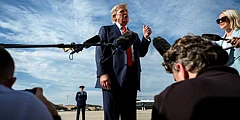
The Associated Press reported that President Donald Trump, in his UN General Assembly address, accused Iran of delaying a settlement over the conflict and the Strait of Hormuz until after the US midterms. Trump said he believed a settlement with Tehran could still be reached.
Al Jazeera reported that Trump said talks with Iran were continuing and that he believed a settlement would eventually be reached.
Al Jazeera reported that US and Iranian representatives were holding mediated discussions in New York over ending the conflict and reopening Hormuz, with Tehran linking progress to the lifting of the US naval blockade and the unfreezing of Iranian assets.
The conditions attached to Iran’s seven-day proposal have not been fully disclosed. Reuters reported on September 24 that US and Iranian negotiators were exploring a phased arrangement under which Iran would reopen Hormuz in return for Washington lifting its economic blockade, although the two sides remained divided over which should move first.















