India and Uzbekistan have elevated their relationship to a Comprehensive Strategic Partnership and agreed to establish a framework for long-term uranium supply.
The two countries will deepen cooperation in areas including defence, trade, critical minerals, mining, infrastructure, healthcare, education and digital public infrastructure.
India's low-grade domestic uranium reserves make imports important for its nuclear programme, while New Delhi aims to expand nuclear capacity from its current 8.78 GW to 100 GW by 2047.
India and Uzbekistan on Sunday decided to elevate their ties to a comprehensive strategic partnership and agreed to establish a framework for long-term supply of Uranium following talks between Prime Minister Narendra Modi and Uzbek President Shavkat Mirziyoyev.
The talks focused on expanding cooperation in areas of trade, investment, infrastructure, critical minerals, mining, defence and security, agriculture, pharmaceuticals, health, information technology, digital public infrastructure including UPI and education.
What Did Modi And Mirziyoyev Agree On?
Spokesperson for the Ministry of External Affairs, Randhir Jaiswal announced on Sunday that both sides reviewed the entire spectrum of India-Uzbekistan relations. They set a target of 5 billion USD of bilateral trade by 2030.
The two sides decided to elevate the bilateral ties to a Comprehensive Strategic Partnership, reflecting the growing depth and expanding scope of cooperation.
Both leaders witnessed the exchange of several MoUs and agreements covering a wide range of areas, including mining, culture, education, tourism, ayurveda, among others. A Letter of Intent for the restoration and conservation of the Buddhist sites of Fayaz Tepa and Kara Tepa in Uzbekistan was also agreed upon.



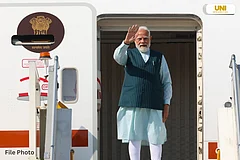

Modi was also conferred with ‘Oliy Darajali Do’stlik’ Order by President Shavkat Mirziyoyev. This is Uzbekistan’s highest honour for foreign leaders and has been awarded for PM’s contribution in strengthening the friendship between two countries.
PM dedicated the accolade to the 1.4 billion people of India and highlighted that it is a symbol of the enduring friendship between the two civilizations.

Why Is Uranium Important For India?
During a Special Briefing by MEA on the State Visit of PM to Uzbekistan, MEA Secretary (West) Sibi George said, “An MOU on mining was signed, which will support collaboration on critical minerals, including the uranium supply. Infrastructure development is another important area. Several Indian companies are already expanding their footprint in Uzbekistan.”
India’s nuclear journey began with a challenge: how to build a dependable energy future despite historical fuel embargoes and limited conventional uranium resources.
India's domestic uranium reserves are of low grade and need to be supplemented through imports, making long-term overseas supplies important for the country's nuclear-energy programme. India primarily uses natural uranium in its Pressurised Heavy Water Reactors, which do not require uranium enrichment.

The importance of uranium imports is also linked to India's plans to expand nuclear power. India currently operates 24 nuclear reactors with a combined installed capacity of 8.78 GW, while the government has set a target of 100 GW of nuclear power capacity by 2047.