The government expects at least 371 Lok Sabha MPs to support the revised delimitation package, according to a report
The DMK has backed the Bill after the Centre accepted key demands on Tamil Nadu’s seat share
Congress is reaching out to regional allies, including Sharad Pawar’s NCP-SP, amid divisions within the INDIA bloc
A day before Parliament takes up the Centre's revised delimitation package, Congress is finding itself increasingly alone in its fight against the legislation. Several regional parties that were expected to stand with the INDIA bloc are now backing the government's proposal or negotiating their own terms, leaving the Congress leadership scrambling to prevent the Bill from securing the numbers needed for passage.
At least 371 Lok Sabha MPs are likely to vote in favour of the Modi government's Constitution Amendment Bill linked to delimitation and women's reservation, News18 reported on Sunday, citing government sources. If the projected support materialises, it would comfortably clear the two-thirds requirement for a constitutional amendment. The figure remains a government estimate, not a confirmed tally of individual MPs.
The government is counting on support from the BJP-led National Democratic Alliance (NDA) and regional parties, including the DMK, YSRCP and BRS. For Congress, the problem is that its efforts to build a united Opposition have increasingly collided with the political calculations of its own allies.




Congress's Chennai Campaign Falls Flat
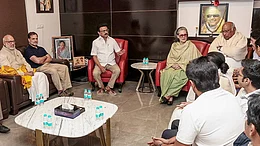
On Sunday, Congress president Mallikarjun Kharge, Sonia Gandhi, Rahul Gandhi and other INDIA bloc leaders travelled to Chennai to persuade DMK chief MK Stalin to withdraw his party's support. The meeting ended without a breakthrough, with Stalin making it clear that Tamil Nadu's interests would take precedence over alliance considerations.
The DMK's position follows the Centre's incorporation of key demands, including protecting Tamil Nadu's existing 7.18% share of Lok Sabha seats and maintaining the relative distribution of parliamentary representation among states for another 25 years. The party argues that the revised proposal addresses its concerns about population-based delimitation disadvantaging southern states. Its 22 Lok Sabha MPs could prove significant to the government's numbers.
The setback is particularly damaging for Congress given its own role in the breakdown of the Tamil Nadu alliance. Following the Assembly elections, Congress walked away from its longstanding partnership with the DMK and extended support to Vijay's Tamilaga Vettri Kazhagam (TVK) government. The move, which came with demands for ministerial representation, drew accusations of betrayal from the DMK. Now, as Congress seeks Stalin's support on a national issue, the fallout has come back to haunt the party.
Pawar Outreach Amid INDIA Bloc Differences
With Stalin refusing to budge, Congress has turned to Sharad Pawar's NCP-SP. PTI reported on Saturday, citing sources, that the party had decided to support the Bill. However, the position within its parliamentary ranks remains unsettled, with MPs expected to meet working president Supriya Sule on Monday before the special session.
Jitendra Awhad has indicated that Pawar favours supporting the proposal, while some MPs have said they need to examine the draft before deciding how to vote. The uncertainty offers Congress little assurance of recovering support from another regional ally.

The Numbers Congress Is Up Against
The Constitution (132nd Amendment) Bill proposes a 50% increase in parliamentary and state Assembly seats, taking the maximum Lok Sabha strength to 850. It also links the implementation of 33% women's reservation to the subsequent delimitation exercise and seeks to retain the relative distribution of seats among states until 2051.
The earlier constitutional amendment failed to secure the required special majority in the Lok Sabha on April 17. The revised package comes up when the special session begins on November 30, with the Rajya Sabha scheduled to take it up from December 2.
Congress is entering the parliamentary battle with its Opposition coalition fractured, its most important southern ally on the other side of the debate and uncertainty over the support of other regional partners. What was meant to be a united INDIA bloc campaign against the delimitation exercise has increasingly become a lone fight for Congress to stop the Bill.