Two young men from flood-hit Rasuwa had travelled to Kathmandu to explore job opportunities in Europe.
Their decision to remain in the capital for a few extra days may have saved their lives, but both lost relatives in the disaster.
Their story highlights the economic struggles pushing young people from remote Himalayan communities towards overseas jobs.
The two friends, Dawa Tamang and Nima Tamang, came to Nepal’s capital with hope. But two days later, they stood outside Kanti Children’s Hospital, scanning a wall listing the names of flood victims and the missing.
They had travelled from Gumbadada village in Kalika Rural Municipality-2, Rasuwa district, one of the regions worst hit by the recent flash floods.
Like thousands of young Nepalis from the Himalayan district, they had come to Kathmandu, the country’s capital, to explore job opportunities in Europe, as their remote town near the China border offered limited access to information about such opportunities.
“We came to ask about jobs in European countries,” Dawa said. “But once we reached Kathmandu, we learnt there was nothing right now. So we decided to stay two or three days to explore the city and then return to our hometown.”

That delay and unexpected plan saved our lives, the two friends said.


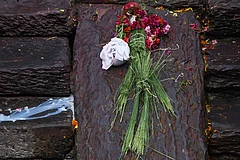
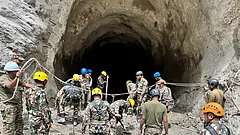
While they were still in Kathmandu, flash floods tore through Rasuwa, wrecking settlements, roads and bridges along the Trishuli Valley. The disaster killed hundreds and left many more missing, with rescue work continuing across the district.
For Dawa, survival came at a cost. Several of his relatives died in the floods. Nima’s loss was no smaller. His elder brother, Nima Tashi Titung, died near Kerung in China, about 30 km from the Nepal border, where he had gone for daily-wage work, a livelihood common among Rasuwa’s residents.
“We too used to work there sometimes,” Nima said. “But there’s barely any work left now.”
When this reporter met the two at Kanti Children’s Hospital, they were searching for their relatives’ names.

Outside the gate, the grief was quiet. Families gathered around a notice board listing the dead, the injured and the unidentified. Some photographed the lists; others scanned them for a familiar name before turning away in tears.
Rasuwa’s location near the China border has long made cross-border labour a lifeline for its people. But with work drying up there too, many young residents are now looking to Europe and other parts of the globe instead.
For Dawa and Nima, that journey has been cut short by tragedy. They had come to Kathmandu chasing work. Instead, they found themselves counting the cost of one of Nepal’s worst flood disasters in years.