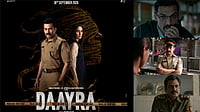
Daayra follows two police officers on opposite sides of an encounter case, forcing them to question what justice really means.
Kareena Kapoor Khan and Prithviraj Sukumaran bring different shades to a conflict where neither side is entirely easy to dismiss.
Meghna Gulzar examines delayed justice, police power and the human cost of a system that fails the people it is meant to protect.
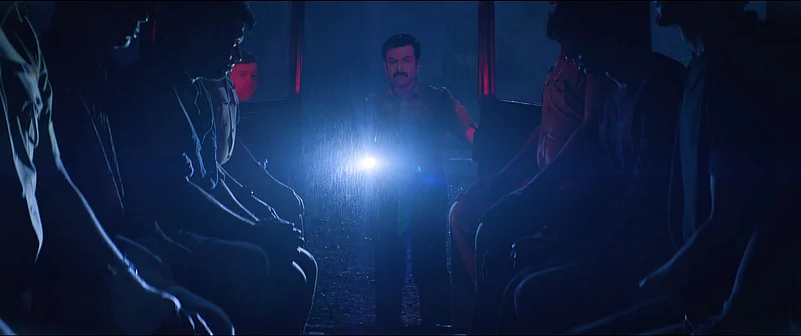
Meghna Gulzar's Daayra begins with an image that is both familiar and unsettling: a police officer is celebrated as a hero after four rape-murder accused men are killed in an encounter. DCP Raman Kumar, played by Prithviraj Sukumaran, is introduced like a larger-than-life star. The slow-motion entry, cheering crowds and public adulation establish him as the man who delivered instant justice. But Daayra focuses on what happens after the applause stops.
The film follows two investigations moving in opposite directions. Raman and his team investigate the rape and murder of a young woman whose burned body is discovered near Delhi. Later, DCP Ajooni Kohli, played by Kareena Kapoor Khan, leads a special team investigating the encounter itself. One officer believes in getting the job done. The other believes that the job has rules for a reason.
The film’s strength lies in making you understand both sides, even when you disagree with them. Raman initially seems like an honest police officer. His team works efficiently and the investigation into the original crime moves with purpose. The accused are identified and arrested. They seem to have done their job properly. Then the police encounter the four men, and the question changes completely: was this a genuine encounter or a planned one?

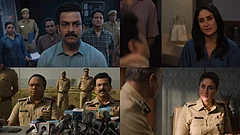


That question becomes increasingly disturbing as the film exposes how the police system operates on the ground. One particularly infuriating stretch shows an FIR being refused. It is the sort of moment that makes the audience want to scream at the screen because the solution seems painfully simple. They just had to do their bloody job. Daayra understands this frustration. Rules can be changed, manipulated, or interpreted differently, but people remain people. The film keeps returning to the gap between what the law promises and what people experience when they actually need it.
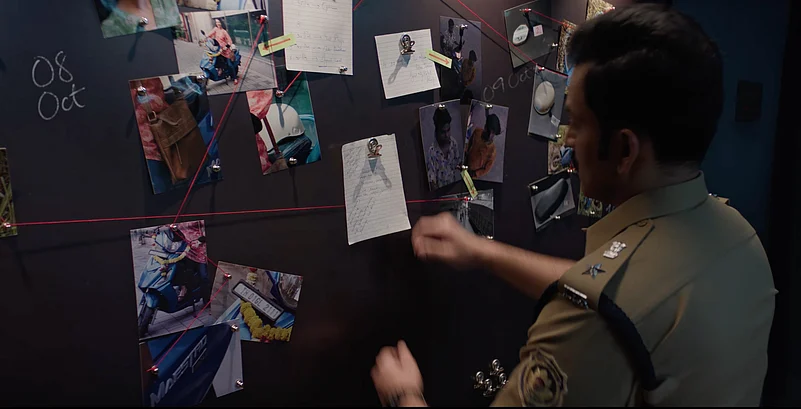
The investigation gradually opens into something larger, involving missing young women and a possible pattern. The burned body found on the highway is not simply an isolated crime. Questions surround the stolen Scooty, a frightened truck driver, and a suspicious dhaba owner. Each detail adds another piece to a disturbing picture. The eventual revelation involving a juvenile offender linked to the Delhi rape case gives the story another uncomfortable dimension. The encounter investigation then suggests that what happened was not a spontaneous act but part of something more organised.

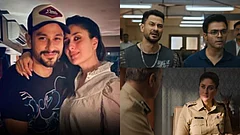
Kareena's Ajooni enters this world as the counterpoint to Raman. Her character believes in the system and wants the encounter investigated properly. Kareena plays her with a controlled authority that works particularly well in the investigative portions. The performance has a sense of restraint, and she gives Ajooni enough curiosity and doubt to keep her from becoming merely the righteous cop on the other side. Meghna Gulzar clearly knows how to work with her actors. Kareena settles into the investigative rhythm nicely, particularly in the scenes where Ajooni has to question people and piece together what happened.

Prithviraj, meanwhile, carries the film with the weight of someone already made into a public hero. Raman is introduced almost as a star before he is introduced as a policeman, which makes his eventual moral uncertainty more interesting. His character is not played as an obvious villain. That is important. There are moments when you can understand why he believes what he is doing is necessary, particularly when victims and their families are forced to deal with a justice system that can move painfully slowly.

Sukumaran's is especially effective when Raman's certainty begins to crack. Instead of turning that change into a dramatic speech, he allows it to register through his performance. The character shows anger, but also the exhaustion of someone who has spent too long confronting the ugliest side of the job and that midpoint shift is one of the film's strongest stretches.
Kshitee Jog also leaves an impression as the victim's mother, bringing an emotional rawness to a character who could easily have been reduced to a device in the larger investigation. Trupti Khamkar makes an impact as a tough policewoman, adding some physical energy to the police portions. The supporting cast generally gives the film a sense of a functioning police machinery rather than making everything revolve around its two leads.

Shot by Saurabh Goswami, Daayra has a visual language that suits its procedural setting. Police stations, roads, interrogation rooms and functional interiors are photographed without turning them into glossy thriller spaces. Much of the film has a grim, slightly worn texture, which helps the investigation feel rooted in an actual working system. But Gulzar occasionally seems unwilling to trust the material. The camera circles characters and moves around scenes where the performances and dialogue already carry enough weight. At times, the filmmaking calls attention to itself when a steadier frame might have been more effective.
The same applies to the background score. There are stretches where it builds genuine anticipation and dread, but it can also become overly emphatic, almost instructing the audience about what to feel. Daayra is strongest when tension comes from an unanswered question, a police statement that doesn't add up, or a character slowly realising something is wrong. Those moments do not need an oversized musical cue.
The editing becomes much more effective towards the climax. The parallel cutting between the original crime and the investigation into the encounter brings the two timelines together with real force. The film starts making its argument through the edit rather than simply spelling it out in dialogue. The organised encounter and the rape are placed in parallel, forcing the audience to confront both the brutality of the original crime and the consequences of what the police choose to do afterwards. It is uncomfortable to watch, but the discomfort serves the film’s central question.
Some creative choices still don't work. The scooter theft and the frightened truck driver stretch credibility, particularly when the circumstances demand a more convincing explanation for why a vulnerable girl would seek help from a truck driver. Some supporting sequences also feel more staged than lived-in, and at times the thriller mechanics become more obvious than the otherwise grounded police investigation.
But the larger idea remains strong. Daayra understands that both Raman and Ajooni can be right in their own ways. Raman sees the failures of a system that takes too long to deliver justice. Ajooni sees what happens when the police decide that those failures permit them to become judge and executioner. The film does not ask the audience to simply pick one of them.
The dhaba thread gives the film one of its more interesting turns. What happens there is not simply another clue in the investigation. It becomes a way of looking at what happens to a person after the system has decided what they are. The connection to the juvenile offender from the Delhi rape case makes that idea even more uncomfortable. Someone who has committed a terrible crime is still dealt with through a system that is supposed to decide punishment, rehabilitation and everything that comes after. Daayra does not pretend that this is an easy or clean process. It asks what happens when the police decide that the process itself is no longer enough.

This is also where Meghna Gulzar’s strengths as a director come through. She has a particular interest in what violence leaves behind, especially on the women who are forced to live with its consequences. The film does not only treat the rape as a crime that needs to be solved. It spends time with the mother, with the missing girls and with the fear that runs through the investigation. There is a female gaze in the way Gulzar looks at these women, not because the film turns sentimental, but because their lives are not pushed aside once the police have something to investigate. The men may drive much of the machinery of the case, but the emotional cost of that machinery is constantly felt through the women left behind.
One of Gulzar’s strengths here is the way she looks beyond the police investigation to the people left dealing with its consequences. Her attention to the women affected by the crime gives Daayra an emotional layer alongside its procedural framework, while Prithviraj Sukumaran and Kareena Kapoor Khan make the central conflict convincing from opposite sides of the law. Neither Raman nor Ajooni is reduced to a hero or villain, which gives their conflict its weight.
The film does not always have the directorial control to match the strength of its ideas. Some scenes are overplayed, the background score pushes too hard and a few dramatic choices feel forced. But when Gulzar trusts her actors and the material, Daayra finds something more interesting than a straightforward crime thriller. It becomes a film about what happens when people lose faith in the system and start believing they can deliver justice themselves.

Gulzar understands the world she is examining, from the police station and the paperwork to the anger surrounding a brutal crime. More importantly, she understands what happens to people when that system fails them. Daayra leaves its central question hanging in the air: when justice takes too long, does that ever give anyone the right to take it into their own hands?