



Did you always dream of becoming a folk singer?Did you ever feel discouraged about taking up folk music as a career?
Since I was a little girl, I wanted to perform on stage, but not even once did I think that I’ll be a folk singer. I love to dance whether it’s for festivals like Holi or at school functions. The second I started talking, I started dancing and singing. My father, who is my adi guru [first teacher], runs an organisation called Laihui, which means “origin”. Laihui conducts extensive research on the indigenous arts of Manipur. I’m also an artist with Laihui and the whole team is called Laihui Ensemble. My father has always been my inspiration. He took me to the finest guru in Manipur so I could learn folk music and classical music, to play the pena, to dance. I always say that dance, song and rhythm are all one body. To sing, we need to feel the rhythm in our bodies. We have to feel alive.
When I sing, I also dance a little bit. It makes the song all the more relatable when the performer acts it out.
Did you ever feel discouraged about taking up folk music as a career?

The Unequal Frontier - 23 November 2026 Issue
Get the latest issue of Outlook India

When I started learning folk music, all my friends made fun of me. ‘Why are you learning grandmothers’ songs?’ That was their first question because they think folk is only for old people, or for radio. There were times when I thought I should start learning western music, sing pop songs. But when I listen to folk music or a folk instrument, I feel I am being chosen by that art form. I completely dissolve into the music. I feel a strong urge to protect and promote it. Even when I was very young, I was drawn to this music. So I keep on doing what appeals to me.




In my homeland, for the past few years, there has been no music, no celebrations. Because of the crisis, we haven’t celebrated any festivals. the only songs we heard were the cries of the mothers mourning the dead.
How hard is it for women artists to find a space in Manipur’s folk-music scene?
When I started out, there were not even three or four women artists in the field. I come from a very conservative society; there were so many dos and don’ts, especially for women, but I stood up. I faced them, convinced them. I had to, because without the acceptance of our society, I cannot do what I am doing right now.
It’s not like I have to go and ask for permission from every department, it’s just about the way I present myself in front of the public. I need to be very smart and diplomatic in different ways. It’s important for me to get support from my people because I am representing them.
It was in 2014 that I sang my first contemporary folk song. This was the turning point in my career. That was the theme song of the 8th Manipur International Polo Tournament. Lots of youngsters were inspired by that song, which my father composed. After I sang it, many people—youths, friends, even some family members—wanted to know more about folk music and many approached me to learn. I came to realise that we need to rejuvenate and contemporarise our music, but without compromising its originality. As folk artists, we should be open to collaborations, but at the same time, be mindful about the originality of our music.
It’s not an easy road but whenever I feel tired, I know my family is fully supportive of me. My students, the youngest is two-and-a-half years old, come to me for lessons every Saturday and Sunday. They’re my hope, they make me strong.
What are some of the major concerns folk artists grapple with?
There is no proper platform for folk artists. We lack good marketing and we have a limited audience. This is lovely music, but where will people hear it? We are showing up and trying to promote our music because even if someone says that they don’t listen to folk music, we give them a chance to listen to it. I guarantee that they will all love folk tunes because we have our own roots. I always say that if you are rooted, then all cultures are connected. Nobody will say that our folk songs are boring. Just make them listen to our songs and they will feel it.
MORE FROM THIS ISSUE



Manipur has suffered many troubles and the violence continues. How do you as an artist respond to this complicated situation?
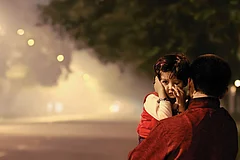
I live in Imphal and travel extensively. My music takes me to different places. In my homeland, for the past few years, there has been no music, no celebrations. Imagine a place without music. It feels so bleak. Because of the crisis, we haven’t celebrated any festivals. Because people were being brutally killed daily. And the only songs we heard were the cries of the mothers mourning the dead. But music has the power to heal. It’s not just for entertainment. After their houses were burnt down, many people didn’t have anywhere to go. They are living in relief camps. So much trauma to bear, especially for the children. I started going to the camps to interact with people, to sing with them. They smile, even if for a moment, and forget how devastated they were.
I know that music can be part of the healing process of my people. Because when you listen to folk music, sometimes it brings back memories. Music is the strongest tool to heal your mind. It can connect strangers despite language barriers. You just have to know when and where to use it. I love to interact with audiences at my concerts. Especially smaller crowds where I can look into everyone’s eyes; connect with them, get them to sing along, dance. If you can’t make the audience connect with what you are singing, then there’s no purpose. You have to sing straight from your heart.








