Organisers skipped an Athletes' Village to cut costs, opting for cruise ships and temporary huts that drew widespread criticism
India's contingent faced kit delivery delays and missing ceremonial uniforms
Long queues, transportation delays, accreditation mix-ups, and protocol blunders—marred the opening days
The 20th Asian Games opened in Aichi-Nagoya on September 19 under a cloud of complaints, with organisers facing criticism on almost every logistical front even before the competition properly got underway.
More than 11,000 athletes from 45 nations are competing across 43 sports, but the build-up has been dominated by headlines about what's gone wrong rather than what's happening on the field. Here's a look at the major flashpoints.
The Accommodation Crisis
The biggest and most persistent controversy stems from a single decision: organisers chose not to build a traditional Athletes' Village to cut costs for the roughly 17,000 competitors and officials, instead housing them in hotels, temporary cabins, and on a cruise ship.
The Italian cruise ship "Costa Serena" is docked in Nagoya and will lodge up to 5,000 athletes and officials, who will be rotated in and out as events end and new ones begin, with about 2,000 people housed in temporary huts. The plan has drawn sharp criticism from multiple delegations — South Korean officials branded the container huts the "worst ever," complaining the beds were too short, and a South Korean basketball player posted video of a leaking sink and soaked floor in his accommodation.

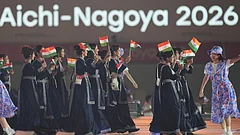


Matters worsened when heavy rainfall and storms last week caused hundreds of athletes to be evacuated from their accommodations altogether. Organisers have defended the setup as "functional," but the complaints have been widespread enough that even India's cricket board arranged separate hotel accommodation for its men's team rather than rely on the official allocation.
India's Kit Chaos
India's own campaign got off to a messy start over apparel. The country's athletics contingent reportedly missed the opening ceremony march after their official kits, handled by IOA supplier, failed to arrive in time. The most visible casualty was shot-put champion Tajinderpal Singh Toor, who was dropped as a flag-bearer because his ceremonial kit never reached him at his training base, and was replaced by kabaddi star Pawan Sehrawat alongside shooter Manu Bhaker.
The confusion didn't stop there — India's men's cricket squad also ran into sizing problems with its official jerseys just before departure, requiring repeated back-and-forth between the BCCI, the IOA to sort out.
Waterlogging At The Cricket Venue
Even before a ball was bowled, India and Pakistan had flagged concerns over the readiness of Kōrogi Sports Park in Nisshin, the tournament's only cricket venue — reports suggested the BCCI even considered sending a weaker squad and prompted the Asian Cricket Council to dispatch an inspection delegation.
Those worries resurfaced during the women's tournament itself: after India thrashed Japan in their quarter-final, reports from the ground flagged waterlogging near one of the boundary areas, raising fresh questions about the ground's drainage ahead of the knockout matches.
Transport, Accreditation And Political Flashpoints
Beyond housing and kits, delegations — including India, China, South Korea and even hosts Japan — have reported long waits at accreditation, buses turning up late or sending athletes to the wrong venues, and difficult commutes to far-flung training facilities. India's contingent specifically flagged accreditation delays, groups not being housed together, and last-minute chaos at reception and flag-hoisting ceremonies.
The Games also saw a diplomatic flare-up when Taiwan's sports minister, Lee Yang, was initially barred from a welcome ceremony, prompting Taiwan's delegation to briefly boycott the event in protest before he was let in roughly 90 minutes later. Separately, South Korea's men's hockey team was left unimpressed when North Korea's anthem was mistakenly played ahead of one of their matches instead of their own.