13.37 crore names have been deleted from draft electoral rolls across 30 States and Union Territories.
Raghav Chadha’s name was marked “permanently shifted” in Punjab’s draft roll, prompting allegations of political vendetta.
Claims and objections can be filed until September 12, with Punjab’s final SIR roll due on October 12.
The Election Commission’s Special Intensive Revision (SIR) of electoral rolls has so far resulted in an estimated 13.37 crore names being deleted from draft voter lists across the country over the past year. The scale of the exercise has also drawn attention to individual cases, including that of Aam Aadmi Party-turned-BJP Rajya Sabha MP Raghav Chadha, whose name was deleted from Punjab’s draft electoral roll and marked as “permanently shifted”.
The deletions have emerged as a major political flashpoint, with opposition parties and leaders raising concerns over the impact of the revision on voters. Fresh draft rolls in Delhi and Maharashtra have recorded cuts of 32.8% and 21.1%, respectively, according to data released by the Chief Electoral Officers of the two states.
Chadha has alleged “political vendetta” over his deletion from Punjab’s draft roll, while the AAP and a senior Punjab government official have rejected the charge, pointing out that the SIR is an Election Commission exercise and that the state government has no role in deciding which names are retained or deleted.



The Punjab draft roll, published on August 13, shows Chadha’s name among those deleted under the category of “absent, shifted, deceased and duplicate” (ASDD), with the reason recorded as “permanently shifted”. The deletion is part of the 20.66 lakh names, or 9.7% of Punjab’s pre-SIR electorate, removed at the draft stage.
Why Was Raghav Chadha’s Name Deleted?
Raghav Chadha’s name is among the 20.66 lakh voters deleted from Punjab’s draft electoral roll during the SIR exercise. The Election Commission’s records list him under the ASDD category — absent, shifted, deceased or duplicate — with the reason given as “permanently shifted”.
The deletion has triggered a political faceoff. Chadha, who was elected to the Rajya Sabha as an AAP nominee from Punjab in 2022 before joining the BJP in April 2026, has alleged “political vendetta” by the AAP government.
Chadha cited the Election Commission’s SIR guidelines, which state that public representatives flagged in the electoral database should be included in the draft rolls to allow documents to be submitted during the claims and objections period. He said his deletion despite being a sitting MP from Punjab was a deliberate violation of the provision.
The Punjab government and AAP have rejected the allegation, saying the SIR is conducted by the Election Commission and that the state government has no role in deciding whose names are deleted. The AAP has also argued that Chadha was living in Delhi and that maintaining or shifting his voter registration was his responsibility.
Chadha’s name can still be restored. The claims and objections window is open from August 13 to September 12, while Punjab’s final SIR roll is scheduled to be published on October 12, 2026.
Delhi Maharashtra Data
The two sets of state data show different patterns in the deletions. In Maharashtra, a CEO office statement stated that 3.56% of electors were marked deceased, 15.78% were tagged as permanently shifted, absent or others, and 1.81% were enrolled at multiple places.
In Delhi, the data showed that 29.86% of electors were tagged as absent, shifted or others. Another 1.95% were marked deceased and 0.98% were listed as enrolled at multiple places.
These categories account for the cuts in the two draft rolls released on Monday. Delhi’s drop is the steeper of the two and is the highest percentage reduction recorded so far in the SIR.
Third Phase Coverage
The Election Commission announced the third phase of the SIR on May 14, to be held in 16 States and three Union Territories.
Draft rolls have so far been published in 17 of those States and UTs. The enumeration phase in Nagaland and Tripura is scheduled to begin over the next two months.
Some areas have been kept out for now. The EC stated that Himachal Pradesh and Jammu and Kashmir would be taken up later because of ongoing Census work and weather conditions. It also stated that Assam would not undergo an SIR until the pending National Register of Citizens is published in the state.
Overall Deletions
The SIR has so far led to 13.37 crore deletions across the three phases, or 14.1% of the pre-SIR electoral rolls.
Delhi has recorded the biggest reduction at 32.80%. Dadra and Nagar Haveli and Daman and Diu follow at 29.60%.
Telangana has recorded 21.70% deletions. Maharashtra stands at 21.10% and the Andaman and Nicobar Islands at 20.60%, according to EC data.
Revision Method And Court
For the past two decades, the EC had not carried out intensive revisions, in which electoral rolls are prepared afresh. Instead, it relied on annual and pre-poll special summary revisions, where additions and deletions were made to existing rolls.
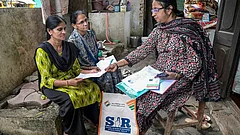
Under the SIR, the EC has introduced a new process that requires all registered electors to submit enumeration forms within a one-month enumeration phase, “map” themselves using their names or their parents’ names in the roll from the last intensive revision in the early 2000s, and submit documents to establish eligibility.
The process has also faced a court challenge. A batch of petitions questioned the EC’s powers and the process adopted in its June 24, 2025 order on the SIR in the Supreme Court. The court upheld the SIR order in its judgment in May this year.