



Bombay High Court directed the ECI to restore Paresh Salgaonkar and six family members' names within 10 days.
The family challenged their exclusion from the electoral roll despite submitting Form 8 for an address change.
The ECI argued that every elector must participate in SIR and use Form 6 if their name is missing.
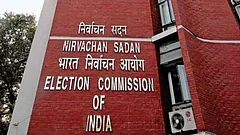
Bombay High Court at Goa has directed the Election Commission of India (ECI) to reinstate the names of a man and six members of his family in the electoral roll within 10 days. Their names had been left out during the Special Intensive Revision (SIR) exercise in Goa.
A bench of Justices Valmiki Menezes and Amit Jamsandekar passed the order on Thursday while allowing a petition filed by Paresh Salgaonkar, a resident of the Santa Cruz constituency in North Goa. The court had reserved its judgment on October 13, reported Hindustan Times.
Family Members Left Out Despite Submitting Form 8
Salgaonkar had moved the high court after finding that the names of his family members were absent from the draft electoral roll despite their submission of Form 8, which is used to report changes of address or correct existing voter details.
The petitioner had declined to submit Form 6, arguing that it was meant for first-time voters or those seeking registration after shifting to another constituency. Since neither condition applied to him, he maintained that submitting the form would require him to make an incorrect declaration.


Advocate Vivek Rodrigues, appearing for Salgaonkar, told the court that the family members were excluded from the draft roll because they had changed their residential address within the same constituency before the enumeration process began.
According to the petitioner's counsel, the family submitted Form 8 on December 2, 2025, two days before the initial deadline for the enumeration phase. However, the application was rejected on the final day set for deciding objections, leaving the petitioners with no opportunity to challenge the decision through an appeal.
Rodrigues argued that the Election Commission could not disregard Form 8 while conducting the revision exercise. The family's names were subsequently absent from the final electoral roll published on February 21.

ECI Says SIR Requires Electoral Rolls To Be Prepared Afresh
Representing the ECI, senior advocate Ashutosh Kumbhakoni argued that the SIR process was fundamentally different from the Special Summary Revision (SSR). He cited Rule 25(2) of the Registration of Electors Rules, 1960, submitting that an intensive revision required electoral rolls to be prepared afresh rather than merely updating existing entries.
He maintained that the previous electoral roll served only as a reference and that inclusion in the draft list depended on submission of an enumeration form. Consequently, the absence of a name from the draft roll could not technically be treated as a deletion, he argued.
Kumbhakoni further submitted that every elector was required to participate in the SIR process, unlike the SSR, where only voters seeking changes or new registration generally needed to take action.

ECI Argues Missing Names Must Be Added Through Form 6
The ECI's counsel argued that those whose names did not appear in the draft roll had to apply through Form 6, accompanied by the prescribed declaration and supporting documents, during the claims and objections period.
He submitted that the final electoral roll would be published after the claims and objections had been examined and decided.















