The Centre has opposed extending the creamy layer principle to SC and ST reservations.
It argued that caste-based historical discrimination cannot be reduced to economic status alone.
The government said any such policy change would require empirical study and parliamentary action.
The Centre has told the Supreme Court that the “creamy layer” principle cannot automatically be extended to Scheduled Castes and Scheduled Tribes, arguing that reservations for these communities are rooted in historical discrimination rather than economic disadvantage alone.
In an affidavit filed before the top court, the government opposed a petition seeking income-based exclusions and sub-quotas within reserved categories. It maintained that the creamy layer doctrine has historically been applied to Other Backward Classes and that any decision to extend it to SCs and STs would require legislative action, empirical study and a broader review of reservation policy.
The government also cautioned against courts directing how reservation policy should be redesigned, saying such decisions fall primarily within the domain of Parliament and the executive.
What Triggered The Case?
The Centre was responding to a public interest litigation filed by BJP politician and advocate Ashwini Kumar Upadhyay.
The petition argues that relatively affluent families within SC and ST communities are repeatedly accessing reservation benefits, resulting in what it describes as “elite capture”. According to the plea, this leaves poorer and more marginalised members of the same communities at a disadvantage in education and public employment.
Upadhyay has sought income-based preferences within reserved categories, including SCs, STs, OBCs and Economically Weaker Sections.


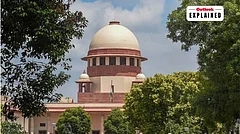

The petition also relies on the Supreme Court’s August 2024 judgment permitting sub-classification within SCs and STs. In that Constitution Bench ruling, four of the seven judges suggested that states should consider identifying a creamy layer within these communities, Indian Express reported.
The present petition seeks to build on those observations and exclude socially and economically advanced beneficiaries from reservation.

Why Does The Centre Say SCs And STs Are Different?
At the heart of the government’s argument is the distinction between economic advancement and historical discrimination.
The Centre said SCs “face historical disadvantage” arising from untouchability, while STs are identified on the basis of factors including “distinct cultures, geographical isolation and backwardness”.
OBCs, by contrast, are identified through a combination of social, educational and economic disadvantage.
The government therefore argued that the rationale behind SC and ST reservation is different from the basis on which the creamy layer principle is applied to OBCs.
According to the affidavit, the objective of reservations for SCs and STs is to promote social equality, correct historical exclusion and ensure greater participation in public institutions.
Keeping that objective in view, the government said discrimination against SC and ST communities “does not happen on the basis of economic conditions.”
In other words, the Centre’s position is that greater income or social mobility does not necessarily erase caste-based or community-based discrimination.

What Exactly Is The ‘Creamy Layer’?
The creamy layer principle is currently associated primarily with reservations for OBCs.
It seeks to exclude the more socially and economically advanced sections of backward classes from reservation benefits so that those benefits reach relatively disadvantaged groups within the category.
The concept was first raised by the Sattanathan Commission in 1971 and later became part of the reservation framework for OBCs.
The Supreme Court’s 1992 judgment in Indra Sawhney v Union of India, which upheld the implementation of the Mandal Commission recommendations, formally recognised the creamy layer principle for OBC reservations.
The Centre has now relied heavily on that precedent, pointing out that the judgment expressly said the doctrine “has no relevance in the case of Scheduled Tribes and Scheduled Castes.”
The government also cited the 2008 Ashoka Kumar Thakur judgment, which reiterated that the creamy layer principle did not apply to SCs and STs.

What Have Earlier Supreme Court Judgments Said?
The legal position became more complicated after the Supreme Court’s August 2024 judgment on sub-classification within SC and ST reservations.
While the court allowed states to create sub-classifications within these categories to ensure that benefits reach more disadvantaged groups, four judges on the seven-member Constitution Bench also favoured consideration of a creamy layer principle for SCs and STs.
However, the Centre has relied on earlier judgments to argue that introducing such an exclusion cannot be done simply through a judicial direction.
It cited the 2005 E V Chinnaiah judgment, where the court observed that if a situation ever arose requiring a creamy layer to be excluded from SC reservation, “it will be the Parliament alone to take the necessary legislative steps.”
That argument forms an important part of the government’s response to the present petition.
Why Does The Centre Say Parliament Must Decide?
The Centre has also invoked Articles 341 and 342 of the Constitution, which deal with the identification of Scheduled Castes and Scheduled Tribes.
Under these provisions, the President initially notifies the lists of SCs and STs. Once the lists are notified, any inclusion or exclusion can be made only through an Act of Parliament.
The affidavit states that it is “not open to State Governments or courts or tribunals or any other authority to modify, amend or alter” these lists.
The government has therefore argued that any major change to the reservation framework, particularly one introducing income-based exclusions, cannot be imposed through a writ issued by the court.
It said such a change would require “a holistic review and thorough empirical study, including socio-economic data of reserved category beneficiaries”, according to Bar and Bench.
The Ministry of Social Justice and Empowerment had similarly stated in a June 15, 2026 reply that Parliament would have to take a call on extending the creamy layer principle to SCs and STs.

What Is The Centre Asking The Supreme Court To Do?
The government has asked the court to dismiss the petition, calling it “misconceived” and lacking merit.
It has also challenged the maintainability of the plea under Article 32, arguing that the petitioner has failed to show that any fundamental right has been violated.
More broadly, the Centre has urged the judiciary not to direct the executive to adopt a particular reservation policy simply because another approach may appear “better, fairer or wiser”.