



SAD and BJP have reunited after splitting in 2020 over the three farm laws.
The alliance has contested five Punjab Assembly elections together and won three times.
Both parties are hoping their combined vote base will help them challenge AAP and Congress in 2027.
After six years, the Shiromani Akali Dal (SAD) and BJP have once again joined hands to ally for the upcoming Punjab Assembly Elections in 2027. With 30 years of history, the two parties have contested polls in the state five times: 1997, 2002, 2007, 2012 and 2017.
However, this historic alliance dissolved in late 2020, despite deep-rooted ties, due to controversial farm laws passed by Prime Minister Modi.
Now, as the SAD and BJP extended an olive branch by reviving their alliance and run, Sukhbir Singh Badal- the very man who had announced the Akali Dal's departure from the NDA as the Chief Ministerial face- attention once again came upon the three farm laws that broke the alliance up in 2020.
History of the alliance
With the efforts of former chief minister Parkash Singh Badal, who acted as the main architect of the alliance, the SAD’s Moga convention in February 1996 broadened its political identity and united under the slogan of “Punjab, Punjabi and Punjabiyat”.
Badal often described the relationship as “Nau-Maas da Rishta”, or a relationship akin to that between a mother and her child, according to news reports.


The party won the 1997 elections, winning 93 seats in total with SAD accounting for the majority.
The alliance has won the elections three times together. The last time, in 2012, they became the first alliance to win a second consecutive term in Punjab after the state’s reorganisation in 1966.
Why They Broke Up
The Shiromani Akali Dal (SAD) ended its alliance with the BJP in September 2020 over the three farm laws introduced by the Narendra Modi-led government, which triggered widespread protests, particularly in Punjab and Haryana. SAD leader Harsimrat Kaur Badal resigned from the Union Cabinet, and days later, party chief Sukhbir Singh Badal announced its exit from the National Democratic Alliance (NDA), accusing the Centre of ignoring farmers’ concerns. Although the laws were repealed in November 2021, the two parties remained separate.
The split proved electorally costly for both. In the 2022 Punjab Assembly elections, the SAD won just three of 117 seats, while the BJP, contesting alongside the Punjab Lok Congress and SAD (Sanyukt), secured two. In the 2024 Lok Sabha elections, both parties again contested separately, with the BJP winning no seats and the SAD managing only Bathinda.
However, their combined vote share stood at 31.98 per cent, higher than the Congress's 26.30 per cent and the AAP's 26.02 per cent. Despite this, they won only one seat between them. The gap between their combined vote share and electoral gains has emerged as a key argument for their reunion ahead of the 2027 Punjab Assembly elections.

What were the farm laws?
The three farm laws introduced by the Narendra Modi-led government in 2020 sought to change how agricultural produce was bought, sold and stored. The Farmers' Produce Trade and Commerce Act allowed farmers to sell produce outside government-regulated APMC mandis, while the Farmers (Empowerment and Protection) Agreement on Price Assurance and Farm Services Act established a framework for contract farming and pre-agreed prices between farmers and buyers. The Essential Commodities (Amendment) Act relaxed stock limits on commodities such as cereals, pulses, oilseeds, onions and potatoes, except under extraordinary circumstances.
The laws triggered widespread protests, particularly in Punjab and Haryana, with farmers fearing they would weaken the mandi system and undermine Minimum Support Price (MSP) procurement. They also raised concerns about greater corporate influence over agricultural trade. After months of protests, the Centre announced the repeal of all three laws in November 2021, with Parliament passing the repeal legislation later that month.
Old Bonds Formed Again
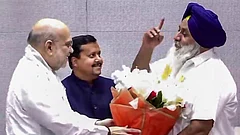
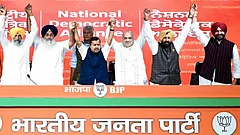
Coming together in a panel this month on the occasion of Guru Nanak Jayanti, they announced the revival of the BJP-SAD alliance for the 2027 Punjab Assembly election.
Home Minister Amit Shah said, “Akali Dal will remain in the role of bada bhai (elder brother). Akali Dal and BJP will fight together. Both the parties will contest together on all 117 seats. But Akali Dal will take the role of bada bhai.”
Modi welcomed the Shiromani Akali Dal's return to the NDA, calling it a natural alliance rooted in Punjab's welfare and communal harmony. In a post on X, he said, “Putting Punjab and the welfare of Punjabis first! I am extremely delighted that the Shiromani Akali Dal returns to the NDA family and that too on the Parkash Purab of Sri Guru Nanak Dev Ji.”
“Ours is a natural alliance that will ensure Punjab gets pro-people governance that takes the state to new heights of progress. Nurtured by Atal Ji, Advani Ji and Sardar Parkash Singh Badal Ji, the Akali Dal-BJP Alliance has stood the test of time,” Modi added.
Shah said Modi had spoken to Sukhbir Singh Badal on Monday, adding that the alliance would symbolise Hindu-Sikh unity. “The BJP and SAD have had historic ties… This alliance will be a symbol of Hindu-Sikh unity,” he said. He added that uprooting the drug menace and corruption would be among the alliance's core concerns.
Badal, who was declared the CM face, described the reunion as more than a political arrangement, calling it an “emotional one”. Recalling the alliance forged in 1996 by his father, Parkash Singh Badal, and former prime minister Atal Bihari Vajpayee, he said, “Today I am happy that this relationship, which was forged in 1996 by my father and Atal Bihari Vajpayee ji, is surfacing again… It was like a family.”
He added that the alliance will work towards “a drug-free and development-oriented Punjab” and restore “the atmosphere of communal harmony and brotherhood which used to exist”.
Reacting to the reunified alliance, Congress leaders view that the two parties had been forced to reunite after years of political decline. They allege that their dependence on each other reflected their “precarious” positions in Punjab. “Leaders representing predominantly rural Assembly constituencies are certain that they will be able to retain their seats because of this alliance and the anti-incumbency against the AAP,” said a senior Congress leader.
With the 2027 Punjab Assembly elections approaching, the question of which party or alliance can consolidate the state's votes remains open. Despite their historic ties, the SAD-BJP alliance faces a changed political landscape, with both parties having to contend with new electoral realities since they last governed Punjab together. Whether their reunion can translate into electoral gains will become clearer as the state heads towards the polls.








