Literature, art and conservation came together to explore Corbett's natural and cultural heritage
Disappearing wildlife and fading traditions raised concerns about the loss of ecological and cultural memory
Responsible tourism and community participation emerged as key to protecting fragile landscapes
What happens to a landscape when its ecology changes, its communities migrate, its traditions fade and its wilderness increasingly becomes a destination for tourists?
On the banks of the Kosi river, where the inaugural Corbett Literature Festival opened on October 6, this question found expression in conversations that travelled well beyond the tiger. Over three days, writers, conservationists, photographers, filmmakers, and cultural practitioners gathered in Ramnagar to talk about forests and wildlife, but also about the people, memories and traditions that belong to this part of the Himalayas.
Corbett is an unusual setting for a literary gathering. Long before the region became associated with tiger safaris, wildlife resorts and the business of tourism, its forests and villages had entered the literary imagination through Jim Corbett's writing. His stories carried the landscape of Kumaon to readers across the world. Today, that same landscape is negotiating a different set of pressures, from growing tourism and changing livelihoods to the disappearance of species and traditional knowledge.
What distinguished the festival was its attempt to place literature within this larger conversation about the place in which it was being held. Nature writing provided the foundation, but the programme reached beyond books to explore how people understand the natural world through scientific research, oral traditions, food, photography, cinema and the memories of communities that have lived alongside forests for generations.


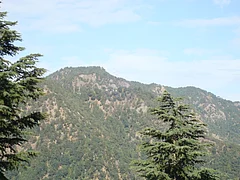
The discussions brought out tensions that are becoming increasingly difficult to ignore. Tourism creates employment, but it also places pressure on fragile ecosystems. Traditional foods are being rediscovered even as the farming practices that sustained them decline. Conservation programmes are helping endangered species recover, while the habitats they depend upon remain vulnerable. Literature and photography preserve images of the natural world, but those images can also obscure how much has already changed.
A literature festival cannot resolve these contradictions. What it can do is bring together people who approach them from very different positions. In Corbett, where conservation, commerce and human habitation exist in close proximity, that exchange seemed particularly necessary.
The festival was held with the support of the Uttarakhand Forest Department, Corbett Tiger Reserve and Uttarakhand Tourism.
Uttarakhand Forest Minister Subodh Uniyal described the initiative as an attempt to bring conservation and community welfare together. "Conserving our forests and wildlife must go hand in hand with improving the lives of the local population," he said.
“The world identifies India with the Himalayas and with Corbett,” said R.K. Sudhanshu, Principal Secretary to the Uttarakhand government, adding that the festival could give that identity "a broader and more expansive dimension".
Stories, Memory And The Making Of A Landscape
The opening conversations moved between mythology, philosophy and the natural world as author Indu Kumar Pandey drew upon the Mahabharata, ideas of human evolution and philosophical traditions to examine why storytelling has remained central to human experience. Literature, in this understanding, is not simply an account of events but a way of making sense of the conflicts and emotions that shape human life.
The relationship between storytelling and landscape acquired a more immediate meaning in a conversation between author Stephen Alter and journalist Nirmal Ghosh on Jim Corbett's literary legacy. “The reason we remember Jim Corbett is not because he was a hunter who killed man-eaters,” Alter said. “If that was all he had done, he would have been forgotten. We remember him because he was a writer, because of the books he wrote.”
Alter spoke about Corbett's little-known early book, Jungle Stories, and the letters he wrote to his sister Maggie. These offered a glimpse of a writer whose interests extended beyond the pursuit of dangerous animals. The forests, their inhabitants and the lives of villagers were as much a part of his imagination as the dramatic encounters for which he became famous.
Corbett wrote many of his celebrated stories late in life, recalling experiences from decades earlier. The young hunter and the older storyteller were separated not merely by time but by a changing understanding of the natural world. Alter suggested that Corbett's later writing revealed a growing concern about the future of wildlife.
There was also a question about what Corbett might have made of today's wildlife tourism, where visitors pursue tigers with cameras rather than rifles. Alter thought he would probably have found the transformation amusing.

The Birds That Are No Longer Missed
The importance of recording a landscape became even clearer in ornithologist and author Asad Rahmani's discussion of disappearing birds.
Rahmani, a former director of the Bombay Natural History Society, recalled visiting the Thar Desert from 1981 onwards, when vultures were so numerous in some places that counting them was difficult. As their populations began to collapse, people would ask him where the birds had gone.
"They are not missing it because they have not seen it," he said, referring to younger generations who had grown up without witnessing the earlier abundance.
His book, Where Have the Birds Gone?, examines the decline of birds and the pressures responsible for it, including habitat destruction, pesticides, changing agricultural practices and expanding infrastructure.
Rahmani argued that scientific monitoring and documentation are essential because memory alone cannot establish the scale of ecological change. Without reliable records, the disappearance of abundance can pass almost unnoticed.
Rahmani also questioned the tendency to value wildlife only according to its usefulness to humans. If societies devote enormous resources to preserving works of art and historical monuments, why should the extinction of a species that has evolved over millions of years be regarded as less significant?
The discussion brought into focus the relationship between cultural and natural heritage. Both depend, in different ways, upon the recognition that something is worth preserving before it disappears.
A Taste Of The Mountains
If the discussions on wildlife concerned the loss of ecological memory, food historian and Padma Shri awardee Pushpesh Pant raised similar questions about cultural memory.
In a session titled Pahadi Bhaadu: Tales, Traditions, and the Flavours of Uttarakhand, Pant explored the histories embedded in the kitchens of the mountains.
The bhaadu, a traditional cooking vessel, became the starting point for a discussion about the relationship between food, utensils, ingredients and the communities that prepare them.
A vessel is not simply an object in which food is cooked. It affects the preparation and, often, the taste of a dish. Pant recalled how even something as familiar as curd could taste different depending on the vessel in which it was set.
The discussion also examined the curious fate of traditional utensils that are now celebrated as symbols of heritage but have largely disappeared from everyday use. They may be displayed in restaurants or invoked in descriptions of authentic regional cuisine, even as the cooking practices associated with them are forgotten.
Pant's reflections went beyond nostalgia. Food, he argued, has always been closely tied to social identity. What people ate, how it was prepared and the occasions on which it was served could reveal caste, class, community and economic position. The contemporary revival of regional cuisine therefore raises questions about authenticity. A dish may retain its traditional name while its ingredients and methods of preparation change substantially.
These questions were particularly relevant to Uttarakhand, where migration and changing agricultural practices have altered the relationship between communities and the food they grow. As young people leave mountain villages for education and employment, farming becomes increasingly difficult to sustain. Traditional crops and cooking practices decline, even as urban consumers develop a new interest in mountain grains and regional dishes.

Looking Beyond The Photograph
The festival examined the ways in which photography and cinema influence how people see the natural world.
Wildlife photographer Akash Das spoke about the power of images to communicate environmental change and reveal aspects of animal behaviour that might otherwise go unnoticed.
He also described how a photograph could create an impression quite different from what actually happened. An image of a tiger, for instance, might appear to capture a moment of aggression, even when the encounter itself was relatively uneventful.
The photograph records a fraction of a second. The story attached to it is shaped by the photographer, the circumstances and the viewer.
Das's reflections suggested that wildlife photography should not be reduced to the pursuit of spectacular encounters. An elephant bathing, an unexpected movement in the forest or the changing relationship between light and landscape can offer equally compelling subjects.
Photographer and environmentalist Anup Sah recalled working in the days of film photography, when limited exposures required patience and deliberation.
Every photograph had to be considered before the shutter was released. That discipline encouraged a slower, more attentive way of looking.
The question is whether photography deepens our understanding of wildlife or occasionally reduces it to a collection of images.
The festival's third day extended this exploration of visual storytelling through films presented by Vikramjeet Singh Bal and other filmmakers.
Conservationist and author Neha Sinha spoke about the ecological histories that survive within cities, drawing particularly upon her experience of Delhi. Cities, she observed, can be exhausting but also exhilarating. Their natural environments are often overlooked amid discussions of congestion, pollution and urban expansion. Through the example of the palash tree, which survives Delhi's extreme summers and winters, she drew attention to the resilience of native species within the city. The discussion widened the meaning of conservation. It suggested that environmental awareness could begin with the trees, birds and habitats people encounter in their everyday lives.

The Pressures Of Being A Destination
If literature and art offered ways of understanding nature, the discussions on tourism confronted the difficulties of protecting it.
Corbett has become one of India's most recognisable wildlife destinations. Tourism has created employment and economic opportunities, but growing visitor numbers, hospitality infrastructure and changing expectations have also placed pressure on the surrounding landscape.
Corbett Tiger Reserve Field Director Dr Saket Badola argued against treating tourism and conservation as opposing interests. Encountering wildlife can create an emotional connection that encourages people to support its protection. But that potential depends upon how visitors behave and how tourism is managed, and stressed on the need for visitor education.
Corbett's growing popularity as a wedding destination has brought concerns about noise, artificial lighting and other disturbances. Light pollution, he argued, is an issue that wildlife destinations need to take more seriously. Excessive illumination can affect nocturnal species, including fireflies, which depend upon darkness.
Meanwhile Anirudh Lakhotia, Director of Ivory Destinations, which owns The Golden Tusk, offered the perspective of a hospitality entrepreneur working in the Corbett landscape. “We can still grow as an industry, grow as a destination, but still find a middle path where conservation or responsible tourism also takes centre stage," he said.
Lakhotia described how his resort introduced a traveller's code of conduct after guests were found driving near the forest at night and using flashlights. The restrictions were subsequently communicated through booking confirmations, check-in procedures, signage and staff interactions. Within months, he said, the resort noticed a marked improvement in visitor behaviour. The challenge was to create experiences that would leave visitors with a greater understanding of the landscape than when they arrived.
Badola also spoke about smaller tourism models, homestays and greater community participation as possible alternatives to concentrating development in a few heavily visited areas. Such approaches could create opportunities for local communities, particularly in regions facing out-migration, while encouraging visitors to explore the landscape differently.