RCMP may reduce its dedicated Kanishka bombing task force and move the 41-year-old probe into “inactive” status.
The Major Commission found intelligence-sharing and airport-security failures before and after the Air India Flight 182 bombing.
Victims’ families want the probe continued and the C$1 million reward revived and increased.
Forty-one years after a bomb tore apart Air India Flight 182 over the Atlantic, killing all 329 people on board, the families of the victims are once again fighting to keep the case alive. This time, the fight isn't against the bombers, it's against the possibility that Canada's deadliest terror attack could quietly slip into "inactive" status.
The Royal Canadian Mounted Police (RCMP) is reportedly considering scaling back its dedicated task force investigating the case, a move families are pushing back against. The development follows a September 12 meeting between the RCMP and relatives of those killed in the bombing.
Sanjay Lazar, chairman of the Kanishka Foundation, has called for the investigation to continue and for the C$1 million reward for information, unclaimed since 1995, to be renewed and increased. The RCMP has not formally closed the case, but families say it is considering moving it to "inactive" status, citing a lack of fresh leads.
What Happened To Flight 182
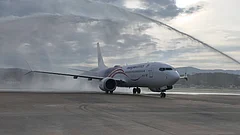
On June 23, 1985, Air India Flight 182, the Kanishka, was flying from Montreal towards London when a bomb exploded over the Atlantic Ocean off the Irish coast. All 329 people aboard were killed. The Indian Express reported that a second bomb exploded at Tokyo’s Narita airport while baggage containing another bomb was being transferred for Air India Flight 301, killing two Japanese baggage handlers. Investigators established that the attacks were connected.


Canadian and Indian investigations concluded that the bombings were planned and executed by Sikh separatists based in Canada, with investigators identifying the Babbar Khalsa network as being involved. Talwinder Singh Parmar was identified as an alleged mastermind. He was killed in a 1992 encounter with Punjab Police in India, The Indian Express reported.
The investigation focused on Inderjit Singh Reyat, Ripudaman Singh Malik and Ajaib Singh Bagri.
Why Only Reyat Was Convicted
Reyat had been convicted over the Narita bombing before becoming a prosecution witness against Malik and Bagri. In 2003, he pleaded guilty to manslaughter and to assisting in making the bomb that brought down Flight 182.
His evidence did not provide the prosecution with sufficient evidence to establish Malik and Bagri’s guilt. During the trial, Reyat said he could not remember important details about the plot or identify those involved. Malik and Bagri were acquitted in March 2005 after the judge found that the prosecution had not proved the case beyond reasonable doubt.
The Indian Express reported that Reyat was later prosecuted for perjury over his testimony. He was convicted in 2010 and sentenced to nine years in January 2011. He remains the only person convicted in connection with the Kanishka bombing.
What The Major Commission Found
The trials did not settle whether Canadian authorities could have prevented the attack.
Justice John Major headed the Commission of Inquiry into the Investigation of the Bombing of Air India Flight 182. Its report examined pre-attack intelligence, the relationship between the RCMP and the Canadian Security Intelligence Service (CSIS), and the subsequent investigation.
The Indian Express reported that the commission described a “cascading series of errors” involving the Canadian government, the RCMP and CSIS. It also examined the destruction of more than 100 potentially significant CSIS wiretap recordings and failures in intelligence sharing.
The inquiry also documented airport security failures. After an X-ray machine used to screen baggage broke down, screening continued with a PD-4 explosive-detection device despite earlier RCMP warnings about its effectiveness.
The New Indian Express reported that Major found no evidence of RCMP follow-up after CSIS received a warning in October 1984 that a plan existed to bomb an Air India Boeing 747 flying from Montreal to India. Investigators did not recognise the significance of the warning until nine months after the bombing, although people named in the intelligence later emerged as suspects.
What Remains Unresolved
The legal record is clear: Reyat was convicted; Malik and Bagri were acquitted; and Reyat was later convicted of perjury. No further convictions followed. But the absence of further convictions did not resolve every investigative question surrounding the bombing, including the wider conspiracy and the role of other people identified during the investigation.
Lazar has also called for the C$1 million reward offered in 1995, which remains unclaimed, to be revived and increased alongside a renewed appeal for information.
An “inactive” designation would not amount to a court ruling closing the case. The families fear that reducing the dedicated task force would mean fewer resources for pursuing fresh leads and are calling instead for the investigation and search for new information to continue.
Forty-one years after Flight 182 was destroyed, the criminal proceedings have produced one conviction, while the public inquiry documented failures in intelligence handling, security and the investigation. The families are asking Canadian authorities to keep pursuing evidence about the wider conspiracy.