India ranks 176th out of 177 in the 2026 EPI, scoring 22.46/100.
India ranks 174th in Environmental Health, 171st in Ecosystem Vitality and 130th in Climate Change.
Air pollution, ecosystem degradation and fossil fuel dependence remain major environmental challenges.
The government has questioned the EPI methodology, while experts say the ranking highlights real issues but needs broader context.
India has been ranked 176th out of 177 countries in this year's Environmental Performance Index (EPI), placing it second lowest, just one place above Laos. With a score of 22.46 out of 100, the ranking puts India among the countries performing poorly on the environmental indicators measured by the index. Estonia, the best-performing country, has a score of 74.79.
India's EPI has been continuously declining over the past decade, with the country being placed at its lowest, 180th rank, in 2022; in 2024 and 2026, both years, India has been placed at the second lowest, 176th out of 177 countries. Notably, EPI is a global index that evaluates countries based on their environmental performance and sustainability efforts.
The EPI is published by Yale and Columbia University researchers every two years; it evaluates nations using a weighted structure divided into three main policy objectives: Ecosystem Vitality, assessing the health of forests, biodiversity, and other natural ecosystems; Climate Change, evaluating how well countries reduce greenhouse gas emissions; and Environmental Health, assessing how environmental degradation affects human health.
The objective of the index is to assess outcomes rather than policy intentions; this enables comparison between countries using standardised global indicators. The index also encourages governance in the environmental sector and evidence-based policymaking.
How India Ranks The Second Lowest
India ranked 174th in Environmental Health, 171st in Ecosystem Vitality and 130th in Climate Change policies; meanwhile, Climate Change has been the most improved sector and is placed at 130th. Despite the country spending ₹16,432 crore under the National Clean Air Programme to combat air pollution, air quality has decreased by 0.15 points.

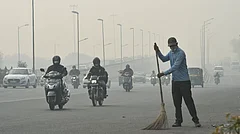


Particularly during winters, individuals face health deterioration as pollution levels exceed the World Health Organisation (WHO)'s recommended limits for PM2.5. Certain measures to overcome air pollution have been made by reducing household air pollution through promoting LPG connection schemes, but those gains are being cancelled out by increasing pollution from vehicle emissions and coal-fired power plants.
India has also been performing below average on Ecosystem Vitality due to infrastructure development, mining projects, and the use of chemical fertilisers that lead to soil degradation and groundwater contamination; these harm the forests, weakening the long-term ability to absorb carbon emissions.
The Response And The Counter Arguments
The Indian Government has rejected the findings of the index. After India was ranked last in 2022, the Ministry of Environment said the EPI was based on "surmises and unscientific methods". The government also raised several concerns about the methodology, including that the index did not take India's historical record of low emissions into account.
However, Yale researcher Martin Wolf, Principal Investigator for the EPI, said the Indian Ministry prefers the index to rank countries based on their policy intentions. He said the EPI has always assessed countries based on their outcomes and performance today, rather than what they promise to accomplish in the future.
According to experts, the EPI ranking needs to be read in the context of the indicators and data used to assess countries. The index compares countries using the same set of indicators, while differences in national circumstances, including development levels and historical emissions, can form part of the broader discussion around how the rankings are interpreted.
Anjal Prakash, a professor at FLAME University, Pune, stated that while the ranking does capture real problems such as air pollution, biodiversity loss and fossil fuel dependence, it also puts a very large, diverse and low-income country into a single cross-national score. He says this can overstate comparisons with richer countries that may have very different historical emission development pathways.
Prakash added that India does not just rank below countries like Estonia; it ranks below every major South Asian country with a comparable or even lower per capita income, such as Bhutan at 82nd, Sri Lanka at 118th, Nepal at 134th, Pakistan at 148th and Bangladesh at 161st. He said this suggests that economic development alone cannot explain India's position.
Meanwhile, the debate around the EPI, therefore, is not only about where India stands on the ranking, but also about how environmental performance is measured and compared across countries. For India, the latest ranking brings together a range of environmental outcomes that vary across sectors, leaving the numbers to provide a more nuanced picture than the overall rank alone.