Gujarat’s decades-old prohibition has not stopped the illicit liquor trade, with smuggling and underground brewing continuing despite strict laws.
The latest Bhavnagar tragedy has claimed 13 lives after methanol-laced liquor was consumed, exposing the deadly risks of the illegal supply chain.
Past tragedies, including the 2022 Botad-Bhavnagar deaths, highlight the recurring challenge of enforcing prohibition and controlling toxic methanol.
Two more men have died after consuming methanol-laced liquor in Bhavnagar, taking the death toll in Gujarat’s latest liquor tragedy to 13, while three patients remain under treatment. The deaths have once again put the spotlight on the illicit liquor trade in the state, which has prohibited alcohol for decades.
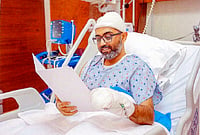
Mukesh Manilal Damor, 36, died late on Saturday night, while Bhargav Upadhyay, 42, was declared dead at 10.25 AM on Sunday, Bhavnagar District Collector Manish Kumar Bansal said. Two of the three remaining patients are being treated at Sir Takhtasinhji General Hospital and one at Pulse Hospital. Their condition is stable.
According to The Indian Express, the State Monitoring Cell has arrested 14 of the 21 accused named in the FIR registered at Vartej police station. A local court has remanded them in police custody till September 1. The agency is also trying to detain other accused persons from Madhya Pradesh and bring them to Gujarat on transit warrants.


What Happened In Bhavnagar?
The incident took place at a farm gathering in Kharakadi village in Ghogha taluka, where a group reportedly consumed counterfeit liquor sold under a popular Indian Made Foreign Liquor (IMFL) brand, as India Today reported.
The first death was reported on the evening of August 18, followed by another death that night and two more the next day. Preliminary investigation suggested that the liquor had been supplied from Madhya Pradesh. Police said around 90% of the illegal liquor stock moved through the smuggling network had been recovered and the suppliers identified.
Bhavnagar Range Inspector General of Police R V Asari said an FIR had been registered against 21 people. The State Monitoring Cell, a specialised police wing, has taken over the probe. A forensic team collected samples from the suspected adulteration site in Ambliwadi area of Vartej.
The forensic tests found 38.59% methanol in the liquor consumed by the victims. Narendrasinh Yadav alias Doctor, 47, who was allegedly involved in preparing the batch, was also among those who died after consuming the toxic liquor.

Toxic Liquor Trail
The FIR, cited by The Indian Express, identifies Gujarat-based bootlegger Gautam Solanki as the alleged ringleader. It says Solanki was in contact with Raees, an accused from Madhya Pradesh and that the two discussed distilling liquor.
According to the FIR, Solanki, Raees and Zubair, a resident of Ujjain, travelled to Ahmedabad to purchase raw materials. They then transported methanol, bottles and stickers to Bhavnagar and made 51 cartons of liquor in the first round.
A second batch was allegedly made but had to be destroyed because of its poor quality. The FIR says Raees subsequently consulted Yadav, a Madhya Pradesh resident, for the third batch. Methanol was used in that batch, with 25 cartons allegedly made and distributed among various bootleggers.
The forensic finding of 38.59% methanol is significant because methanol is highly toxic and is not found in licensed alcoholic beverages.
The State Monitoring Cell’s investigation has now widened to include other accused persons allegedly involved in bringing the liquor-making material from Madhya Pradesh.

Dry State Or Deadly Trade?
Gujarat has had a blanket ban on the manufacture, sale and possession of alcohol since 1960. The prohibition policy is associated with Mahatma Gandhi’s legacy and was strengthened through a 2017 legal amendment prescribing up to 10 years’ imprisonment for offences under the Gujarat Prohibition Act, 1949.
Yet the latest deaths are part of a longer history of liquor tragedies in the state.
Bhavnagar and neighbouring Botad were at the centre of Gujarat’s deadliest hooch tragedy in more than a decade in July 2022, when methanol poisoning killed 42 people. Bootleggers had mixed water into stolen industrial methyl alcohol and sold it as country liquor.
The tragedy was described as Gujarat’s worst since 2009, when a mass liquor poisoning episode in Ahmedabad killed 148 people over three days. A commission subsequently recommended tighter controls on the transport and storage of industrial methanol. Critics have alleged that enforcement of those recommendations has been patchy.
Critics of prohibition argue that the ban has pushed the liquor trade underground rather than eliminating supply. The material supplied for this explainer says bootleggers allegedly smuggle liquor and raw alcohol from Madhya Pradesh, Rajasthan and Daman, or brew country liquor locally, sometimes using industrial methanol to increase profits.
NCRB data cited in the reports points to the scale of enforcement. Gujarat registered about 3.1 lakh cases under prohibition and liquor laws in 2022, compared with 2.83 lakh in 2021. After the 2022 Botad tragedy, the state DGP said more than 2.5 lakh people had been arrested under the Prohibition Act in the preceding 19 months.

What Does The Barcode Warning Reveal?
The latest case has also exposed the difficulty of tracing counterfeit liquor in a prohibition regime. On August 21, The Indian Express reported that authorities had warned people against bottles of a whisky brand carrying the barcode 8901522000665. The State Monitoring Cell found that the seven initial victims had consumed liquor from bottles bearing the same barcode.
The Cell appealed to people not to consume liquor carrying the barcode and asked those who had already consumed it to seek medical attention.
The warning also highlighted the problem of getting people to hand over suspected bottles to the police. An investigator told The Indian Express that people who had purchased liquor illegally might not come forward in a state where alcohol is prohibited. The Cell therefore asked people to destroy the suspected bottles, saying its immediate priority was to prevent further consumption of the contaminated liquor.
With the death toll now at 13 and three patients still under treatment, the Bhavnagar tragedy has once again raised the question at the heart of Gujarat’s prohibition policy.