A glacial lake outburst flood in Bhutan triggered a flash flood through the Mo Chhu river towards the Sankosh.
West Bengal authorities issued a high alert across North Bengal.
Officials have activated disaster management teams and coordinated with Bhutanese authorities.
A glacial lake outburst flood in Bhutan has triggered a flash flood, sending large volumes of water downstream through the Mo Chhu river towards the Sankosh river and prompting authorities in West Bengal to issue a high alert across North Bengal. More than 10,000 people have been moved to shelters and safer locations as disaster response teams prepare for possible flooding.
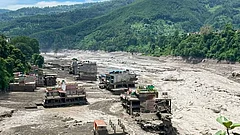
The late-night flood damaged infrastructure at the Gasa Tshachu natural hot springs in Bhutan’s Gasa district, washing away parts of the popular tourist destination. No injuries or loss of life have been reported, Bhutan’s state broadcaster, Bhutan Broadcasting Service (BBS), said on Friday. The full extent of the damage remained unclear, with BBS attributing delays in the assessment to “darkness and the strong flow” of floodwaters.
According to Bhutan’s national newspaper Kuensel, parts of the road leading to Laya village, where the hot springs are located, were washed away, making the route impassable. The road has been closed to traffic indefinitely. Two Bailey bridges may also have been washed away. Authorities had evacuated the area before the floodwaters reached the hot springs.

North Bengal On High Alert As Thousands Evacuated
West Bengal authorities have activated disaster response mechanisms and alerted residents living along the Sankosh river and its tributaries following reports of the glacial lake outburst flood at Lemthang in Bhutan.


Residents in the Darjeeling hills, Terai and Dooars regions have been advised to remain alert and move to safer locations if they live in vulnerable areas. BJP MP from Darjeeling Raju Bista issued an alert on X on Thursday, urging people in the Sankosh river catchment and adjoining areas to move away from the river and its tributaries.
“A glacial lake outburst flood (GLOF) has been reported at Lemthang in Bhutan. The overflowing water from the lake is flowing downwards through the Mofu River towards the Sunkosh River,” Bista wrote, urging residents in the Darjeeling hills, Terai and Dooars to remain alert.
The State Disaster Management Team has been activated, while the National Disaster Response Force (NDRF) has been notified. Disaster management volunteers have also been instructed to remain on the ground as authorities monitor the situation.
What Is A Glacial Lake Outburst Flood?
A glacial lake outburst flood (GLOF), also known as a jökulhlaup, occurs when a natural barrier holding back a glacial lake fails or is breached, releasing a large volume of water downstream. Such floods can develop rapidly and cause extensive damage to roads, bridges, settlements and other infrastructure, particularly in mountainous regions.
According to local reports, Shintaphu Lake, located below Wakila Mountain in Lungo, Laya Gewog, in Bhutan’s Gasa district, is among 17 glacial lakes in the country identified as potentially dangerous.
The Gasa Tshachu hot springs have also experienced flooding in the past. In 2021, a flash flood occurred after the Mo Chhu river changed course and swept through the area.
The latest incident has renewed concerns about the risks posed by glacial lakes in the Himalayan region, where sudden releases of water can threaten communities and infrastructure far downstream.
Authorities in West Bengal continue to monitor river levels and coordinate with Bhutanese officials and disaster response agencies. Residents in vulnerable areas have been urged to follow official advisories and move to safer locations when instructed.