



Xi Jinping has directed authorities to prioritise people's safety, strengthen monitoring and early-warning systems, and improve coordination to prevent further casualties and secondary disasters.
Deadly floods and landslides have struck several regions, including Gansu and Chongqing, while the government has released funds for flood, drought and typhoon relief.
Typhoon Dolphin added to China's weather challenges, prompting large-scale evacuations in Zhejiang and other affected provinces.
Chinese President Xi Jinping issued official instructions on August 15 demanding enhanced disaster prevention and relief efforts. Severe floods and landslides are actively battering multiple regions across China. These events threaten lives and infrastructure.
Xi mandated an urgent operational shift. The president instructed authorities to "put people's lives and property safety first". This top-level directive drives the government response to the ongoing crisis, Reuters reported.
The comments come after a series of severe weather events that have caused deaths and widespread disruption across the country. A flash-flood-induced landslide in Gansu province killed 25 people, while a mountain collapse in Chongqing left 51 people dead, according to Reuters.

Xi Calls For Better Early-Warning Systems
Strict orders guide the response. The central government instructed local authorities and emergency management departments to deploy scientific rescue teams and allocate relief funds immediately. The State Council and regional governments are mobilising resources to reinforce reservoirs, dikes and vulnerable geological hazard points.


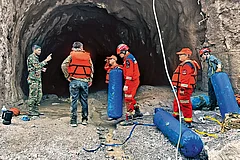

Xi detailed specific operational commands for the administration. He instructed officials to "strengthen monitoring, early warning, and coordination". The president said these measures are necessary to minimise casualties and prevent secondary disasters across the impacted zones.

In conjunction with the mid-August 2026 disaster-management directive, China’s central government allocated 180 million yuan (~$26.52 million) on August 10 to support typhoon-ravaged and drought-hit regions. An additional 80 million yuan (~$11.8 million) was allocated on August 13 for flood relief in Henan, Hubei and Anhui.
The National Development and Reform Commission (NDRC) also earmarked 200 million yuan (~$29.46 million) on August 10 for Zhejiang Province. The funds will restore damaged public services and infrastructure, including roads, water conservancy, schools and hospitals, according to China Daily reported.
Policy-wise, the official directive published on August 15 mandates a shift toward pre-disaster prevention. It aims to close infrastructure drainage gaps in northern China and utilise advanced technologies—such as artificial intelligence, drones and satellite remote sensing—to coordinate rescue efforts.

Typhoon Dolphin Adds To China's Weather Concerns
Heavy rainstorms have caused casualties and significant property damage in the affected provinces. Gansu Province reported some of the highest casualty figures. The death toll from late-July flash floods in Weiyuan County rose to 25 as of August 2, 2026, South China Morning Post reported. In Chongqing, officials finalised a mid-July landslide death toll at 51 in early August.
For displacement, Zhejiang Province recorded the highest figures in mid-August 2026 due to Typhoon Dolphin. Authorities evacuated approximately 900,000 people in Wenzhou and 390,000 in Taizhou. Shaanxi Province also experienced massive displacement, relocating more than 140,000 residents as of August 6, 2026. Shanghai and Fujian Province evacuated 215,600 and 167,900 people respectively.















