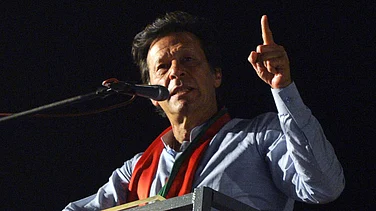
Hundreds of thousands protest against proposed media funding changes.
Critics fear government influence over public broadcasters.
Opposition parties demand withdrawal of the controversial bill.
Hundreds of thousands of people gathered in Prague on Sunday to protest against Prime Minister Andrej Babiš's proposed changes to public broadcaster funding, warning that the move could put media independence and democracy at risk.
The rally was held at Letná Park, the same site where huge crowds gathered during the 1989 Velvet Revolution that brought an end to more than four decades of communist rule.
An estimated 350,000 people took part in the demonstration, according to AP, which cited Mikuláš Minář, who leads the Million Moments for Democracy group. Held two days before the anniversary of the 1989 protests, the rally called on the government to abandon its proposed changes to public broadcaster funding. Protesters also voiced fears about the impact of Babiš and his coalition partners on democracy.
“We do witness here something extraordinary today,” Minář said. “It’s just a beginning.”

Why Are People Protesting In Czech Republic?
The main point of contention is a government proposal to change the way public broadcasters are funded. Critics fear the changes could make Czech Television and Czech Radio more dependent on the government, weakening their editorial independence.
The government coalition pushed the bill through its first reading in the lower house on October 24, limiting the time opposition lawmakers could speak before holding a vote at 4:36 am. The legislation still has two more parliamentary readings to clear.



The Babiš government wants to scrap the existing system under which households and businesses pay regular fees to fund Czech Television and Czech Radio. Under the proposed reform, both broadcasters would instead receive money from the state budget.
The change has raised concerns because critics say direct state funding could make the broadcasters more vulnerable to political pressure. Reuters reported that the proposal also involves cutting their funding by around 15%, potentially leading to staff layoffs and programme cancellations.

The Opposition Has Slammed The Changes
The proposed legislation has drawn comparisons with Hungary, where former Prime Minister Viktor Orban oversaw the expansion of a large network of media outlets supportive of his government.
Opposition parties and civic organisations have also criticised the coalition for pushing the bill's initial version through parliament in an overnight sitting in October. They have called on the government to withdraw the legislation. Public broadcaster employees also staged a one-day strike on November 3 to oppose the changes.
Media Freedom Debate Reaches European Parliament
The proposed changes have also drawn attention at the European level. On Wednesday, the European Parliament held a debate on media freedom and the rule of law in the Czech Republic.
EU Justice Commissioner Michael McGrath said national laws must ensure that public broadcasters receive funding based on transparent and objective criteria. He stressed that they must also have access to “adequate, sustainable and predictable financial resources.”