Australia’s highest court opened hearings on Tuesday in Melbourne on constitutional challenges to the under-16 social media ban
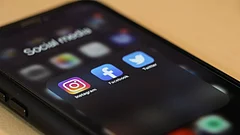
The law covers Facebook, Instagram, Reddit, Kick, Snapchat, Threads, TikTok, X, YouTube and Twitch
Sydney-based Digital Freedom Project says the ban curbs freedom of political communication implied in the constitution
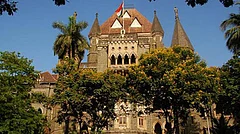
Australia’s highest court on Tuesday opened hearings on constitutional challenges to a world-first law that bars children under 16 from holding accounts on major social media platforms. Seven High Court judges are considering two challenges to the measure, which started last year.
The ban applies to Facebook, Instagram, Reddit, Kick, Snapchat, Threads, TikTok, X, YouTube and Twitch. The two-day hearing is due to end on Wednesday.
The case goes to the core of how Australia balances child safety against constitutional protections, privacy and political expression. One challenge comes from a rights group and the other from Reddit.
Freedom And Privacy
The court is hearing two challenges. Sydney-based rights group Digital Freedom Project filed the first and says the law wrongly takes away an implied constitutional right to freedom of political communication from millions of young Australians.
The second challenge comes from U.S. online forum Reddit. It argues the ban raises questions of privacy and political expression.
Reddit also argues it should not have been placed in the same category as the other banned social media platforms. The hearing is testing whether the government drew that line lawfully.


Teen Plaintiffs Speak
Two teenagers were initially part of the case. Sydney 15-year-olds Noah Jones and Macy Neyland were named as plaintiffs when the Digital Freedom Project filed its challenge last year.
They were later removed because of concerns they could be held liable for legal costs if the case failed. Noah Jones is now 16 and is no longer covered by the ban.
Outside court, Jones told AP, “I believe that this is just a stepping stone further and further to censorship and I think they’ve masked it as this form of child safety.” He added to AP, “But in the end, it’s really just them trying to slowly gain more and more control of what young people see as they will be voters.”
His mother backed the challenge while acknowledging the risks. Renee Jones told AP she was “fiercely afraid” of problems social media presented to young people.
She argued the law missed the mark and would leave children unaware of safe online behaviour and the dangers on social media. “I want my son to grow up into a young Australian man who is resilient, who is responsible online, who can identify the dangers, and who is able to vet some of these things,” the mother told AP.
Enforcement And Evidence
The government is weighing tougher rules. In June, it announced it was considering strengthening the laws behind the ban after evidence showed young children were still staying on social media.
The 10 targeted platforms face fines of up to 49.5 million Australian dollars ($34.5 million) if they fail to take reasonable steps to remove the accounts of young children. That enforcement question has gained weight because recent research suggests the ban has not fully kept minors off the platforms.
A June study in the British Medical Journal found that 85% of a sample of Australian 12- to 17-year-olds were still using restricted platforms. Separate government research released in March showed 7 in 10 underage children still had accounts on Facebook, Instagram, Snapchat and TikTok since December.
Communications Minister Anika Wells was in court for the proceedings and later told AP the laws were under attack. “We are here to defendant a fundamental tenet of Australian democracy which is an Australian’s right, and particularly an Australian child’s right, to be free from harm, and we seek to defendant that from sustained ideological attack,” Wells said.