Reports of falling US Patriot interceptor stocks in Europe have raised concerns over NATO’s air-defence capacity
Demand from Ukraine and the Iran war is adding pressure to limited interceptor supplies
NATO disputes claims that stocks are “beyond critical” but says the alliance needs many more interceptors and faster production
A reported shortage of advanced US missile interceptors in Europe is raising concerns about NATO’s ability to defend against a potential Russian missile attack, as air-defence resources face increased demand from the Middle East and Ukraine, the Associated Press reported.
Two US and NATO officials told AP that Patriot interceptor stocks in Europe had fallen sharply, with one US defence official describing the situation as “beyond critical”. Both spoke anonymously because they were discussing sensitive military matters. NATO military spokesperson Colonel Martin O’Donnell disputed that assessment, saying it was “simply not the case” that Patriot stocks in Europe were beyond critical.
The disagreement is significant because NATO itself says it needs many more interceptors, sensors and command-and-control capabilities, while the Iran war has added further pressure to air and missile-defence resources.
Why Are Patriot Missiles So Important?
Patriot is a key component of NATO’s integrated air and missile-defence architecture and is designed to counter advanced threats, including ballistic missiles.
NATO describes ballistic-missile defence as a combination of interceptors, sensors and command-and-control capabilities designed to protect allied territory, forces and populations from ballistic-missile threats.
For ballistic-missile defence, the availability of interceptors is critical because each engagement consumes ammunition that cannot be instantly replaced.


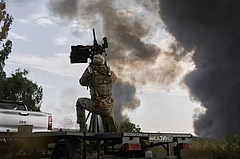
NATO Deputy Secretary General Radmila Šekerinska said in July that the alliance needed more of these capabilities, including “many more” interceptors, sensors and command-and-control systems, while stressing the urgency of expanding production and procurement.

Why Is Europe Worried About Patriot Stocks?
European NATO members operate different air-defence capabilities, while Patriot is a key system for defending against advanced missile threats.
NATO’s broader approach relies on layered air defence, with different national and allied systems designed to address different threats and ranges.
A different air-defence system cannot necessarily substitute for a Patriot battery. It would need to be available in sufficient numbers and integrated with the appropriate equipment, personnel and command structure.
Layered defence uses different systems against different parts of the threat spectrum, so an interceptor shortage cannot simply be addressed by shifting another system into an affected area.
What Did The Iran War Change?
The Iran war has created a major new demand on US air-defence stocks, according to AP’s reporting.
AP cited a Center for Strategic and International Studies estimate that about 65% of the US Patriot interceptor inventory, roughly 1,500 of 2,330 interceptors, had been used during the conflict.
NATO says it increased its Alliance-wide ballistic-missile-defence posture after Iranian ballistic missiles targeted Türkiye in March.
The Iran conflict has therefore added further pressure at a time when the system is already facing sustained requirements elsewhere.

How Did Ukraine Contribute?
Ukraine has been another major source of demand for Western air-defence interceptors since Russia’s full-scale invasion.
NATO Secretary General Mark Rutte said in May that European and Canadian allies were helping finance equipment supplied to Ukraine, including Patriot interceptors. NATO has also used its Priority Order mechanism to allow allies to finance US-made equipment for Ukraine.
Why Can’t The US Just Make More?
The US is expanding Patriot production, but additional capacity cannot be created overnight.
The US Army has established a seven-year procurement framework for Patriot PAC-3 MSE production with Lockheed Martin, replacing a shorter-term arrangement and intended to support US and allied requirements. The Army said the seven-year arrangement could be worth up to $53.86 billion.
The Army said the longer-term arrangement is designed to give industry a more predictable production pipeline, helping manufacturers hire skilled workers, secure raw materials and invest in manufacturing capacity.
NATO is separately pushing allies to increase production of interceptors and other air-defence equipment. Šekerinska said in July that the alliance needed to accelerate production and expand its stocks.

Does NATO Have Alternatives To Patriot?
Yes, but they are not straightforward substitutes.
NATO relies on layered air defence, with different national and allied systems designed to address different threats and ranges.
That means a Patriot shortfall cannot necessarily be solved simply by acquiring another type of interceptor. The alternative system would need to be available in sufficient numbers and integrated into the relevant defence architecture.
How Serious Is The Risk To NATO?
The central concern is not that NATO has exhausted its air-defence capability or that a Russian missile attack on a NATO member is imminent, but how deep the alliance’s reserves would remain if a major conflict required repeated interceptions over an extended period.
The US official cited by AP warned that depleted Patriot stocks could leave American forces in Europe with limited options against a sustained ballistic-missile attack. NATO, however, says the alliance retains enough air-defence munitions to defend allied territory and continue supporting Ukraine.

What Is NATO Doing About It?
NATO has identified air and missile defence as a priority capability and is pushing for more interceptors, sensors and command-and-control capacity. The US is also expanding Patriot PAC-3 MSE production through its new multiyear procurement arrangement.
NATO disputes the assessment that Patriot stocks in Europe are “beyond critical”, but its own officials say the alliance needs “many more” interceptors and faster production. The central challenge is rebuilding stocks quickly enough to meet NATO’s needs while continuing to support Ukraine and respond to additional demand from the Iran conflict.