



American forces conducted limited defensive strikes against Iranian targets near the Strait of Hormuz on Monday, while Washington maintained its naval blockade
Further attacks on commercial shipping, including a tanker struck north of Qatar and an Indian-crewed vessel attacked near Oman, have underscored the risks to maritime traffic
Iran has sent a new nuclear proposal to Washington through Qatar but says negotiations and reopening the strait depend on the US meeting its demands, as Oman and Qatar continue diplomatic efforts
A reported US strike on Iranian targets near the Strait of Hormuz has added uncertainty to efforts to prevent a renewed escalation between Washington and Tehran, with maritime incidents continuing in the region and Gulf countries pressing for a diplomatic settlement.
Explosions were heard on Qeshm and Hengam islands, as well as near Bandar Abbas, on Monday. An unnamed US official told AP that the strikes targeted Iranian personnel who were using surface-to-air missiles against American assets in the strait. The official was not authorised to comment publicly and spoke on condition of anonymity. No public CENTCOM or Pentagon statement confirming this specific operation was located.

The strikes came amid an extended confrontation involving a US naval blockade of Iranian ports and restrictions on shipping through the strait. According to AP, back-channel negotiations have continued, with mediators discussing a possible arrangement under which Iran would stop attacks in the strait in return for Washington lifting its blockade. The report cited regional officials and another person familiar with the discussions, all speaking anonymously.


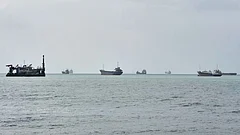

Iran has also set conditions for reopening the waterway. Its Supreme National Security Council chief, Mohsen Rezaei, said the strait would remain closed until Washington addressed Tehran's demands, which include lifting the naval blockade, waiving sanctions on Iranian oil sales and observing a ceasefire that includes Lebanon.
The maritime situation remains volatile. The UK Maritime Trade Operations (UKMTO) reported on Thursday that a tanker had been struck by two unidentified projectiles about 50 nautical miles north of Madinat ash Shamal, Qatar. The crew's status, damage assessment and environmental impact were initially unconfirmed. On November 3, UKMTO also reported an attack on an Indian-crewed dhow sailing out of the Strait of Hormuz; Oman's Royal Navy rescued the surviving crew.
The International Maritime Organization's tracker recorded 129 confirmed maritime incidents in the Middle East and 24 seafarer fatalities as of Thursday. Its latest listed incident, dated November 4, involved the vessel VELOS SAPPHIRE, damaged north of Qatar, with one seafarer missing.

Diplomatic contacts continued alongside the maritime incidents. Oman's Foreign Minister Badr Albusaidi spoke to Iranian Foreign Minister Abbas Araghchi on Thursday about practical arrangements to restore unhindered navigation, ensure maritime safety and secure international trade and energy supplies. Qatar's Prime Minister and Foreign Minister also held a call with Araghchi, reiterating Doha's support for diplomatic initiatives and freedom of navigation. Neither announcement confirmed an agreement to reopen the strait.
The US Maritime Administration has warned that risks to commercial shipping remain high, citing possible missile, drone and unmanned surface vessel attacks, as well as boarding and diversion attempts. The immediate question is whether diplomatic efforts can produce an arrangement on navigation and the US blockade before further incidents trigger another round of military action.















