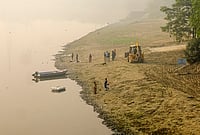
Saudi Arabia's 1,200-km East-West oil pipeline was targeted in the Madinah region on Monday, causing a limited fire but no casualties or disruption to operations
The pipeline can transport up to seven million barrels of crude daily and has become a crucial alternative export route amid disruptions to Strait of Hormuz shipping
The incident came amid fresh missile and drone threats against Saudi Arabia, with the Saudi-led coalition reporting multiple interceptions on Tuesday
Saudi Arabia's East-West oil pipeline was targeted in the Madinah region on Monday, triggering a limited fire that was extinguished by emergency teams. No injuries or deaths were reported, and the pipeline's operations remained unaffected, according to an official source at the Saudi Ministry of Energy.
The ministry's statement said emergency response and specialised technical teams were deployed immediately to secure the site and check its safety. It did not specify the weapon used or identify those responsible for the attack.
The incident comes as the pipeline has become increasingly important to Saudi Arabia's oil exports during the disruption to shipping through the Strait of Hormuz. Reuters reported that the kingdom has been rerouting around four million barrels of crude per day through the pipeline to the Red Sea port of Yanbu, equivalent to approximately 4% of global supply.


Why The Pipeline Matters
The East-West pipeline runs for approximately 1,200 km across the Arabian Peninsula, connecting oil-producing areas in eastern Saudi Arabia with export infrastructure on the western coast. Saudi Aramco said in its first-quarter 2026 results that the pipeline had reached its maximum crude transportation capacity of seven million barrels per day, including around two million barrels allocated to refineries. It provides an alternative route for crude and petroleum product exports without requiring shipments to pass through the Strait of Hormuz.
The infrastructure has been targeted before. On September 10, the pipeline came under multiple attacks in the Riyadh and Madinah regions, prompting authorities to suspend operations as a precaution. The Saudi Energy Ministry reported injuries during that incident. The November 9 attack, by contrast, caused a limited fire but no reported casualties or interruption to operations.

Regional Tensions
The latest incident comes amid renewed military exchanges involving Saudi Arabia and Yemen's Houthi movement. On Tuesday, the Saudi-led coalition said it had intercepted two missiles fired towards Riyadh and another aimed at the kingdom's southern region. Coalition spokesperson Major-General Turki al-Maliki blamed the Houthis for those missile attacks. However, Saudi authorities have not attributed the November 9 pipeline incident to the group or to Iran.
The pipeline's continued operation is significant for Saudi oil exports as maritime disruption persists. But the latest attack has raised fresh concerns over the security of infrastructure that has become central to the kingdom's ability to move crude to global markets.