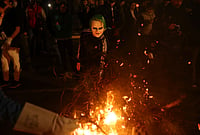
Russian missile strikes hit Kyiv following an earlier attack that reportedly injured six people and damaged homes and infrastructure.
The Kremlin said Vladimir Putin had agreed in principle to resume trilateral talks with Ukraine and the United States, potentially after 10 November.
Ukrainian President Volodymyr Zelenskyy backed renewed negotiations, but the timing, format and prospects for a ceasefire remain uncertain.
Russian President Vladimir Putin has agreed in principle to resume trilateral peace negotiations involving Russia, Ukraine and the United States following a meeting with US special envoy Steve Witkoff in St Petersburg, the Kremlin said on Wednesday. The discussions, which also involved US President Donald Trump’s son-in-law Jared Kushner remotely, came as Washington renewed efforts to end the war. However, Moscow’s willingness to return to negotiations was followed hours later by Russian missile and drone attacks on Kyiv, highlighting the uncertainty surrounding the diplomatic push.
Missiles struck Ukraine’s capital, Kyiv, in the early hours of Thursday, hours after Russia signalled its willingness to resume US-mediated peace negotiations with Ukraine, underscoring the gap between diplomatic efforts to end the war and continued fighting on the ground. A Reuters witness reported the missile strikes, which followed a Russian air attack the previous evening that injured six people and damaged homes, a petrol station and transport equipment.
The developments came amid renewed efforts by Washington to bring Moscow and Kyiv back to negotiations over the conflict that began with Russia’s full-scale invasion in February 2022.


Russia Signals Readiness For Fresh Negotiations
Russian President Vladimir Putin agreed in principle to resume trilateral talks with Ukraine and the United States during a meeting with US special envoy Steve Witkoff in St Petersburg on Wednesday, Kremlin aide Yuri Ushakov said. Moscow indicated that a new round of negotiations could take place after November 10. The discussions would focus on establishing a security framework for Russia and Ukraine following the end of the conflict, according to Ushakov. The proposed talks would mark a renewed diplomatic effort after previous negotiations failed to produce a broader settlement, with the two sides continuing to disagree over the terms for ending the war.
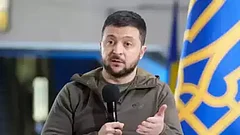
Ukrainian President Volodymyr Zelenskyy said Kyiv supported a US proposal for trilateral negotiations at the level of negotiating teams, ideally by early November. Speaking to journalists as he returned from Norway, Zelenskyy said Ukraine remained in contact with American officials to facilitate a meeting. He also expressed support for proposals aimed at securing a ceasefire, including measures covering energy infrastructure and humanitarian issues. The timing and format of any new negotiations, however, remain to be settled, with Ukraine seeking an early meeting while Moscow has indicated a later timetable.


Fighting Continues Despite Diplomatic Push
The latest attack on Kyiv came amid a wider escalation in strikes on Ukrainian cities and infrastructure. Ukrainian officials have repeatedly reported attacks on energy facilities, raising concerns about electricity supplies as the conflict continues. The attacks have complicated efforts to establish limited understandings over energy infrastructure, even as Washington seeks to revive negotiations. The latest missile strikes also highlight the challenge facing diplomatic initiatives: agreement to return to talks does not itself amount to a ceasefire or guarantee progress towards a settlement.
The United States has intensified diplomatic engagement with both sides, with Witkoff meeting Zelenskyy in Norway before travelling to Russia for talks with Putin. US President Donald Trump has urged Ukraine to reach an agreement to end the war, while Kyiv has sought continued American support for its defence. Whether the proposed trilateral negotiations can produce meaningful progress will depend on the willingness of Russia and Ukraine to bridge their differences over security arrangements and the terms of a settlement. For now, the continued attacks on Kyiv demonstrate that military operations remain active despite the renewed diplomatic push.