



Mark Carney says Canada examined the possibility of US military action as an “extreme tail risk”.
The Canadian prime minister says Ottawa is reducing its dependence on US technology and suppliers amid strained bilateral ties.
Canada's defence minister says analysing military risk scenarios is routine, while Carney maintains frequent contact with Donald Trump.
Canadian Prime Minister Mark Carney has said his government examined the possibility of US-led military action against Canada, describing it as an “extreme tail risk” that Ottawa had a responsibility to consider amid strained relations with Washington. Carney said the scenario was not considered likely, but argued that failing to prepare for an unlikely but potentially serious threat would be irresponsible.
What Did Mark Carney Say?
Carney told The Times that his government had assessed the possibility of US military action against Canada as an “extreme tail risk” and had made preparations for such a scenario, although he did not disclose further details.
Any military conflict between the two countries would be heavily unequal in terms of military strength. The US has more than 2 million active-duty and reserve personnel, compared with fewer than 200,000 in Canada, according to figures provided by the two governments. The disparity is also reflected in their submarine fleets: the US had 65 military submarines in 2024, while Canada had four.


"I think you have a responsibility in these roles to look at extreme tail risk," Carney told the Times. "That's just risk management. That's not a base case, but it would be irresponsible not to" prepare.
How Is Canada Reducing Reliance On The US?
Carney also told the NYT that Canada is seeking to reduce its dependence on American technology and suppliers. He cited plans to diversify away from Starlink, while Canada's purchase of US-made F-35 fighter jets is also under review.
Canada is also seeking to deepen economic relationships with other countries, including China, while Carney said Ottawa does not intend to deepen defence ties with Beijing.
Defence Minister David McGuinty subsequently said that analysing such scenarios was normal for militaries, adding that “all militaries in the world spend time analysing risk scenarios”.
Canada has the world's longest coastline and lies close to the Arctic, factors that have contributed to Carney's decision to increase defence spending since becoming prime minister. At the same time, Trump has repeatedly referred to Canada as the “51st state”. His administration has also engaged Ottawa in a trade war, which intensified last month as both countries imposed reciprocal tariffs on various goods.
Despite the worsening trade tensions, Carney told The Times that he remains in frequent contact with Trump.
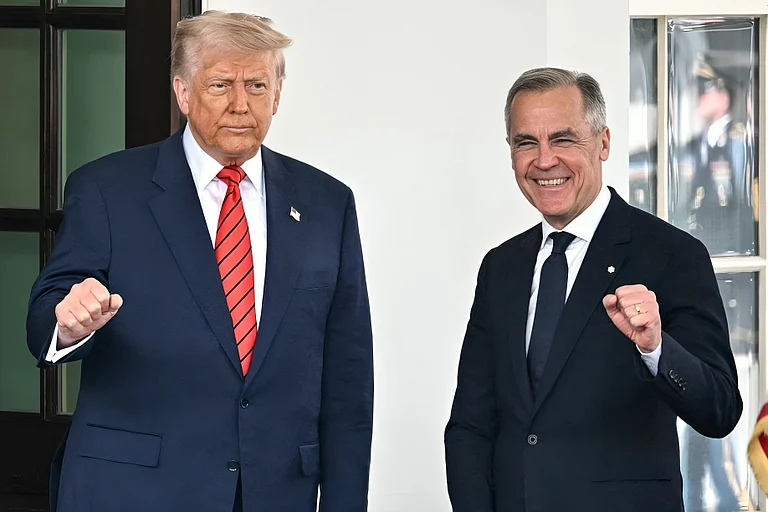
"From my perspective, we have a good relationship in the sense of we can pick up the phone and talk to each other about issues," he told the outlet.

"He's direct. I'm direct in terms of where positions are. It's much more efficient that way, and so you know that exists and that will continue to exist."















