China sees artificial intelligence and technology-sharing as key to narrowing the development gap across the Global South.
Beijing believes stronger people-to-people and business ties can help India and China move beyond their unresolved boundary dispute.
As BRICS expands its influence, China wants the grouping to push for a more equitable international order and a greater voice for developing
As BRICS marks 20 years, China sees the grouping’s next phase being shaped by technology, climate change and the push for a more equitable global order. For Ren Yan of People’s Daily, the Chinese Communist Party’s official newspaper, the New Delhi summit also offers a chance for India and China to move beyond their longstanding border dispute and rebuild ties.
Twenty years after four countries came together to form BRICS, the grouping has grown into a broader platform representing 11 members and 10 partner countries. “This year marks the 20th anniversary of BRICS. In the past 20 years, BRICS has grown from five nations into a big family, with 11 members and 10 partners,” he says.
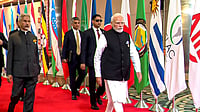
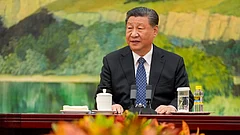
The remarks come as Chinese President Xi Jinping arrived in India on Saturday for the 18th BRICS Summit in New Delhi, at the invitation of Prime Minister Narendra Modi. Xi also held a bilateral meeting with Modi on Saturday. His delegation includes Foreign Minister Wang Yi and senior Chinese Communist Party official Cai Qi.


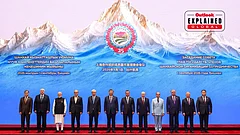
The BRICS grouping of major emerging economies, comprising Brazil, Russia, India, China and South Africa, is holding its summit in New Delhi on September 12 and 13.
The trip comes six years after a deadly 2020 military clash along their disputed Tibetan border, with ties gradually improving through restored flights, visas and high-level contacts. The underlying territorial dispute remains unresolved, and both sides retain heavy military deployments along Galwan Valley and Depsang Plains.
China, as a founding BRICS member, has played a significant role in the organisation’s evolution, hosting the summit twice and contributing to its expansion, says Ren. Beijing is now looking to deepen cooperation with other BRICS countries, particularly as the grouping becomes an increasingly important platform for developing nations to articulate their concerns and their place in the international order.
For Ren, artificial intelligence is likely to be one of the most consequential areas of cooperation. China has emerged as a major player in AI, but the gap between countries with advanced technological capabilities and developing nations remains substantial.
“If we lose the opportunity of AI, developing countries may lose a lot of development opportunities for the future,” he says. China, he adds, is willing to share technology and expertise with other developing countries to help narrow that gap.
Looking Beyond the Border
That emphasis on cooperation also informs Ren’s assessment of India-China relations. He describes the border dispute as a longstanding problem, one that he believes should not define the relationship between the two Asian neighbours.
“It is a historic issue left by colonial powers,” he says. India and China, as developing countries and Asian neighbours, should look beyond the dispute, he argues. Remaining preoccupied with the problem risks missing opportunities for cooperation in areas of mutual interest.
Ren points to Europe as an example of how countries can move beyond historic conflicts. Having spent years working in Europe, he notes that France, Germany and Britain fought devastating wars against each other in the first half of the 20th century. Yet European integration has transformed those relationships.
“If you go to European soil, you cannot find the border, no border. You can move freely in the European Schengen area,” he says, pointing to the continent’s ability to overcome historical divisions.
He believes India and China can similarly look beyond their differences. In his view, the relationship has already begun to recover from its lowest point, although the pace may not be as fast as some would like.
For years, people-to-people and business exchanges had grown steadily, but the relationship subsequently became “frozen”, he says. The resumption of direct flights between China and India, however, is an encouraging sign.
“Each of the direct flights brings more business people and more people-to-people exchanges,” Ren says. Such interactions can help improve mutual understanding, particularly when the two countries have often viewed each other through the prism of Western media coverage.
“If we know each other through the lens of Western media reports, I think we will misunderstand each other,” he says.
The presence of Chinese journalists in New Delhi for the BRICS summit is itself, he suggests, a sign that relations are gradually thawing.
A New Phase for BRICS
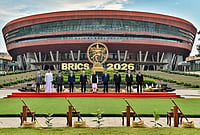
The next major shift could come when China assumes the BRICS presidency. Chinese President Xi Jinping has announced that China will host the grouping’s summit next year.
“The first 20 years, BRICS had to grow. But in the next 10 years, it can have more power to express its voice and exert its influence in many matters,” he says.
For China, technology is likely to be a major priority during its presidency. While BRICS countries have traditionally focused on areas such as infrastructure and finance, Ren expects greater attention to new technologies, particularly AI.
Technology, he argues, can provide a fresh impetus to economic growth across the Global South, especially for countries seeking to close the development gap.
Climate change is another area where Ren sees considerable scope for cooperation. Developing countries, he says, have borne a disproportionate share of the consequences of climate change despite having contributed less historically to the problem.
“Developing countries are the sufferers. We pay a lot,” he says. BRICS countries therefore have a shared interest in pushing for stronger cooperation on climate issues, articulating the concerns of the Global South and offering their own solutions.
The Push for a Fairer Order
For decades, he argues, the international order has been dominated by Western powers. The emergence and expansion of BRICS represents a significant change, giving developing countries a collective platform through which to demand a greater voice.
“Twenty years ago, BRICS was born. It was a signal of the rise of developing countries,” he says.
The grouping’s rapid expansion, in his view, means that it is no longer simply a forum for emerging economies. Its growing weight gives it greater potential to influence debates on global governance, development and international affairs.
Ren compares BRICS to a young person growing into adulthood. In its first two decades, the grouping was still developing its institutional strength and influence. The next decade, he believes, should be about using that accumulated weight more effectively.
“Maybe the first 20 years, it had to grow. But in 30 years, it will have more power to express its voice and exert its influence in many matters,” he says.
His larger argument is that BRICS should not simply seek a larger role within the existing global order but work collectively to make that order more equitable.