The AfD has won Saxony-Anhalt but needs a coalition or other route to form a government.
Its manifesto proposes faster deportations, separate refugee classes and a more patriotic school curriculum.
It also seeks changes to Islamic expression, broadcasting, cultural funding, family policy and gender care.
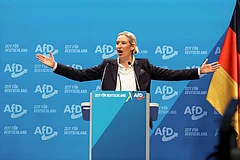
The Alternative for Germany (AfD), under lead candidate Ulrich Siegmund, has won the state election in Saxony-Anhalt but fallen short of an outright majority, leaving its path to government uncertain. Its "Vision 2026" election manifesto sets out plans for major changes to immigration, schools, culture, family policy and gender-related healthcare.
Under Germany’s federal system, state governments have wide powers over education, domestic security and culture and are represented in the Bundesrat, the upper house of parliament. That means an AfD-led government could implement parts of the party’s programme at state level, particularly in education and culture.
Here is what the party says it would change if it formed the state government.
Tougher immigration policy and faster deportations
Immigration would be one of the clearest areas of change under the AfD.
The party’s "Vision 2026" manifesto proposes a state-level deportation offensive and a task force to coordinate quicker deportations. The proposal would put greater emphasis on speeding up the removal of people required to leave Germany.
The AfD also wants businesses to rely less on skilled migrant workers. It proposes incentives for small- and medium-sized companies to adopt artificial intelligence and digitalise their processes rather than turn to skilled workers from what it calls "culturally alien" backgrounds.


The party would also seek a change in the status of Ukrainians who fled the war. It would advocate removing war refugee status for Ukrainians in Germany as long as the conflict remains concentrated in eastern Ukraine, arguing that they should seek refuge in western Ukraine.
Reuters has reported that the AfD’s manifesto calls for faster deportations and measures to reduce reliance on skilled migrants.
For an AfD-led state government, migration policy would focus on faster deportations and reducing reliance on migrant labour through technology and digitalisation.
Separate classes and a new school curriculum
Education would also undergo major changes under the AfD’s proposals.
The party wants children of refugees to be placed in separate classes. Its manifesto says this would convey the message that "their stay in Germany is merely temporary" and prevent "various stresses" on other children from being around different cultures.
Children with disabilities would also no longer be taught in the same classroom as those without disabilities. Instead, they would be sent to special schools.
The party would ban rainbow flags from schools and require the German national flag to be raised daily. Students and staff would also sing the national anthem at school celebrations.
The curriculum would be changed under what the AfD calls a "patriotic cultural policy". Greater attention would be given to medieval rulers and 19th-century figures from German history, including Otto von Bismarck, the "Iron Chancellor".
Social and psychological support and integration measures would be scrapped.
Reuters reported that education would be one of the main focuses of an AfD government. The party argues that schools should not be responsible for integrating refugee children or for inclusion.
Restrictions on Islamic expression and public broadcasting
The AfD’s proposals would also affect religious expression and cultural institutions.
The party says an AfD-led state government would "exhaust all legal avenues" to limit Islamic expression. Its manifesto includes proposals to ban the call to prayer and stipulate how mosques are decorated.
The party also wants to dismantle the current structure of the public broadcasting system in Saxony-Anhalt. It would withdraw state funding from some cultural institutions.
Traditional families and fewer restrictions on gender policy
The AfD also proposes tackling Germany’s ageing population without relying on immigration.
Instead, it would offer financial incentives to German citizens to have children. The party says greater acceptance of "sexual deviations and non-reproductive lifestyles" has contributed to sinking birth rates.
It would therefore promote "traditional" family structures consisting of a mother, father and children.
The AfD would also push to restrict access to puberty blockers and gender-affirming hormone therapies for children and adolescents. It says this would counter what it calls an increasing "trend" towards gender dysphoria.
What an AfD-led state government could change
The scope of an AfD-led government would be shaped by Germany’s federal system. State governments have wide powers in education, domestic security and culture, while also taking part in federal politics through the Bundesrat.
The election result does not automatically put the AfD in government. The party won 43.8% of the vote and 39 of the 83 seats in the state legislature, leaving it short of a majority. Most other parties have ruled out joining an AfD-led coalition, leaving Siegmund to find a way to form a government.
Reuters reported that the AfD sees education and culture as areas where a state government would have particular scope to implement its programme, as these areas largely fall under the authority of Germany’s federal states.
An AfD-led Saxony-Anhalt would therefore not be able to implement the party’s entire national agenda. But its manifesto shows where it would use state powers: tougher deportation efforts, a different approach to schools, restrictions on Islamic expression, changes to public broadcasting and cultural funding, and policies aimed at promoting traditional family structures.