DNA testing is identifying flood victims whose bodies are badly decomposed.
Nepal is collecting blood samples from first-degree relatives of missing people.
Forensic teams compare genetic profiles with family samples and personal records.
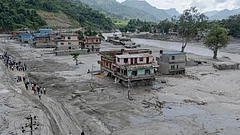
After the devastating floods that killed thousands, Nepal Government have entered a difficult phase, which is to identify the dead bodies, so they can be handed over to the concerned relatives.
Authorities said on Thursday that more than 1,270 people had been killed across Nepal and Tibet, while over 4,700 remained missing. Amid the grim search, rescuers reportedly pulled two workers alive from a hydropower tunnel on Friday morning, Al Jazeera reported.
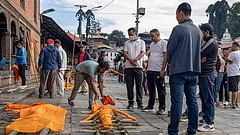
Forensic teams, meanwhile, are processing human remains recovered from rivers, collapsed settlements and damaged hydropower projects. Many bodies are decomposed, mutilated or otherwise impossible to recognise visually, making DNA analysis central to establishing their identities.

Why Visual Identification Is Not Enough
Identification after a mass-casualty disaster usually begins with fingerprints, dental records, clothing, jewellery, tattoos and other distinguishing features. However, prolonged exposure to water, mud and debris can severely damage bodies and erase recognisable features.
“Forensic teams on the ground told us that there are some things that can help with the identification process, such as tattoos and jewellery,” Al Jazeera’s Jessica Washington reported from a testing facility in Kathmandu. She added that the condition of many bodies had made identification particularly challenging.

Interpol says visual recognition alone is rarely sufficient following a major disaster. Fingerprints, dental information or DNA are generally needed for a conclusive identification under internationally accepted Disaster Victim Identification procedures.
How Is DNA Recovered From Bodies?
Forensic specialists first collect a biological sample from the unidentified remains. Depending on the body’s condition, DNA may be extracted from blood, soft tissue, bones or teeth.
Blood and tissue can provide high-quality genetic material when remains are recovered quickly. In advanced decomposition, however, bones and teeth may offer a better chance because their hard structures can protect DNA from water, heat, bacteria and environmental damage.
Laboratory specialists extract the genetic material and examine selected regions that vary between individuals. The resulting pattern, known as a DNA profile, does not provide a person’s complete genetic information. It acts as a biological identifier that can be compared with a reference sample.
Each body and sample must be assigned a unique identification number. Investigators also document where the remains were recovered, their physical characteristics and associated belongings to prevent errors or duplication.

How Is A Match Established?
The strongest comparison involves a direct sample belonging to the missing person. This could come from a stored medical specimen or a personal item carrying biological material, such as a toothbrush or razor.
When no direct sample is available, investigators turn to biological relatives. Parents and children inherit closely measurable portions of DNA from one another, allowing forensic scientists to calculate the likelihood of a family relationship.
Nepal Police has asked parents, children and other first-degree relatives of missing people to provide fresh blood samples. Hundreds of such samples have reportedly been collected and sent to the Nepal Police Central Forensic Science Laboratory and the Nepal Academy of Science and Technology.
A potential DNA match is not always treated as automatic confirmation. Investigators may cross-check it against dental records, medical information, personal belongings and details about where the body was found. Interpol says further checks are used to confirm potential matches produced through kinship analysis.
What About Missing Foreign Nationals?
Relatives of foreign nationals do not necessarily have to travel to Nepal. A first-degree relative may provide a DNA sample through an authorised facility in their home country, after which the profile can be transmitted to Nepalese authorities for comparison.
Such cross-border matching requires careful documentation, standardised laboratory procedures and a secure chain of custody. Authorities must be able to establish who provided the sample, how it was collected and whether it remained protected against contamination.
International co-operation is particularly important because tourists, migrant workers and foreign employees were among those reported missing.

How Is India Assisting Nepal?
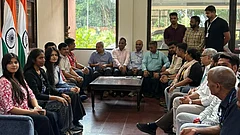
India has deployed a 19-member forensic team to assist Nepalese specialists with the identification effort. The team began analysing DNA samples at the Nepal Police Central Forensic Science Laboratory and the National Forensic Science Laboratory in Kathmandu’s Khumaltar area.
“The team is working to expedite the processing of DNA samples in Nepal,” the Indian Embassy said, adding that the exercise was intended to identify those affected by the floods.
Additional specialists and laboratory capacity can help reduce delays when hundreds of bodies and reference samples must be processed simultaneously.