






Two workers were rescued alive from the Upper Trishuli 3A hydropower tunnel nine days after devastating floods struck Nepal, raising hopes for others still trapped underground.
Mud, boulders, damaged infrastructure and blocked tunnel entrances have made it difficult for rescuers to locate workers and reach sections where they may be trapped.
Rescue teams are using voices and other signs of life, technical information from engineers, heavy equipment and controlled excavation to locate and reach possible survivors.
Two men were rescued alive from a tunnel at the Trishuli 3A hydropower project on Friday, nine days after a flash flood tore through the Trishuli River corridor in central Nepal. They were identified as Kabir Maharjan, 45, a mechanical supervisor at the project, and Sanjay Sah, 30, a foreman, according to the Public Relations Directorate of the Nepal Army.
According to the Independent Power Producers’ Association of Nepal, more than 600 people working at 11 hydropower projects remain missing. However, locating hundreds of people believed to be trapped underground has proved exceptionally difficult.
Why Are The Rescue Teams Struggling To Reach The Workers?
The flash flood sent water, rock and mud through the valleys and into hydropower infrastructure. At Upper Trishuli 3A, rescuers needed almost six days just to locate the tunnels because of the amount of mud and debris, as the tunnels were buried by mud and boulders tunnels were buried by mud and boulders.
The flash flood sent water, rock and mud through the valleys and into hydropower infrastructure. At Upper Trishuli 3A, rescuers needed almost six days just to locate the tunnels because of the amount of mud and debris. Large boulders and flood waters had deluged the hydropower tunnels, blocking off the entrances, and some were buried deep in mud.


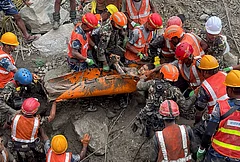
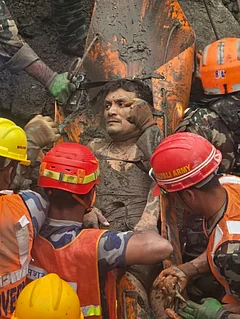
The flood has changed the physical landscape and damaged infrastructure. Even when rescuers suspect people are alive, they need to determine which sections remain accessible or contain survivable spaces.

At Trishuli 3A, rescuers reportedly heard voices from inside the tunnel before the successful rescue, giving them a much clearer target.

How Are Rescuers Trying To Find Survivors?
Sah, who is from Saptari district in Madhesh province, told security personnel that he was chanting 'Hare Krishna’ mantra for the last nine days while trapped inside the tunnel.
“I was chanting Hare Krishna mahamantra for the past nine days,” he said, briefly talking about the incident soon after he was taken out safely.
He said he stayed behind while others fled after the disaster because he felt responsible for everyone’s safety.
Sah said he was working in the control room when the accident occurred. “I was working in the control room. My responsibility was to save everyone’s life.” He said he urged everyone to run after the accident, but by the time others had left, it was too late for him to escape.
Asked how many people might still be trapped inside, he said he had heard or communicated with three or four people in his vicinity. “There were only three or four people with whom we were able to communicate, nearby, by talking or making noises.” Sah also said there could be more people trapped deeper inside the tunnel, including around the powerhouse.
“Not everyone may have been able to escape. The tunnel is very long,” he said, he told PTI, adding that the force of the floodwater could have carried people deeper inside.
The Nepal Army-led security command has been engaged in the search and rescue operation using specialised equipment.
The rescue followed an earlier breakthrough in which rescuers heard voices from inside the tunnel and established communication with people believed to be trapped there, the Kathmandu Post reported.
The Nepali Army and Armed Police Force intensified efforts to reach them after the voices were heard.

Why Is There Still Hope For Survivors?
Nepal’s Communication Minister Bikram Timilsina said officials remain hopeful that more workers will be rescued. “We are waiting for the rescue of more and more people,” he wrote on social media, as per Al Jazeera.
Over 1,250 people have died due to the flash floods while more than 4,700 people remain missing, PTI reported.
The flash floods, triggered by an ice-rock avalanche near the Nepal-Tibet border on August 26, devastated towns and villages in northern and central Nepal, leaving a trail of destruction.
















