A software glitch converted some voters’ names into Hindi sentences, including ‘Ram ne Yadav ko maara’, in UP electoral rolls.
Chief Electoral Officer Navdeep Rinwa ordered an inquiry after 158 irregular entries surfaced across 11 Legislative Council constituencies.
The errors emerged ahead of polling, prompting directions to ensure eligible voters are not denied their voting rights.
A software glitch in Uttar Pradesh's electoral rolls turned some voters' names into Hindi phrases, with entries such as 'Ram ne Yadav ko maara' and 'Ram ne Sharma ko maara' appearing ahead of polling for 11 Legislative Council seats.
Uttar Pradesh Chief Electoral Officer Navdeep Rinwa acknowledged the discrepancies on Thursday and ordered an inquiry. Rinwa said 158 irregular entries had been found among 14.81 lakh names across the 11 constituencies.
The errors were reported in the Allahabad-Jhansi graduates’ constituency. In one instance, ‘B.Com’ appeared in place of a voter’s father’s name. Rinwa said some discrepancies were linked to the software used to prepare the electoral rolls digitally.

How The Error Occurred
The problem arose from the translation software used to convert English names into Hindi. Rinwa said the system was designed to transliterate names, rendering them phonetically in Hindi. However, in some cases, it translated words literally instead of preserving their pronunciation, resulting in incorrect entries in the final electoral rolls.


He cited the example of ‘Ramhit Yadav’ being entered as ‘Ram hit Yadav’. The software interpreted the separated words as a sentence rather than as parts of a name, producing the phrase ‘Ram ne Yadav ko maara’.
Rinwa said the errors could have been corrected using the editing option available in the software, but some entries remained in the final rolls.
He also indicated that the entry of ‘B.Com’ in place of a voter’s father’s name appeared to be a case of human error or negligence rather than a translation-related glitch.

Digital Preparation Of Electoral Rolls
Uttar Pradesh used a digital system to prepare electoral rolls for graduate and teachers’ constituencies for the first time, replacing the earlier district-level manual process.
The election office’s IT team developed the platform in about four months. Its features included voter registration, application scrutiny, approvals and rejections, duplicate checks, serialisation and electoral roll downloads.
The system was intended to make the preparation and management of voter lists faster and more efficient. However, translation-related errors allowed incorrect details to appear in the final rolls.
Rinwa said the 158 irregular entries accounted for a small proportion of the 14.81 lakh voters across the 11 constituencies.

Inquiry And Safeguards
The discrepancies came to light after political parties raised complaints and lists highlighting errors circulated on social media. Rinwa subsequently ordered an inquiry into the cases.
The inquiry, conducted by Jhansi Divisional Commissioner Vimal Kumar Dubey, confirmed that errors had occurred in the electoral rolls.
The issue surfaced ahead of polling in five graduate and six teachers’ constituencies in the state.
Rinwa directed district authorities to ensure that no eligible voter was denied the right to vote because of clerical or printing errors in the rolls. Presiding officers were instructed to verify the necessary documents and allow eligible voters to cast their ballots.
District magistrates will be held responsible if any eligible voter is turned away for such reasons.

UP MLC Polls: Schedule And Voter Details
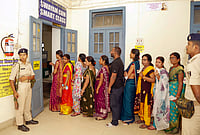
Polling for the 11 Legislative Council seats is scheduled for Friday, from 8 am to 4 pm.
More than 14.81 lakh voters are eligible to cast their ballots at 2,697 polling stations spread across 72 districts. A total of 152 candidates are contesting the elections.